
Scent Diffuser Total Cost of Ownership: Look Beyond Unit Price
Scent diffuser total cost of ownership is the cost of delivering an agreed operating plan over a defined period, not just the price of the machine. An SP01 wall-mounted arrangement and a DecoPro tabletop arrangement may involve different placement and staff tasks. Do not compare them as interchangeable simply because both diffuse fragrance. First establish which proposed version and operating plan meets the actual requirement, then compare the costs you can support with quotations and records.
1. Make the compared service scope equivalent
Name the site, intended position, actual model and supplied version before collecting numbers. Record the approved operating plan and the service outcome the buyer is evaluating, without treating an untested room photo as proof of coverage. A wall-mounted SP01 quotation may include tasks that are absent from a tabletop DecoPro quotation. Keep such differences visible instead of declaring one format cheaper for every use. Define the comparison period and the unit count, and separate one-time project work from recurring operation. If a proposal does not meet the requirement, a low cost does not make it an equivalent option.
2. Separate equipment and initial setup from recurring items
Start with the exact quoted equipment, confirmed included items and any agreed installation, training or setup work. Identify exclusions such as local mounting assessment, additional approved supplies or optional development rather than silently adding them to every order. Keep taxes, freight and currency treatment consistent between proposals, using the commercial terms actually offered. This article supplies no Aromaprox price list or market-specific tax advice. A bundled service should be described as a bundle; do not also count the same included labor or supply as a separate cost.
3. Use measured oil and electricity inputs where needed
Estimate fragrance cost from the approved oil price and a documented consumption observation that matches the intended program. Do not derive monthly use from bottle capacity alone or transfer a rate from another model. If electricity is material to the decision, use an appropriate verified input and the actual operating context; do not turn a disputed electrical specification into a precise annual bill. Use the separate consumption and electricity guides for those calculations. Here, the task is to combine defensible inputs, not to invent common rates for SP01 and DecoPro.
4. Count routine staff time without inventing failure rates
Record the actual tasks staff are expected to carry out, such as checking the routine record, permitted refill or replacement and approved care. Observe a representative task and distinguish hands-on time from other activity. Use a labor-cost assumption approved by the buyer and label it as such. Add necessary approved supplies based on the agreed routine. Internal repair is not an ordinary operator task, and an assumed monthly breakdown is not evidence of a model's reliability. Keep unknown service events as an uncertainty or a clearly labeled scenario rather than a claimed predictable cost.

5. Show the arithmetic as a transparent worked example
Consider a purely fictional budgeting example for one defined deployment over one year: equipment and initial setup total 300 currency units; fragrance totals 180; routine labor totals 120; approved supplies total 30. The subtotal is 630 units. If the buyer separately defines an illustrative 40-unit disruption allowance, the scenario total becomes 670. These are invented teaching figures, not Aromaprox prices, measured consumption, reliability data or a forecast for either model. Keep each input visible so a buyer can replace it with actual quotations and records without mistaking the example for a commercial offer.
6. Test uncertainty and keep disruption separate from revenue claims
Show which inputs are quoted, observed or still uncertain, then test the decision with reasonable alternative assumptions chosen by the buyer. If the ranking changes mainly because of an unverified oil-use or labor assumption, obtain better evidence before deciding. Define disruption carefully: recorded extra staff time is different from hypothetical lost sales. Do not claim that scenting guarantees revenue or that every inactive hour creates a specific loss. Keep the model-specific operating limits and support arrangements attached to the comparison. A useful total is explainable and revisable, not merely precise-looking.
Frequently asked questions
Can the cheapest diffuser have the highest total cost?
It can, but demonstrate the difference with a consistent service scope and defensible recurring inputs. Do not assume the result from device price or an invented maintenance rate.
Can reservoir capacity determine monthly fragrance spending?
No. Capacity is not consumption. Use the approved oil and documented use under a relevant operating program rather than converting a bottle specification directly into a monthly cost.
Are the example figures a quote for SP01 or DecoPro?
No. They are fictional arithmetic inputs for explaining a comparison. Request current model-specific commercial terms and replace the example with your own supported observations.
Plan your next step
Ask Aromaprox for a quotation identifying the SP01 or DecoPro version, included items and agreed support scope. Combine it with your site-specific refill, labor and operating records. Keep uncertain costs visible and compare only proposals that meet the same actual requirement.
Related resources
- SP01
- DecoPro
- Commercial Scent Diffuser Oil Consumption: How Much Oil Does It Use?
- Scent Diffuser Electricity Consumption: Measure and Calculate
- Diffuser Oil Capacity vs Scent Coverage: Why They Are Different
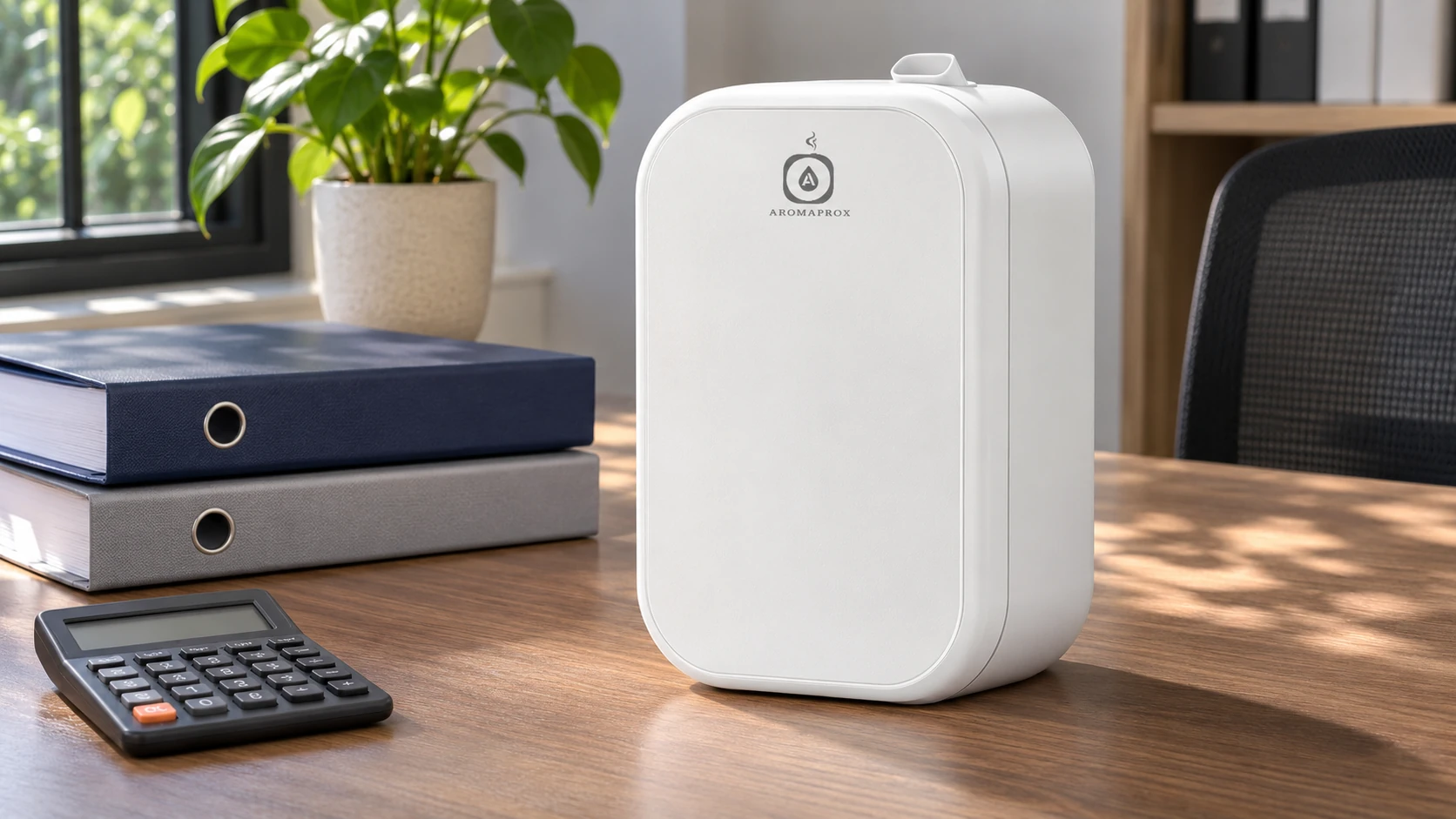
Images are AI-generated editorial scenarios based on Aromaprox product reference photographs. They are not test records, installation instructions or a statement of included accessories. Confirm the exact model, finish and current specifications before ordering.


