
Scent Diffuser Electricity Consumption: Measure and Calculate
Scent diffuser electricity consumption is an energy question, not an oil-consumption question. The wattage printed on an adapter does not necessarily equal the diffuser's average demand. Intermittent operation, standby and charging can all change the result. For a useful budget, measure the complete operating arrangement and state exactly which periods the calculation includes.
1. Separate watts, watt-hours and adapter ratings
Watts describe power at a moment; watt-hours describe energy over time. Kilowatt-hours are the units commonly used for electricity billing. An adapter's maximum output rating is a capacity limit, not a measurement of normal device demand. A diffuser may cycle between active and resting states. Before comparing models such as DecoPro and DecoPlus, obtain the correct electrical information for the exact version and distinguish nameplate values from measured averages.
2. Measure the complete arrangement safely
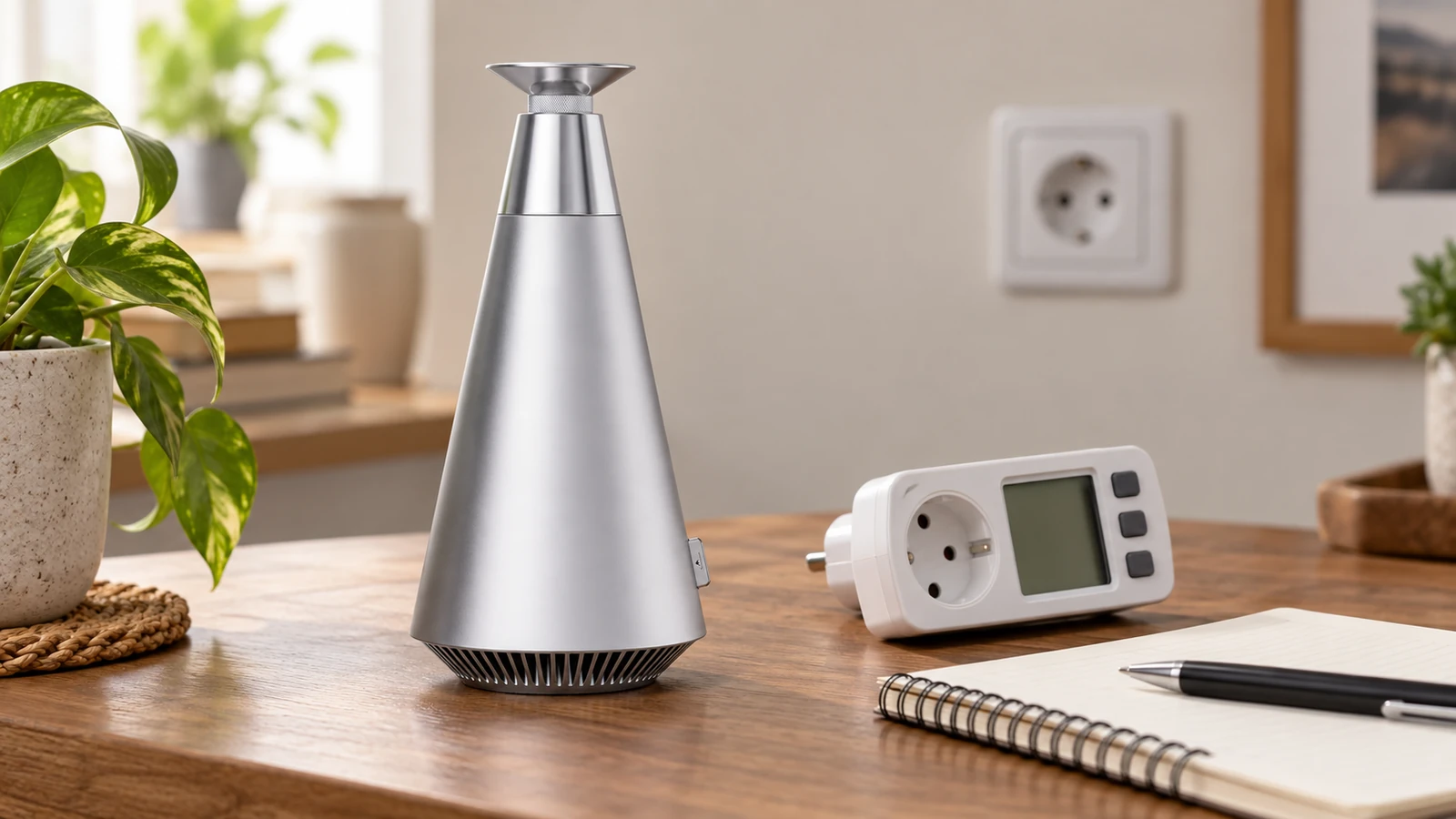
Use a suitable, correctly rated energy meter according to its instructions, without opening equipment or altering wiring. For an externally powered device, measuring at the supply includes the adapter's losses. Select an instrument capable of resolving the low demand involved; a coarse household display may be inadequate. The illustrations show planning equipment, not a live electrical test. When a measurement requires professional equipment or electrical access beyond ordinary plug-in use, use a qualified technician.
3. Capture a representative operating period
Keep the normal intensity, schedule and optional functions unchanged while recording accumulated energy and elapsed time. Include enough complete on-and-rest cycles to avoid selecting only an active burst. The U.S. Department of Energy explains that fluctuating power can be characterized by measuring energy over a period and dividing by that period. Record the meter, device version and settings. This practical approach is not a claim that an informal measurement meets a particular laboratory standard.
4. Use a transparent worked example
Here is an illustrative calculation, not an Aromaprox specification: suppose measured average demand during an eight-hour enabled window is 4 W, and standby for the remaining sixteen hours averages 0.5 W. Daily energy is (4 × 8 + 0.5 × 16) ÷ 1,000 = 0.040 kWh. Across thirty identical days, that is 1.2 kWh. At a hypothetical tariff of 0.20 currency units per kWh, the energy charge is 0.24 currency units. Replace every assumption with your own measurements and tariff.
5. Avoid double-counting charging and standby
A full-day meter total already includes the states that occurred during that day; do not add the same standby hours again. For a rechargeable diffuser, energy drawn during charging and energy used from the battery are different measurement boundaries. If your budget concerns the electricity bill, measure the charging arrangement over representative use and recharge cycles. Separate the adapter left connected without the device where relevant. Note anything excluded, rather than presenting an incomplete figure as total operating cost.
6. Scale the calculation without overstating savings
Multiply a representative per-device energy total by the number of devices and operating days, allowing for different schedules across locations. Keep electricity, fragrance refills and servicing as separate cost lines. A device with a lower power reading is not automatically the better fit if it cannot meet the intended application. Recheck the estimate after a firmware change, altered schedule or different equipment version. Publish the assumptions next to any cost comparison so readers can reproduce the arithmetic.
Frequently asked questions
Can I calculate consumption from the adapter label alone?
Not reliably. The label may state maximum capacity rather than actual average demand. Use measured energy or a verified whole-device average.
Does a diffuser use power when fragrance output stops?
It may, depending on its electronics and operating state. Measure or confirm standby demand rather than assuming that a rest interval means zero power.
Is the 4 W example a DecoPro specification?
No. All numbers in the worked example are hypothetical and demonstrate the calculation only. Confirm current specifications for the exact product version.
Plan your next step
Ask Aromaprox for the electrical specification and operating profile of your chosen model, then use your local tariff and measured schedule for the budget.
Related resources
Sources and further reading
Images are AI-generated editorial scenarios based on Aromaprox product reference photographs. They are not test records, installation instructions or a statement of included accessories. Confirm the exact model, finish and current specifications before ordering.


