
Scent Diffuser Light Controls: Questions to Confirm Before Ordering
Scent diffuser light control requirements deserve their own line in a buying brief. A product described with ambient lighting may still leave unanswered questions about switching, brightness, indicators and what happens after a mode change. Aromaprox literature identifies lighting on DecoPro and DecoPlus, but that feature description does not establish every lighting function on every version. Ask for the actual behavior you need instead of assuming that a photograph or a colorful app screen proves independent control.
1. Identify which light you are discussing
A decorative light and a lamp indicating gear, connection or another operating state have different jobs. The reviewed DecoPro manual describes color-coded gear and Bluetooth indications; a brochure separately identifies ambient lighting on the product family. Those descriptions must not be merged into an assumed single lighting system. Ask the supplier to point out each visible light on the exact sample and explain its purpose. Keep the manual revision with the record so a photograph of another control layout is not treated as the delivered design.
2. Translate preferences into observable tasks
Write what the intended operator needs to do, not just the phrase adjustable lights. Examples include viewing necessary status feedback without a distracting decorative effect, stopping fragrance, or confirming a chosen light state during the intended session. Mark each item as requested rather than available until verified. A person arranging a reception desk may have a different preference from someone selecting a personal desk product. Do not turn a preference for low light into a medical, sleep-improvement or accessibility-compliance claim about the diffuser.
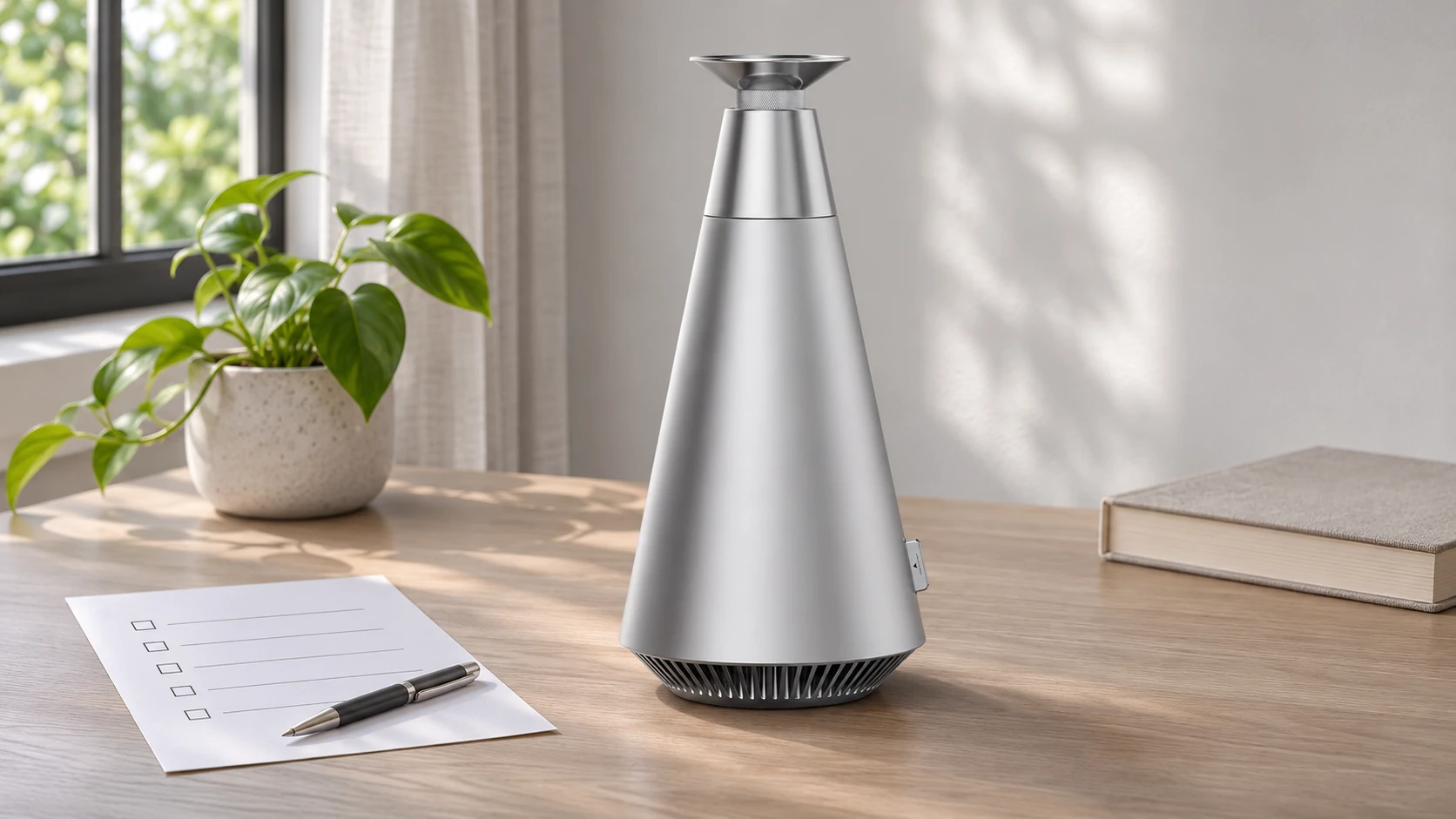
3. Request a demonstration on the ordered configuration
Ask for the product model, revision, supplied controller and current instructions. Observe the relevant physical button, app or optional handset operation separately. A function visible in an unrelated app screenshot is not evidence that the same control exists for DecoPro or DecoPlus. If the supplier says a task is available, request a simple starting-state, action and resulting-state demonstration. Where fragrance and light cannot be adjusted independently, record the actual limitation instead of inventing a sequence or promising a software change that has not been agreed.
4. Review the experience in representative lighting
Observe the sample where it will be used, with the normal room lighting, surrounding reflections and viewing position. Record whether the light is acceptable to willing occupants and whether essential feedback remains understandable. A showroom image cannot establish the brightness perceived in a dim reception area. Avoid describing a visual impression as a measured illumination value unless a suitable test was actually performed. The scene illustrations in this article are not photometric tests, proof of independent switching or a guarantee of suitability for every interior.
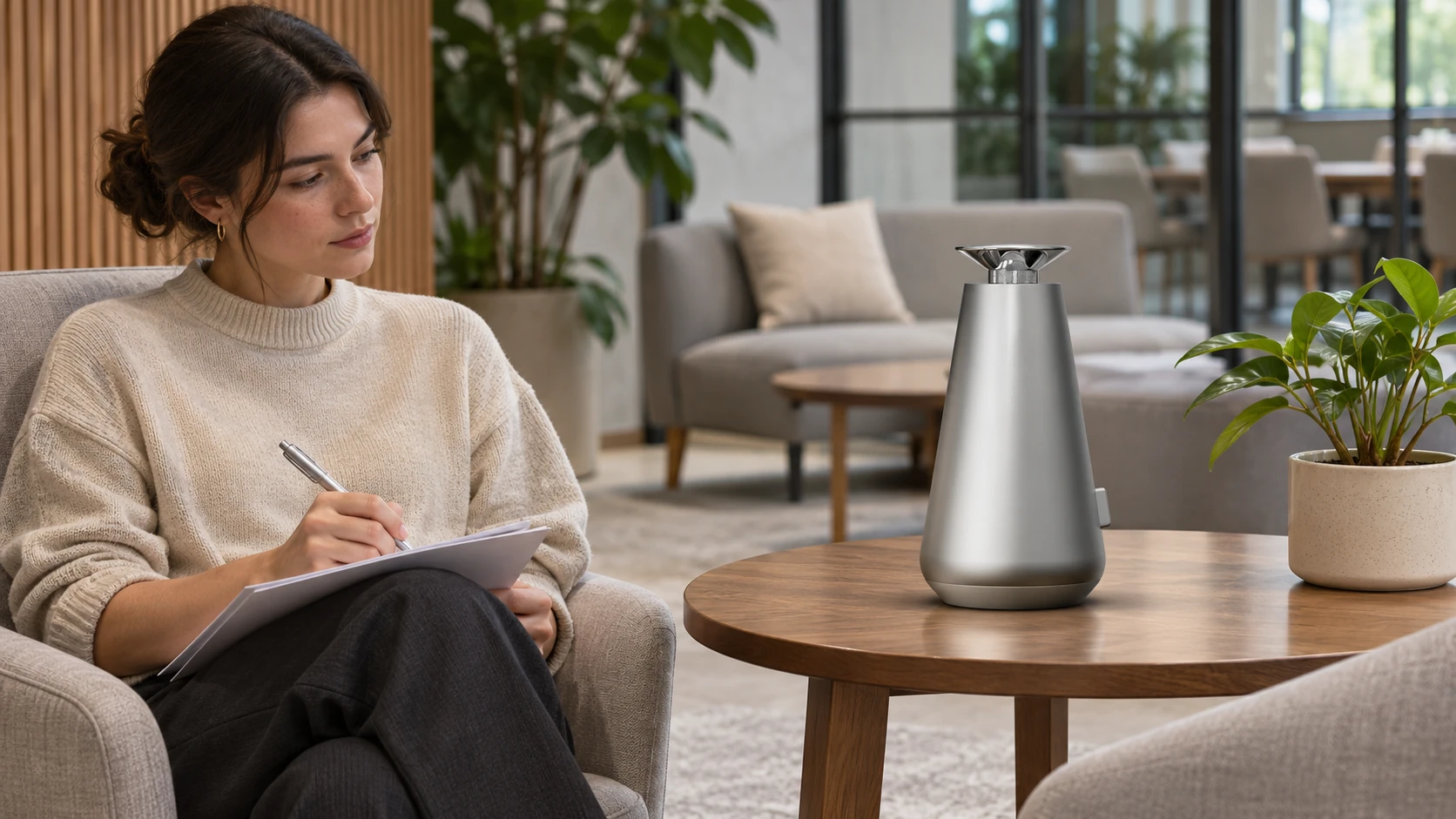
5. Check normal control changes without assuming memory
If permitted by the instructions, observe what happens after the normal start, stop or mode actions relevant to the intended routine. Ask whether the selected light behavior persists, resets or depends on a particular control interface; do not assume a memory function. Keep app and physical-control observations distinct. Only assess power interruptions under the manufacturer's allowed procedure, without electrical modifications or repeated stress testing. If the behavior is unclear, retain a simpler confirmed routine and ask support rather than relying on an undocumented reset or hidden setting.
6. Include lighting in the quotation and handover
Attach a short requirement list to the order: exact model revision, required lighting tasks, demonstrated limitations, supplied accessories and matching instructions. Separate standard functions from requested customization and optional items. A photograph showing a colored base should not become packaging copy that promises unlimited colors or dimming. Give the eventual operator the confirmed start and stop routine and a clear way to request help. This keeps the lighting decision connected to the delivered product rather than to a generic description of a smart fragrance device.
Frequently asked questions
Does ambient lighting mean I can switch the light off while scenting?
Not by itself. Confirm that exact combination on the ordered version. The presence of lighting does not establish independent switching, dimming or the same commands across interfaces.
Are a colored status indicator and ambient lighting the same thing?
They may serve different purposes. Identify each light with the current manual and sample; do not treat a gear or connection indication as a decorative-light specification.
Can a product photograph prove brightness is suitable for my room?
No. View the actual unit in representative conditions. An AI scene or supplier image is not a brightness measurement or a documented lighting-control test.
Plan your next step
Tell Aromaprox whether you are evaluating DecoPro or DecoPlus and describe the lighting tasks that matter to your users. Request a version-specific demonstration and accessory list before confirming the order. Keep any unverified lighting function marked as an open requirement rather than presenting it to customers as standard equipment.
Related resources
- DecoPro
- DecoPlus
- Scent Diffuser Remote Control vs App: Choose by Daily Tasks
- Scent Diffuser Control Accessibility: A Practical Usability Review
Images are AI-generated editorial scenarios based on Aromaprox product reference photographs. They are not test records, installation instructions or a statement of included accessories. Confirm the exact model, finish and current specifications before ordering.


