
Scent Diffuser Atomizer Cleaning: How to Prevent Clogging and Weak Output
Scent diffuser atomizer cleaning helps restore consistent fragrance output when residue, dust or incompatible oil begins to restrict the delivery path. Cleaning should be methodical: identify the symptom, isolate the machine, follow the model-specific instructions and verify performance before returning it to service.
Signs That the Atomizer Needs Attention
Weak scent output is only one warning sign. Uneven operation, a change in sound, delayed fragrance delivery, visible residue around a serviceable outlet or a sudden increase in oil consumption can also indicate a restricted path. First confirm that the schedule, intensity, oil level and power supply are correct. This prevents unnecessary disassembly when the real issue is a setting or empty bottle.
If the problem persists, compare the machine with its approved baseline. Record the oil batch, operating hours and last cleaning date. That information helps distinguish gradual residue buildup from an electrical, pump or control problem.
Prepare the Diffuser Safely
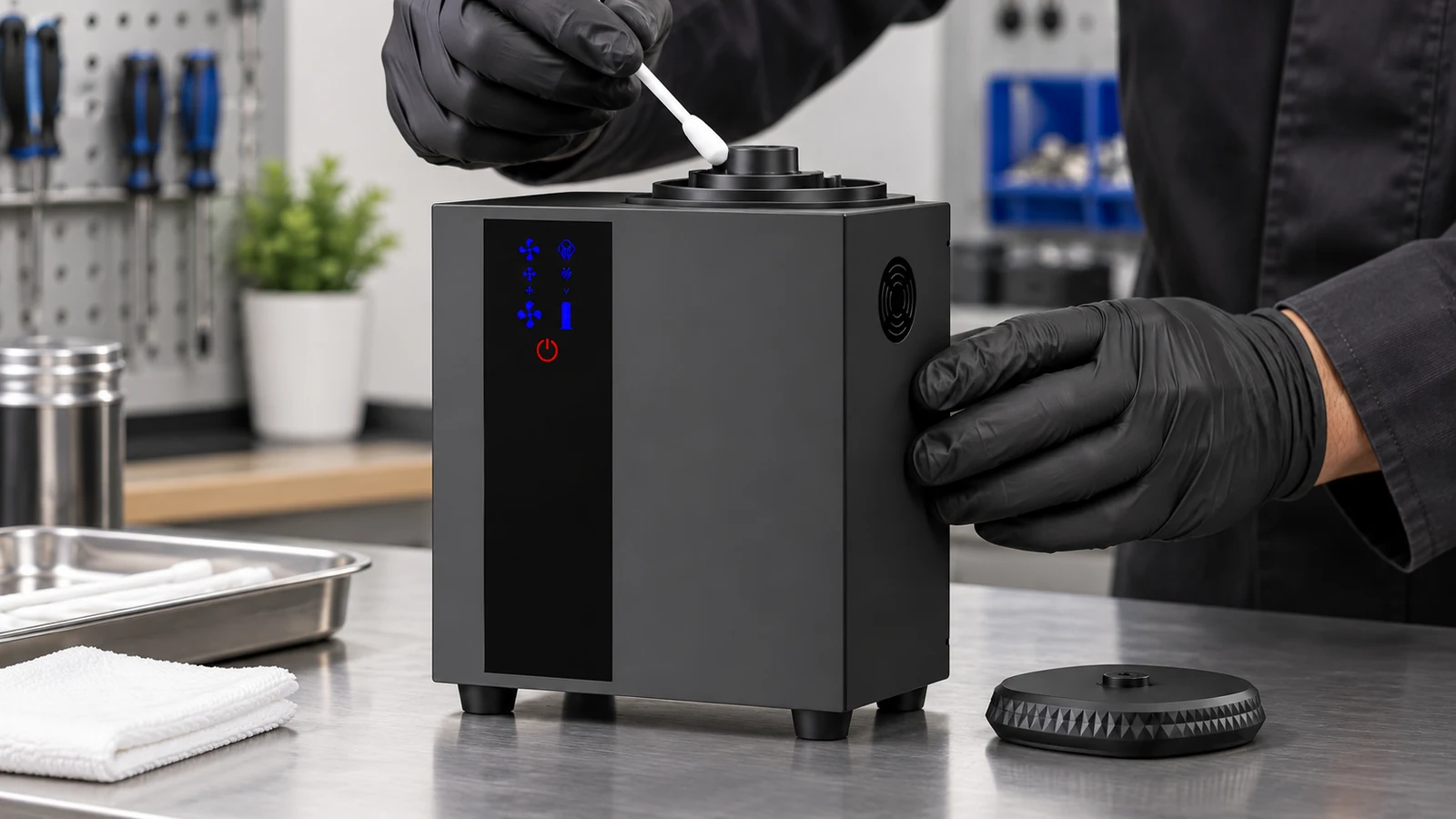
Switch off and unplug the unit before opening any service area. Move it to a stable, protected surface and wear clean gloves so dust and skin oils do not enter the fluid path. Keep the approved manual, lint-free cloths, swabs and cleaning liquid nearby. Do not substitute aggressive solvents: they may damage seals, coatings or plastic components.
Photograph the original arrangement before removing parts. Work with one component at a time and keep screws, caps and seals in a clean tray. For installation and safety context, review the HVAC scent diffuser installation guide.
Clean the Serviceable Atomizer Components
Remove only the parts identified as user-serviceable. Wipe exterior residue first, then clean the atomizing component with the manufacturer-approved method. A lightly moistened lint-free swab is often more controlled than pouring liquid directly into the assembly. Avoid bending a tube, enlarging an outlet or scratching a sealing surface.
Where a short flush cycle is permitted, use the specified cleaning fluid and duration. Never assume that procedures are interchangeable between models. Large commercial systems, desktop units and portable diffusers may use different pump, seal and atomizer designs.
Reassemble and Test One Variable at a Time
Allow cleaned parts to dry completely, inspect seals for correct seating and reassemble in the original order. Reconnect the approved fragrance oil and begin at a low intensity. Listen for normal operation and check for leaks before increasing the setting.
Evaluate scent performance in the actual room after air circulation stabilizes. Do not judge output by placing your face close to the machine. For a structured diagnosis when cleaning does not solve the problem, use the waterless diffuser troubleshooting guide.
Build a Preventive Cleaning Schedule
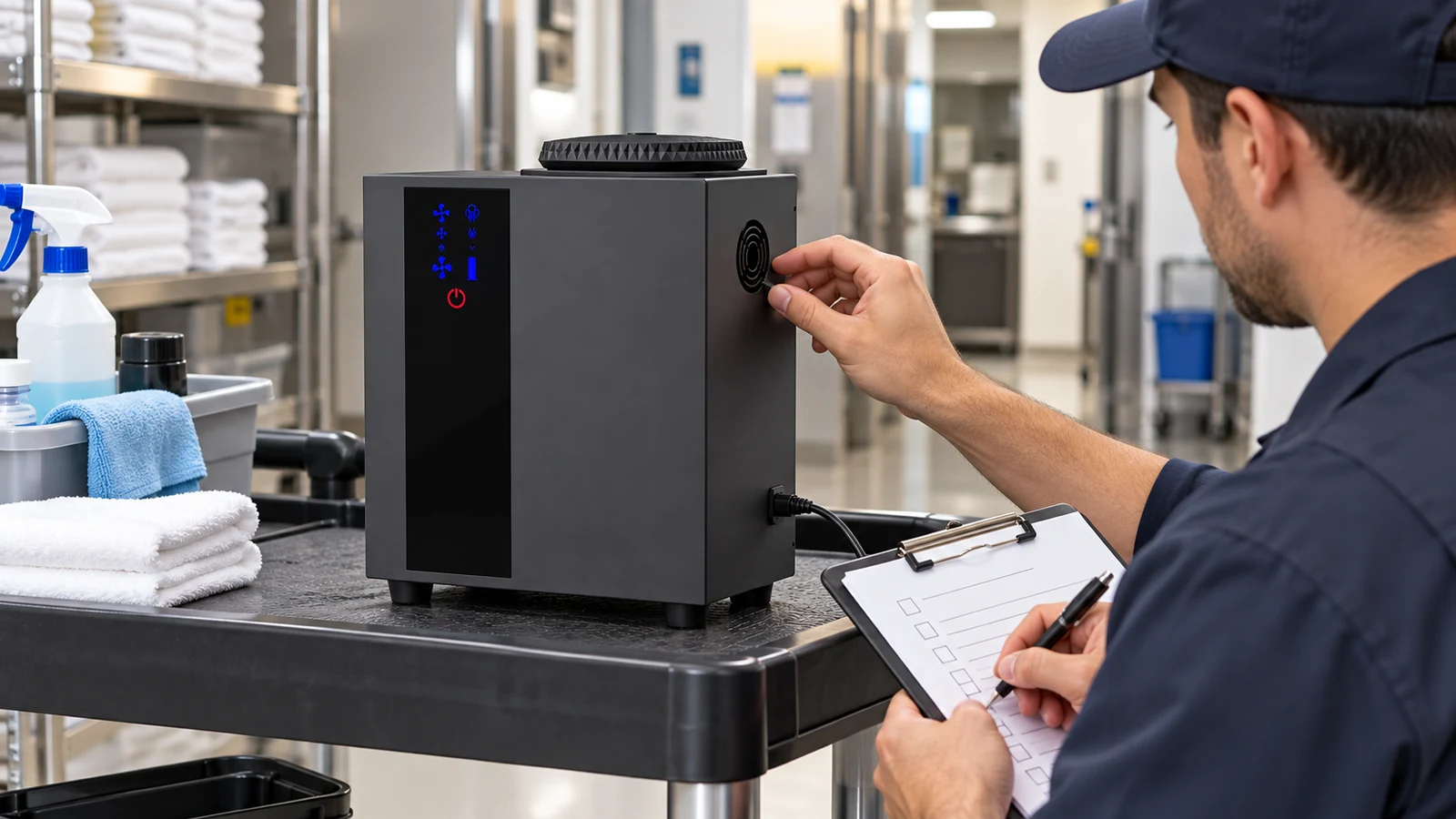
Cleaning frequency depends on operating hours, oil formulation, dust exposure and the machine design. A heavily used hospitality or retail diffuser normally needs more frequent inspection than a residential unit running a few hours per day. Keep a log of refills, oil changes, cleaning dates and unusual symptoms.
Clean before changing to a very different fragrance profile to reduce cross-contamination. Also inspect vents, cables, bottle caps and tubing. Preventive maintenance protects scent consistency and makes it easier to identify a genuine component failure.
Implementation Checklist
- Define the objective, target user and operating environment.
- Confirm the exact diffuser, oil, accessories and documentation.
- Approve a written baseline before changing settings or specifications.
- Test in realistic conditions and record the result.
- Assign one authorized person to approve changes.
- Keep samples, photographs and revision records.
- Review the program after layout, ventilation or product changes.
Frequently Asked Questions
How often should a scent diffuser atomizer be cleaned?
Follow the model manual and adjust the interval for operating hours, oil type and dust exposure. Clean sooner if output weakens or residue appears.
Can I use alcohol to clean every aroma diffuser?
No. Use only the solution and procedure approved for that specific model because alcohol or other solvents may damage seals and finishes.
Why is output still weak after cleaning?
Check oil compatibility, tubing, seals, schedule, intensity, power and pump operation. A trained technician may be needed if the baseline cannot be restored.
Should I clean the diffuser when changing scents?
Cleaning is recommended when changing fragrance families because residual oil can distort the new scent and contribute to buildup.
Discuss Your Project With Aromaprox
Need model-specific cleaning guidance or replacement components? Send the model, oil type and operating symptom to Aromaprox.


