
HVAC Scent Diffuser Installation Guide: Connection Points, Safety and Commissioning
HVAC scent diffuser installation is an engineering and operations task, not simply a matter of placing a fragrance machine beside an air duct. A successful project matches the diffuser to the air-handling zone, follows the exact product instructions and provides safe access for refilling, cleaning and inspection.
This guide gives hotel, retail and facilities teams a practical planning framework. Final electrical, duct and building-work decisions should be completed by qualified personnel under local requirements and the instructions for the exact machine.
1. Confirm the Exact Equipment and Approved Method
Begin with the model, power requirements, oil capacity, control method and manufacturer installation instructions. Do not assume that two commercial diffusers connect in the same way. Document the unit, accessories and intended HVAC zone before work begins.
For large commercial projects, compare current models on the business aroma diffuser page and request the matching installation documentation.
2. Map the HVAC Zone Before Choosing a Location
Record which rooms share the air-handling zone, operating hours, supply and return locations, filtration stages and seasonal changes. A diffuser cannot create consistent results when the target rooms are served by unrelated systems or when ventilation is frequently switched off.
- Mark all rooms served by the zone.
- Note doors, exhaust systems and high-loss areas.
- Confirm the ventilation schedule.
- Keep food preparation and fragrance-sensitive zones separate.
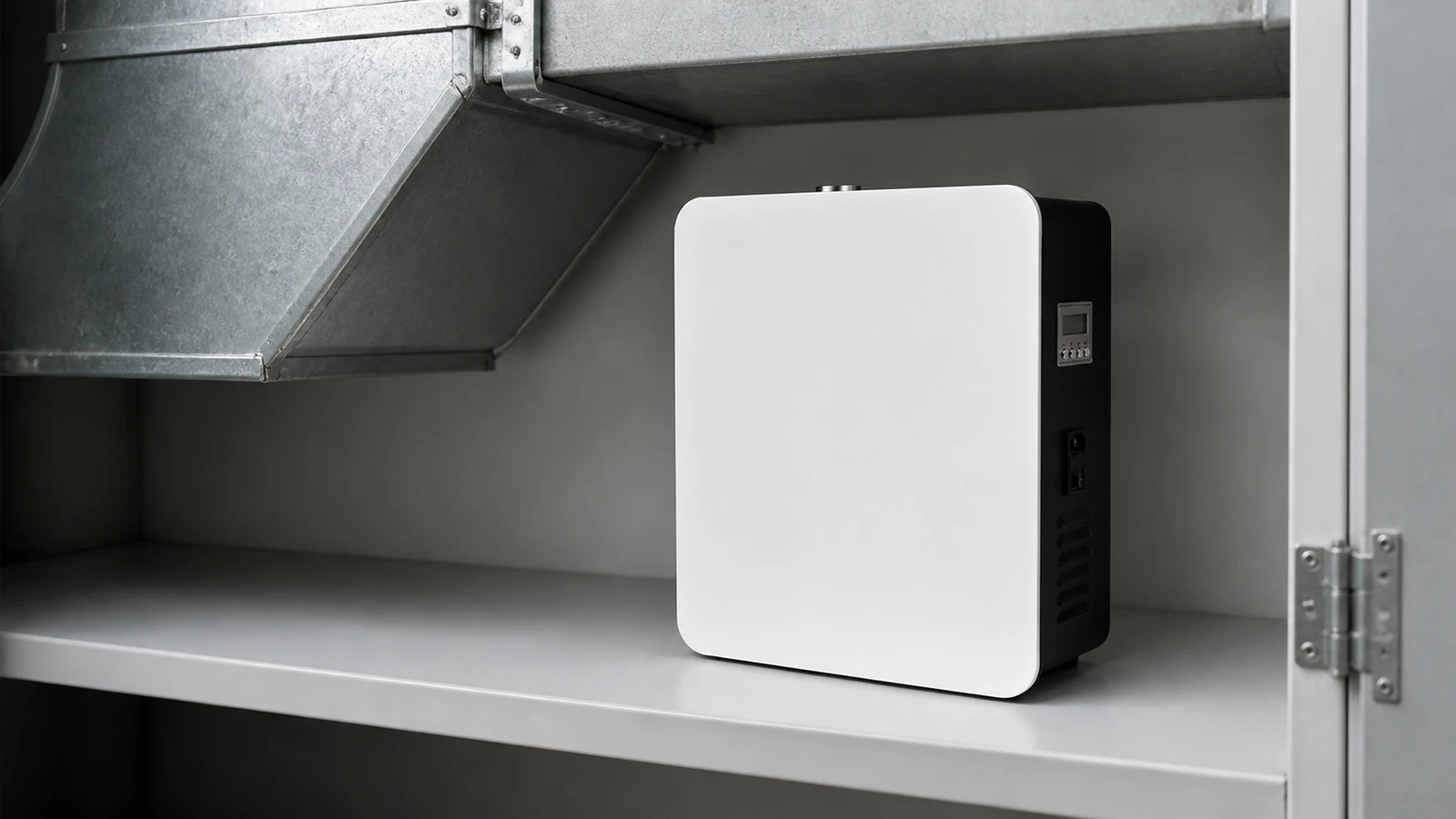
3. Choose a Safe, Serviceable Equipment Position
The machine needs a stable position, suitable power access and enough clearance for routine service. It should not obstruct filters, dampers, fire controls or HVAC maintenance panels. Protect it from heat, water, vibration and accidental impact.
The product shown here retains its original top connection hardware; the final connection arrangement must follow the exact model instructions rather than a generic photograph.
4. Plan Controls and Operating Hours
Schedule scent delivery around actual occupancy and ventilation. Starting the diffuser long before the air handler runs can create a concentrated local zone, while operating after closing wastes oil. Assign one authorized setting owner so different staff members do not make conflicting adjustments.
5. Commission at a Low Setting
Commission the installation under normal doors, ventilation and occupancy conditions. Begin low, wait for the space to stabilize and walk the entire served zone. Record weak points, concentrated points and oil use. Change one variable at a time.
- Verify the equipment is secure and accessible.
- Run normal ventilation.
- Start with a conservative duty cycle.
- Evaluate several rooms and times of day.
- Document the approved setting.
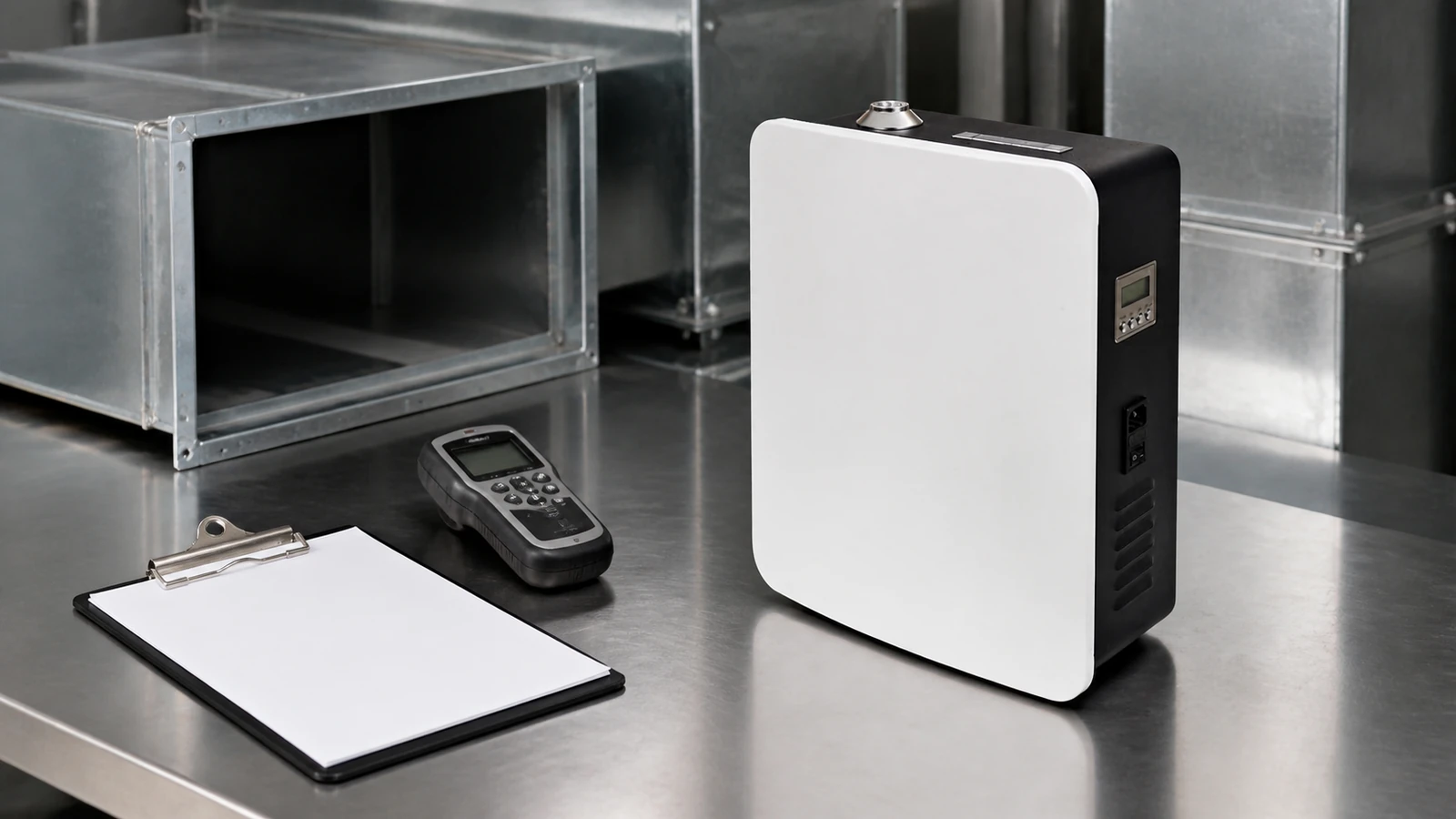
6. Create a Maintenance and Safety Record
Maintain a log for refill dates, oil batches, cleaning, setting changes and reported issues. Include the machine in facilities inspections and train staff on spill response and safe oil handling. Review the EPA workplace indoor-air guidance when building the wider IAQ plan.
Implementation Checklist
Before rollout, turn the recommendations into a written site plan. Record the intended zone, product model, exact position, approved fragrance, starting program, operating hours and person responsible for refilling and inspection. Photograph the approved installation and retain the current product instructions with the maintenance record.
- Confirm the objective and target zone.
- Verify the current product specification.
- Review airflow, access, power and safety.
- Begin with a conservative program.
- Evaluate at more than one time of day.
- Collect feedback from new visitors as well as staff.
- Record oil use, maintenance and setting changes.
- Review the plan after layout, season or ventilation changes.
A documented baseline prevents different locations or team members from making uncoordinated changes. It also provides first-party operating data that can improve future product selection, refill forecasting and multi-site quality control.
Frequently Asked Questions
Can any scent diffuser connect to HVAC?
No. Use only a model and connection method approved by the manufacturer for the intended application.
Where should an HVAC scent diffuser be installed?
Use a secure, serviceable equipment location that follows the exact product instructions and does not obstruct HVAC components.
How strong should the first setting be?
Begin conservatively and increase only after evaluating the complete served zone under normal operation.
Who should perform the installation?
Qualified electrical or HVAC personnel should complete regulated building work and follow local requirements.
Plan the Installation Around the Building
Share the HVAC zones, operating schedule and project requirements through Aromaprox contact for current model guidance.


