
Real Estate Showroom Scent Marketing: A Practical Planning Guide
Real estate showroom scent marketing can support the atmosphere of a sales gallery when fragrance, interiors and the visitor journey communicate the same positioning. The objective is not to make a property smell strong; it is to create a controlled, repeatable environment from arrival to model viewing and consultation.
1. Define the Property Positioning
Translate the project into clear sensory language: urban, coastal, natural, family-oriented, minimal or luxurious. Select fragrance directions that support the materials and setting without implying unsupported features of the future property.
2. Map the Sales Journey
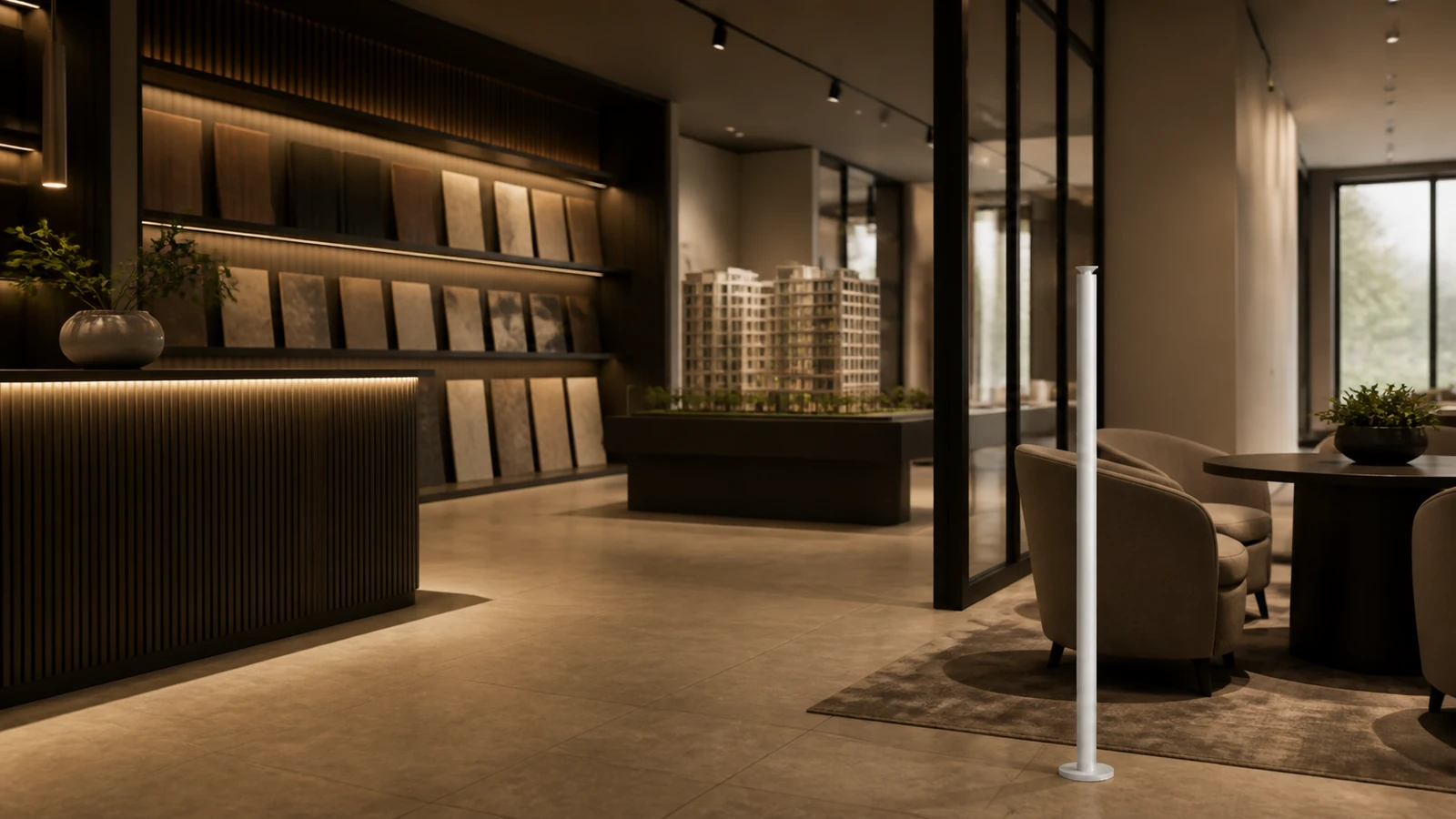
Walk the entrance, reception, architectural model, sample display, mock-up apartment and consultation area. Identify where guests pause and where exterior air or doors disrupt continuity.
3. Assign a Role to Each Zone
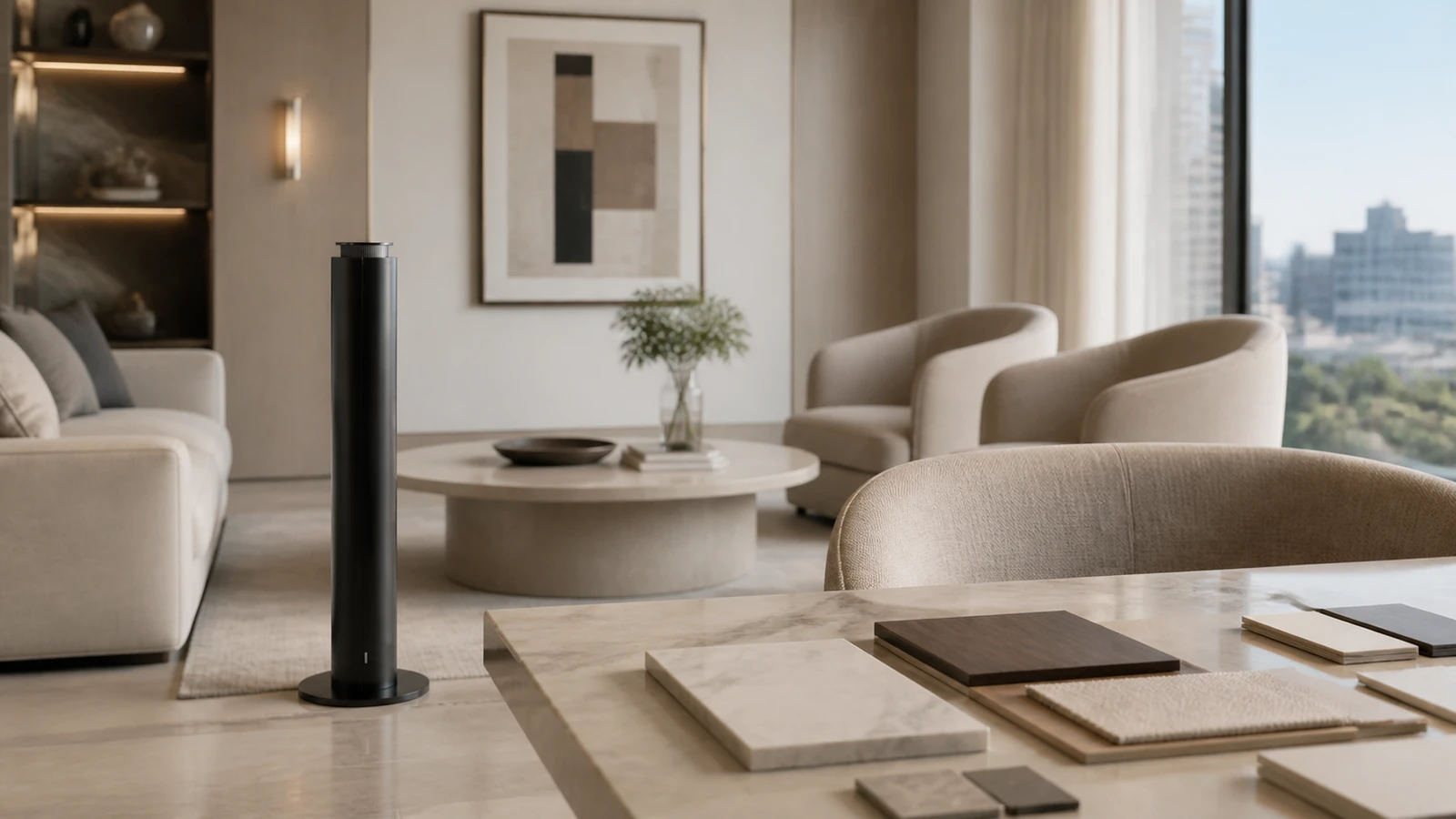
The entrance can establish recognition, the model area can carry the core identity and the consultation lounge should remain softer for longer conversations. Avoid placing a device directly beside seating or refreshments.
4. Match Product Format to the Gallery
Slim freestanding products can integrate with premium interiors while retaining service access. Select by room volume, airflow, noise, controls and oil capacity rather than appearance alone. Use the commercial diffuser selection guide for the hardware decision.
5. Create a Daily Operating Standard
Document start time, approved settings, refill responsibility and how staff should respond to feedback. Coordinate with cleaning and event schedules. Keep fragrance batches consistent during a campaign.
6. Measure Experience Without Overclaiming
Use short visitor feedback, staff observations, complaints, dwell patterns and oil consumption. Record other campaign changes before attributing commercial results to scent. A showroom program should be treated as an operational brand test.
Implementation Checklist
Before rollout, turn the recommendations into a written site plan. Record the intended zone, product model, exact position, approved fragrance, starting program, operating hours and person responsible for refilling and inspection. Photograph the approved installation and retain the current product instructions with the maintenance record.
- Confirm the objective and target zone.
- Verify the current product specification.
- Review airflow, access, power and safety.
- Begin with a conservative program.
- Evaluate at more than one time of day.
- Collect feedback from new visitors as well as staff.
- Record oil use, maintenance and setting changes.
- Review the plan after layout, season or ventilation changes.
A documented baseline prevents different locations or team members from making uncoordinated changes. It also provides first-party operating data that can improve future product selection, refill forecasting and multi-site quality control.
Frequently Asked Questions
What scent works in a real estate showroom?
Choose a fragrance direction that supports the project’s positioning and test it in the finished gallery.
Where should the diffuser be placed?
Use a secure location with open airflow that supports a priority visitor zone without concentrating scent beside seating.
Should the mock-up apartment use the same intensity?
Usually not; smaller enclosed spaces often require a lower independent setting.
How should results be measured?
Combine visitor feedback and operational data while documenting other marketing or layout changes.
Align Fragrance With the Property Story
Discuss gallery zones, brand mood and product formats through Aromaprox.


