
Fragrance Oil Viscosity for Diffusers: What Buyers Should Check
Fragrance oil viscosity for diffusers is a compatibility question, not a shortcut for judging fragrance quality. A liquid that looks thicker does not automatically produce a stronger or longer-lasting scent. Buyers need to know how a viscosity value was measured and whether the formulation is suitable for the exact delivery system they intend to use.
1. Distinguish flow behavior from scent quality
Viscosity describes resistance to flow under stated conditions. It is not the same as fragrance concentration, density, oil capacity or perceived intensity. Visual comparisons made by tilting two bottles cannot establish a numerical specification. A neat-looking liquid may still be incompatible with a particular device, while a suitable formulation may have a different appearance from another scent. Start with the application and supplier documentation instead of choosing whichever sample appears thickest.
2. Ask what the reported number actually means
Request the value, units, measurement temperature and test method together. Liquid viscosity depends on temperature, so controlled measurement conditions matter. AMETEK Brookfield: Viscosity and Rheology FAQs Do not compare a result obtained under one condition with another result whose conditions are missing. If the supplier reports a range, ask whether it represents a product specification or observed variation. Have the supplier or a qualified laboratory resolve inconsistent units rather than converting an incomplete value by guesswork.
3. Check the complete formulation against the device
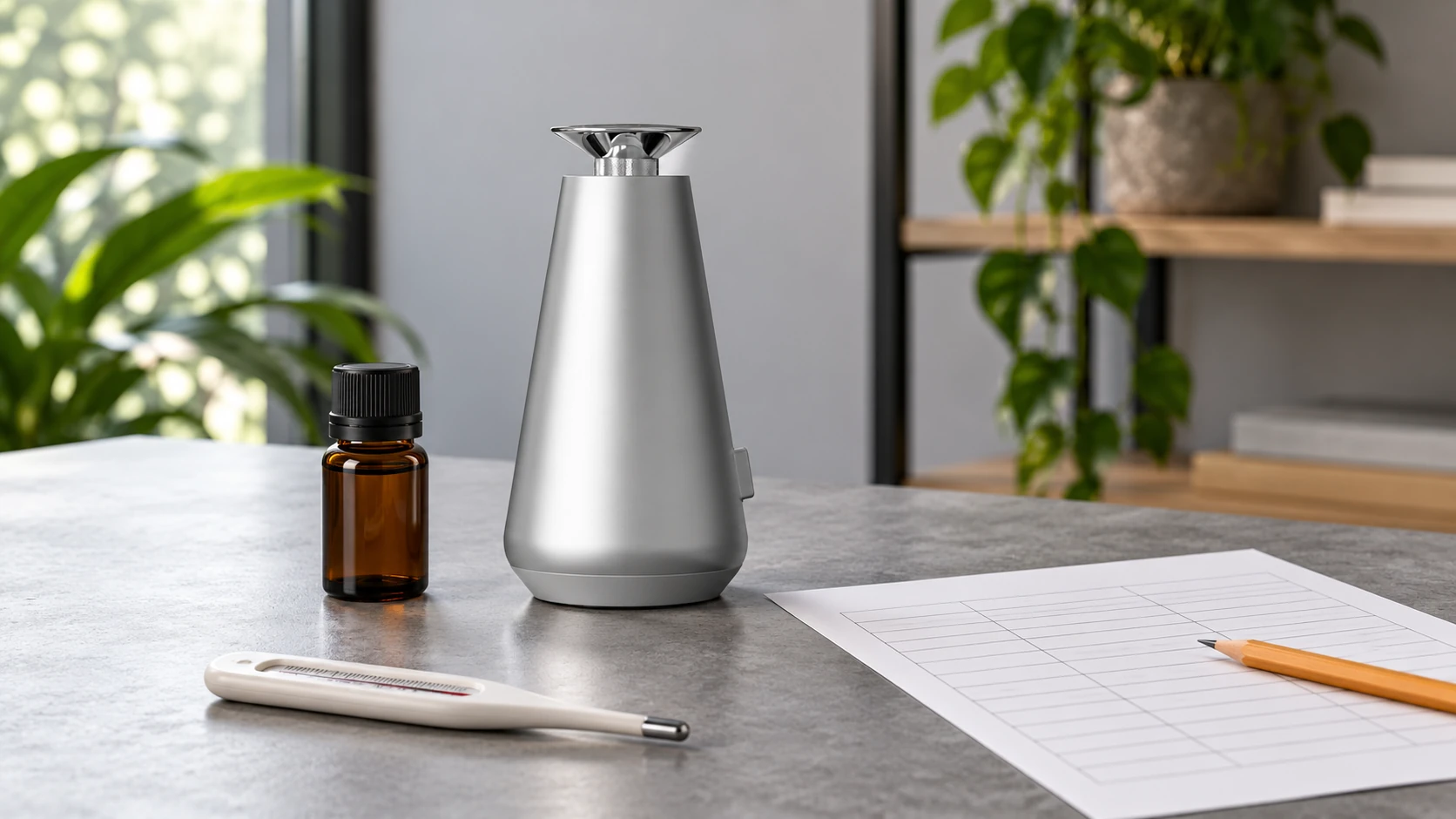
A viscosity figure alone does not establish that a fragrance is approved for a diffuser. Ask about intended use, the liquid specification and material compatibility for the exact model and version. A product photo such as the SC02 illustration cannot show its internal liquid path or prove a suitable viscosity range. Do not transfer approval from a reed system, a heated warmer or another manufacturer's device simply because the oil flows similarly.
4. Plan a documented normal-use evaluation
Use a supplier-approved sample and the manufacturer's normal operating instructions. Record the liquid identity, unit version, permitted settings, room conditions and any operating observations. Keep comparison conditions consistent and document interruptions. This is an application review, not a certified viscosity or droplet-size test. Where a technical measurement is needed, agree the method and acceptance criteria with the supplier before ordering professional testing. No universal pass limit is provided by this article.
5. Avoid improvised corrections
Adding water, alcohol or another carrier changes the formulation and may create incompatibility or handling risks. Heating a bottle to make it flow more freely is not a suitable substitute for supplier approval. If output changes after switching liquids, stop the comparison and identify what changed before making adjustments. Preserve labels and observations, and follow the manual for any inspection. Do not open non-serviceable parts or repeatedly force an unsuitable liquid through the device.
6. Put the agreed requirements into the order
Keep the approved fragrance identity and relevant specification revision with the diffuser order. State who confirms compatibility and what happens if the formulation changes. Ask for repeat-order documentation that links the supplied product to the approved specification. Separate fragrance preference, room intensity and liquid compatibility in your records; they require different evidence. This reduces the risk that an attractive scent sample is treated as approval for an untested operating combination.
Frequently asked questions
Is thicker fragrance oil better for a diffuser?
Not automatically. Suitability depends on the formulation and exact device. Thickness is not a reliable measure of scent quality or persistence.
What is the ideal viscosity for every cold-air diffuser?
There is no universal value established here. Obtain the allowed specification and measurement conditions for the particular model and liquid.
Can I dilute an oil that does not work well?
Only use a formulation and preparation method expressly approved by the relevant supplier and device manufacturer. Do not improvise a thinning recipe.
Plan your next step
Ask Aromaprox to confirm the exact diffuser version and its approved fragrance requirements. Provide the oil's technical information when requesting compatibility advice rather than relying on its appearance.
Related resources
Sources and further reading
Images are AI-generated editorial scenarios based on Aromaprox product reference photographs. They are not test records, installation instructions or a statement of included accessories. Confirm the exact model, finish and current specifications before ordering.


