
Fragrance Oil Batch Consistency: Compare Deliveries to a Reference
Fragrance oil batch consistency matters when a brand expects repeat deliveries to support a recognizable scent. A perceived difference deserves investigation, but it does not by itself prove a defective batch. Sample age, storage, presentation and the diffuser can all complicate a comparison. Start with traceable evidence before changing the fragrance or rejecting stock.
1. Establish a usable reference
Agree which approved product and revision define the comparison. Retain a labeled sample in a compatible, tightly closed container under the supplier's storage instructions. Record the batch, receipt date, opening date and storage history. A repeatedly opened, poorly stored or very old sample can itself change; it should not automatically be treated as an unquestionable standard. Agree replacement and retention rules with the supplier.
2. Check identity before checking scent
Compare the order, fragrance code, formulation revision where provided, batch labels and delivery paperwork. Inspect the packaging and note any leakage or unusual appearance without assuming a cause. Confirm whether the same concentration and intended application were supplied. Similar commercial names do not establish identical formulations. Ask for relevant batch information; do not invent acceptance limits from a marketing description.
3. Make the sensory comparison repeatable
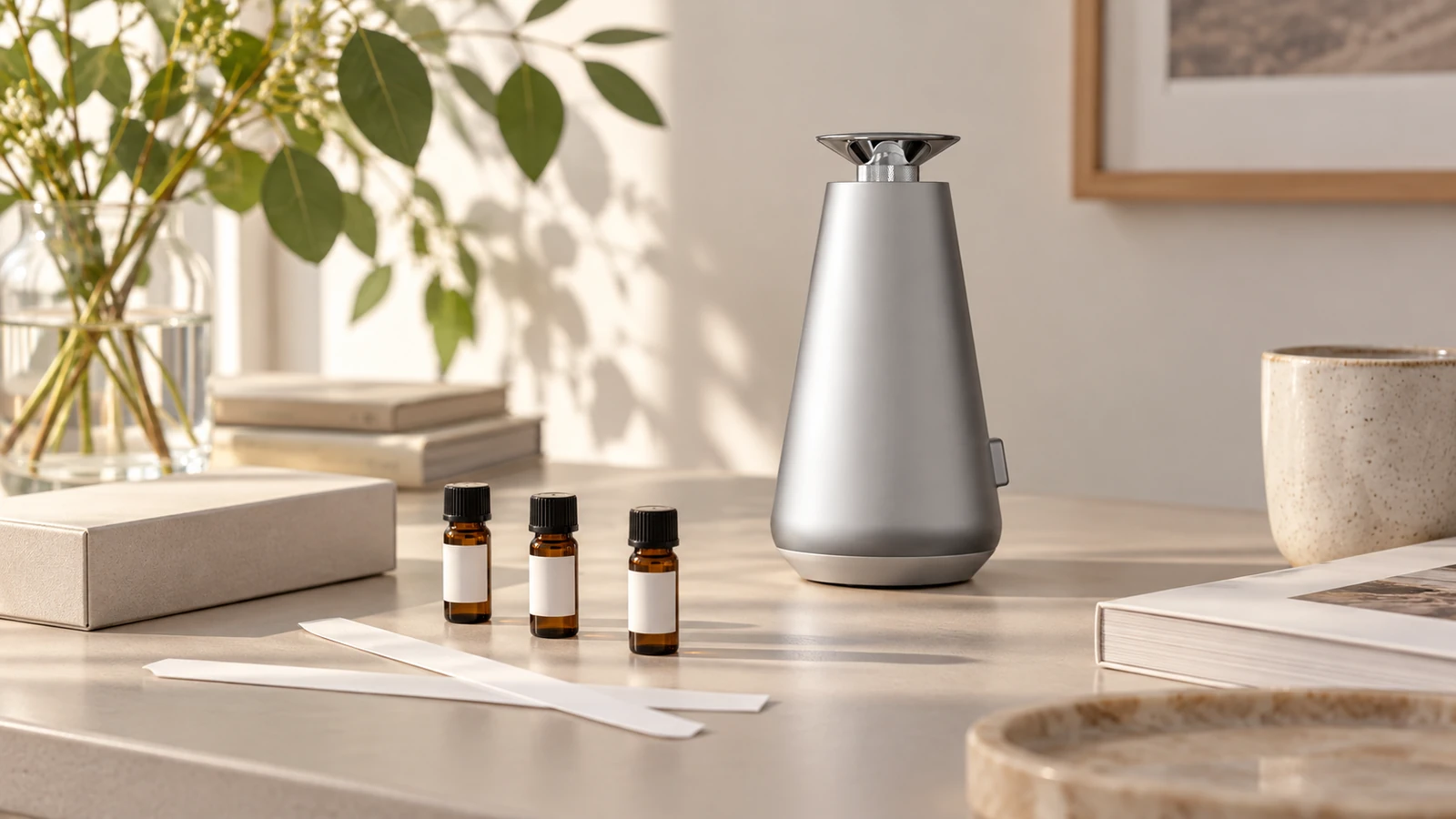
Use a low-odor evaluation area and the same presentation method for reference and incoming samples. Where the supplier recommends blotters, use matching strips, consistent loading and matched elapsed times. Code samples neutrally, keep them separated and record observations before discussing them with others. Take breaks and avoid evaluating many samples in succession. Do not apply room-fragrance oil to skin or taste it. This is a screening procedure, not a certification test.
4. Separate liquid differences from machine conditions
If the concern appears only during diffusion, record the machine, maintenance state, approved oil, settings, room and evaluation time. Compare sequentially under controlled conditions, following the model's approved cleaning procedure between liquids. Residual fragrance or different settings can confuse the result. A DecoPro may illustrate the evaluation context, but it is not a laboratory instrument that certifies the composition or conformity of an oil.
5. Use a concise comparison record
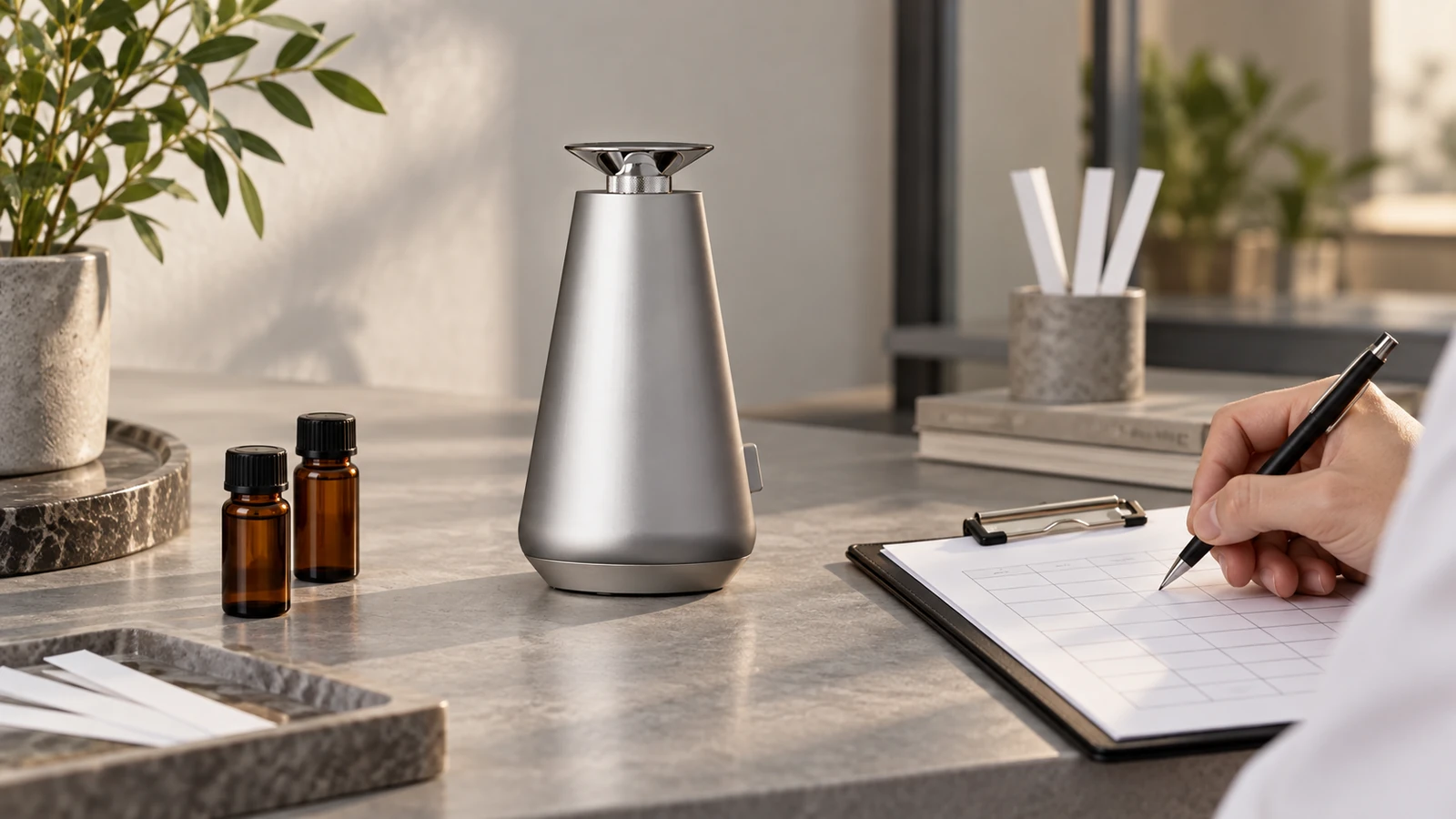
Record reference and incoming batch IDs, sample condition, evaluation method, timing, descriptors, observed differences and reviewer names. Distinguish intensity from character: 'less intense at the agreed observation time' is more useful than 'wrong smell.' Repeat an unexpected result under the same documented conditions. Do not blend batches or alter the liquid in an attempt to hide a difference before the investigation is complete.
6. Resolve discrepancies with the supplier
Send the traceability details and observations, preserving both samples. Ask whether further evaluation against the agreed specification is needed and who can authorize release. Keep affected stock identifiable while the decision is pending. Possible outcomes include a confirmed match, a reference-sample issue, additional testing or agreed corrective action. Record the evidence and decision rather than treating personal preference as the acceptance standard.
Frequently Asked Questions
Does a color difference prove a fragrance batch is defective?
No. Appearance should be assessed against the agreed specification and supplier information. Record the difference and investigate instead of making a conclusion from color alone.
Can a retained sample be kept indefinitely?
Do not assume so. Its suitability depends on the formulation, container, age and storage history. Agree a retention policy with the supplier.
Is batch consistency testing the same as a fragrance preference test?
No. Preference testing asks which scent people like. Batch comparison asks whether a delivery matches an agreed reference within the applicable acceptance criteria.
Discuss Your Application
Contact Aromaprox with the fragrance code, batch identification and comparison conditions. For first-time liquid selection, use the separate fragrance-oil compatibility guide before conducting a repeat-batch comparison.
Related resources
AI-generated editorial illustrations based on Aromaprox product references; not photographs of a documented test or customer installation. Confirm specifications and procedures for the actual model.


