
Build an Aroma Diffuser Demo Station That Helps Buyers Decide
An aroma diffuser demo station should help a buyer understand the product, not overwhelm them with fragrance. A distributor needs a repeatable way to explain controls, physical fit and service requirements while recording the customer's application. A polished counter is useful only when the demonstration produces a clear next step.
1. Define the buyer's decision first
Ask where the unit will be used, who will refill it and which installation constraints matter. A compact car-oriented SC02 and a desktop DecoPro are different reference formats, not interchangeable promises of performance. Choose a small, relevant shortlist. State whether the counter shows a standard unit or a customization sample, and identify any feature that is not included in the offered configuration.
2. Divide the counter into clear functions
Provide a dry area for product handling and specification cards, a controlled operating position and a place for notes. Keep liquids closed except during an approved procedure. Leave the outlet clear, secure cables and use the specified power supply. Avoid running several scents together. Offer a product-only explanation to visitors who do not want a scented demonstration; do not require them to approach the outlet.
3. Put verified information beside the machine
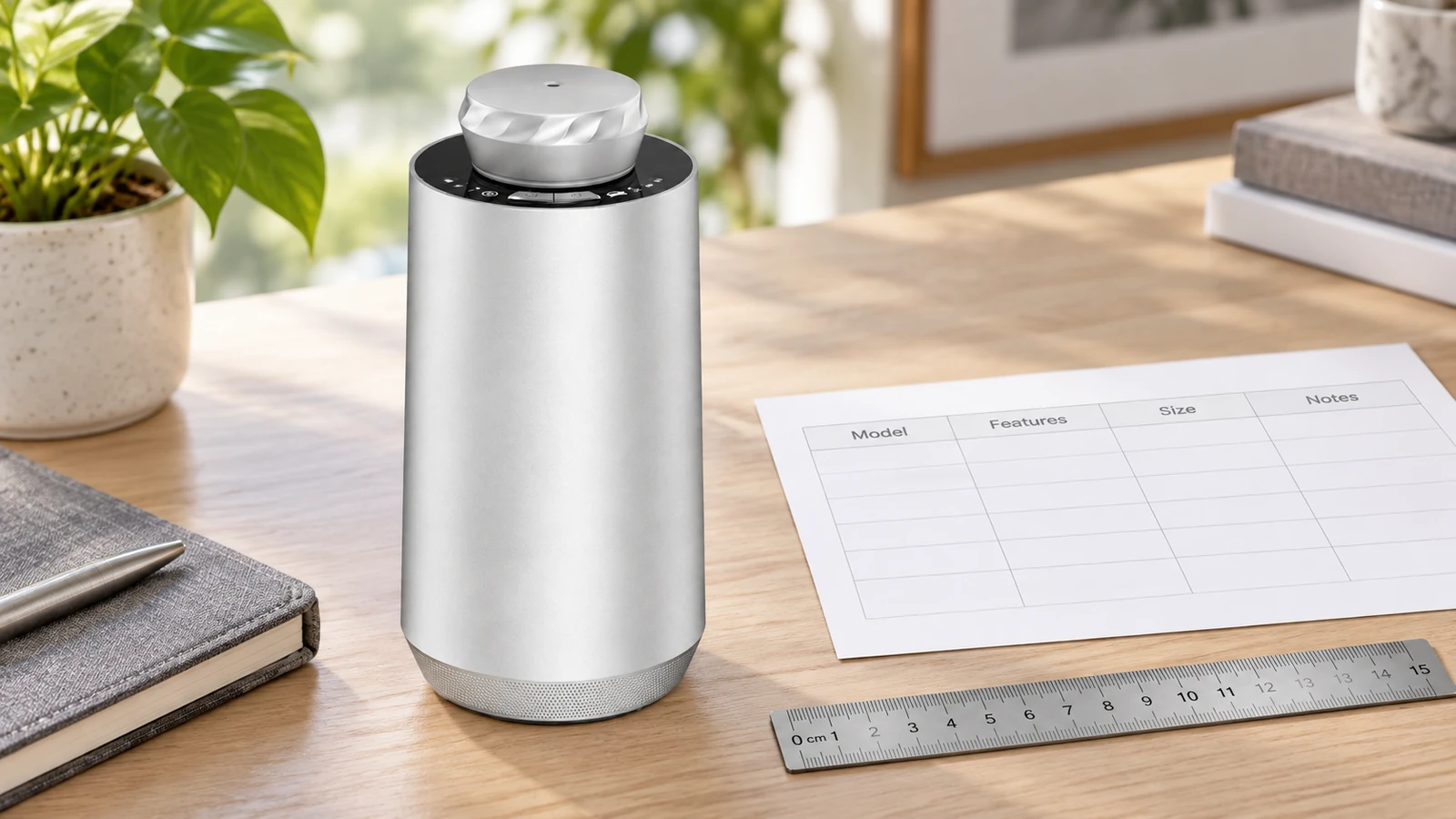
Use a model-specific card showing the exact configuration, dimensions, power method, supported controls, supplied contents and service requirements. Date the card and identify its source. Coverage figures need context, not an unconditional promise. A photograph of another version should not imply that the demonstrated unit includes its battery, accessory or software feature. Keep quotation terms separate from technical observations.
4. Use a repeatable demonstration sequence
Begin with the exterior and intended placement. Show starting and stopping, then one supported adjustment and the refill access described in the manual. Isolate power before any service demonstration that requires it; never improvise disassembly. If a fragrance trial is appropriate, use an approved oil and a conservative setting. Explain what the buyer can observe here and what requires testing in their own space.
5. Record questions and limitations
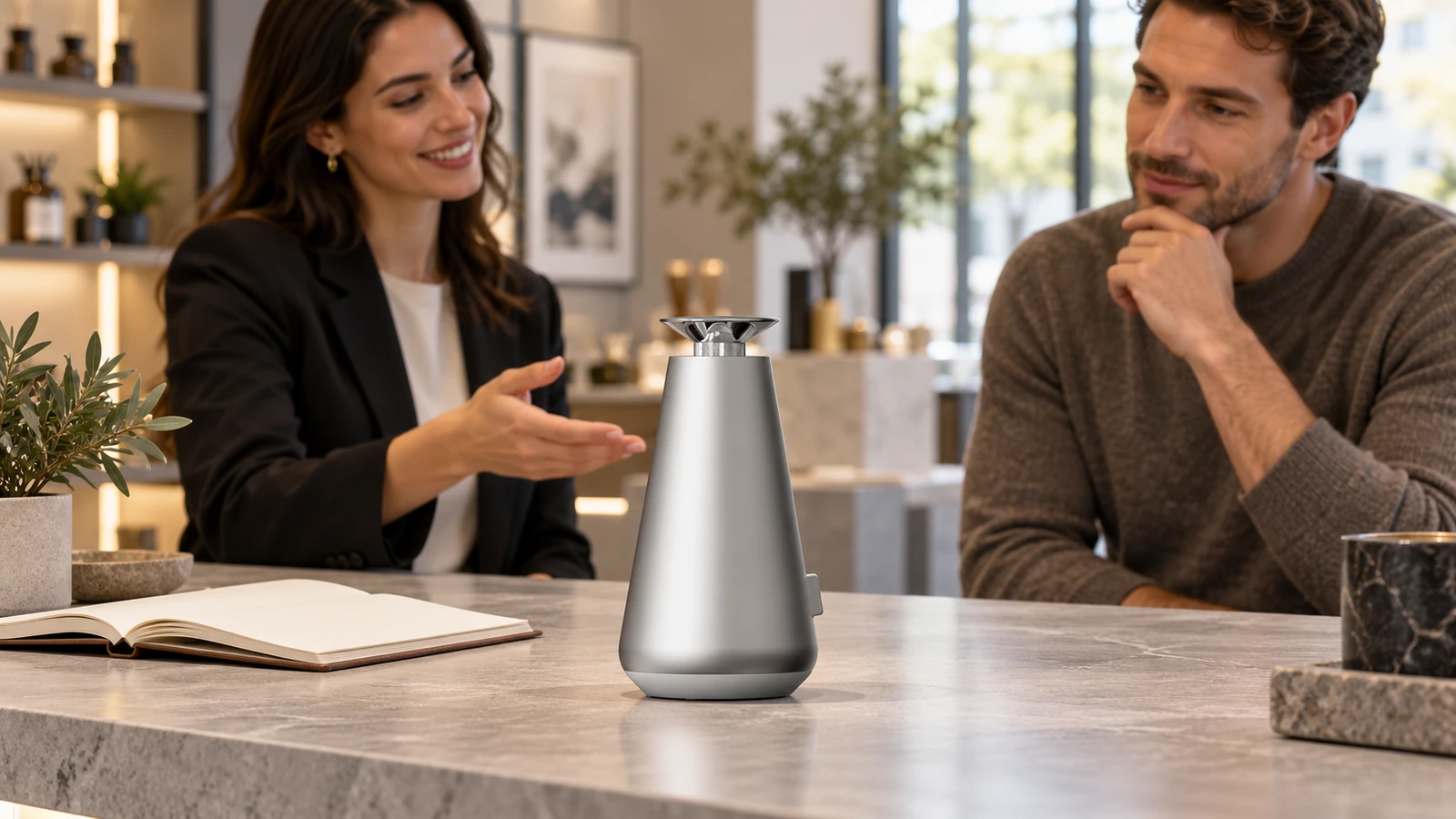
Use a short consultation record: application, preferred format, essential features, fragrance feedback, unanswered questions and the agreed next action. Record the actual demonstrated model and settings. A showroom impression cannot establish coverage, battery life or noise performance for every customer location. Arrange a suitable follow-up when the buying decision depends on those factors rather than presenting a brief counter demonstration as a laboratory test.
6. Reset the station and follow up
After each session, stop the unit as appropriate, close samples, restore the documented setup and allow lingering scent to clear. Check that cards still match the displayed products. Assign an owner to inspect the station before opening. Send the buyer the correct model sheet and a summary of unresolved points, then confirm the next step: quotation, sample request or a controlled site evaluation.
Frequently Asked Questions
How many diffusers should run at once?
For a clear scent demonstration, operate one at a time. Several displayed models can remain off while their physical features are compared.
Should the demonstration use maximum output?
No. Begin conservatively and follow the model instructions. The purpose is an understandable demonstration, not the strongest possible smell.
Can a showroom demo replace a site trial?
Not when the decision depends on the customer's airflow, layout or operating conditions. Use the demonstration to define what the site trial must confirm.
Discuss Your Application
Ask Aromaprox for current SC02 or DecoPro product information and the configuration relevant to your buyers. Share the demonstration setting and target application before requesting samples.
Related resources
AI-generated editorial illustrations based on Aromaprox product references; not photographs of a documented test or customer installation. Confirm specifications and procedures for the actual model.


