
Diffuser Reservoir Capacity vs Fill Level: What Can You Add?
Diffuser reservoir capacity vs fill level is a practical distinction whenever a bottle is replenished. A capacity shown in a quotation identifies a reservoir specification; it does not automatically provide the amount to pour during every refill. The actual bottle, atomizing assembly and instructions matter. Aromaprox SP01 and DecoPro have different documented bottle arrangements, so neither a shared unit of measurement nor a similar photograph establishes a common filling rule.
1. Separate a specification from an operating instruction
Nominal reservoir volume is one item in a product description. A filling instruction explains how that particular container should be prepared and reassembled. Those are related but different pieces of information. The SP01 manual identifies an oil bottle and its associated parts, while DecoPro documentation shows its own removable bottle and atomizing assembly. Keep the model, bottle identity and manual revision together. Do not transfer a volume or an apparently convenient filling height from one product to another, even when both are described as waterless diffusers.
2. Obtain the correct limit before measuring a refill
Ask whether the supplied bottle has a marked maximum or another documented filling method. If a limit exists, request an explanation that matches the actual bottle, not a generic reservoir image. If no limit is provided in the material available to you, record that information gap and ask for the current instruction. This article does not invent a fill percentage, a required headspace measurement or a visual mark. A missing instruction is a question to resolve, not permission to fill the container to its rim.
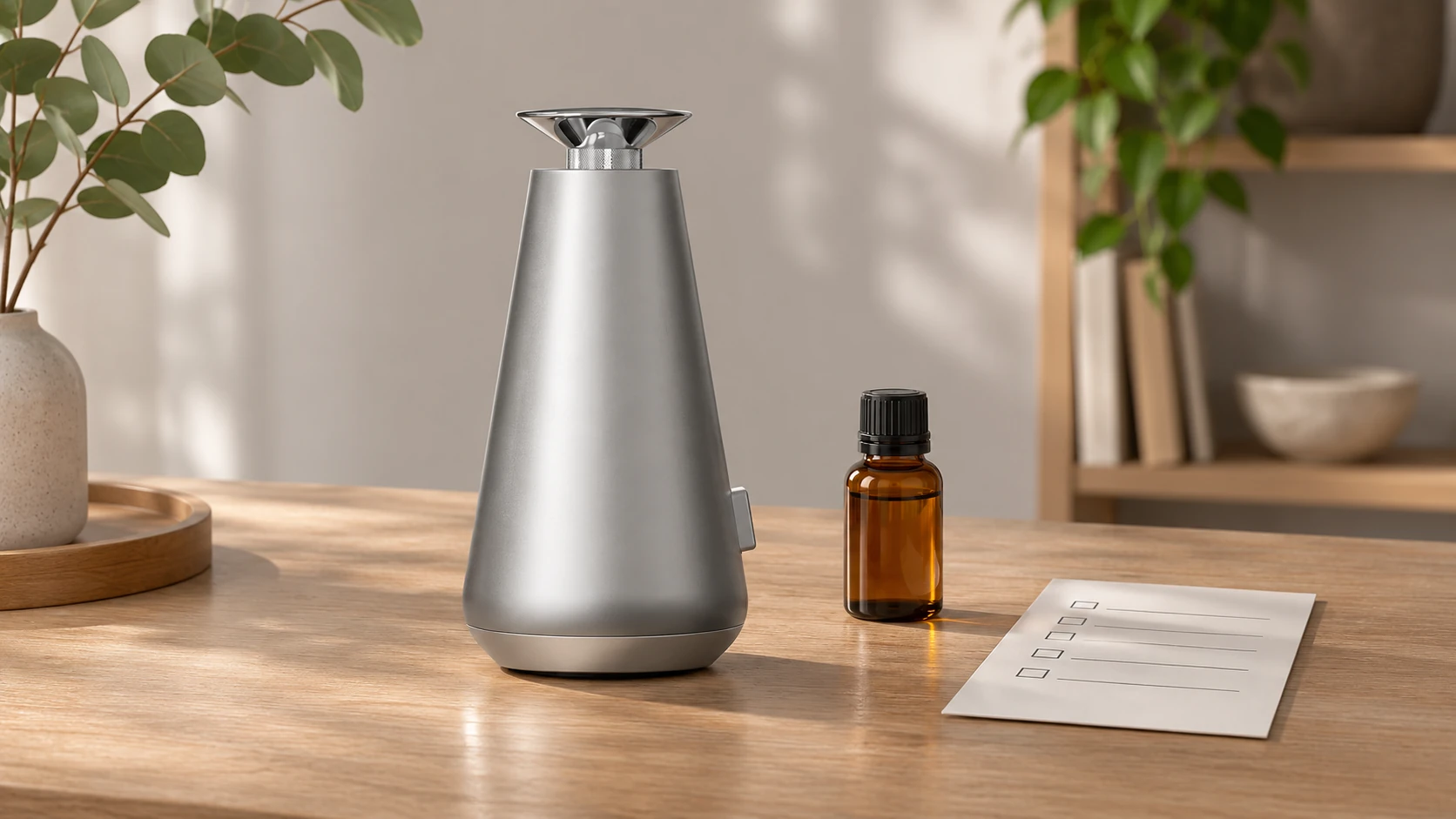
3. Account for the assembly without improvising a formula
A bottle works with a cap or atomizing assembly and the model's specified internal components. Their fit matters during normal reassembly. The presence of an intake tube or seal does not give an operator enough evidence to calculate a new filling limit. Do not trim a tube, remove a gasket or change a container to make more liquid fit. Use the approved matching parts and stop if the bottle cannot be reassembled normally. Ask support to confirm the intended arrangement instead of compensating for an unexplained obstruction.
4. Replenish only under the model's approved procedure
Stop the diffuser and follow its instructions before accessing the bottle. Use a suitable stable preparation area and keep liquid away from electrical parts. The reviewed manuals include upright-handling and user-service boundaries; they do not authorize filling an operating machine through its outlet. Do not tilt a filled device to make an oil level look easier to read. Choose an appropriate measurement method only after the approved quantity or limit is known. Do not assume that an ordinary drinking measure, unmarked bottle or another device's cap provides a valid reference.
5. Keep remaining liquid separate from added quantity
If the approved routine allows replenishing an existing amount, the added quantity and the resulting total are not the same number. Record what the instructions require and how the remaining condition was established. Do not add the full nominal capacity on top of an unknown remainder. This is not a recommendation to mix old and new oils or to use a universal topping-up procedure; oil identity and replacement instructions need their own review. Where the remainder or its condition is unknown, pause and obtain the appropriate model-specific guidance.
6. Turn the distinction into a clear staff instruction
Write a short refill reference naming the model, reservoir, approved oil, filling instruction and the person who confirmed it. Keep a photograph of any genuine mark with its explanation; never add an arbitrary line to imply supplier approval. Include the normal stopping and reassembly steps and a contact for unresolved questions. For multi-model locations, store the instructions separately so SP01 and DecoPro routines are not confused. Reservoir size remains useful for ordering the correct product, while the approved fill procedure governs what staff actually do.
Frequently asked questions
Can I pour the stated reservoir capacity at every refill?
Not automatically. Confirm the approved filling limit and account for any permitted remainder using the model's instructions. Nominal capacity alone is not a complete refill procedure.
Should I leave the same percentage empty in every diffuser bottle?
No universal percentage is established here. Ask for the approved limit or filling method for the exact bottle and assembly; do not create a rule from another machine.
Can a bigger replacement bottle solve a filling problem?
Do not substitute an unapproved bottle. Mechanical fit, assembly and the applicable instructions all need confirmation. Resolve the original filling question before changing parts.
Plan your next step
Ask Aromaprox to confirm the current reservoir identity and filling instruction for your SP01 or DecoPro version. Include a photograph of the actual bottle and any original markings. Request a usable staff instruction rather than relying only on the capacity listed in a quotation.
Related resources
- SP01
- DecoPro
- Diffuser Oil Capacity vs Scent Coverage: Why They Are Different
- Scent Diffuser User Maintenance vs Repair: Where to Stop
Images are AI-generated editorial scenarios based on Aromaprox product reference photographs. They are not test records, installation instructions or a statement of included accessories. Confirm the exact model, finish and current specifications before ordering.


