
Using Two Scents in One Room: How to Avoid Fragrance Interference
Using two scents in one room can create an unclear experience rather than a richer one. A diffuser is only one possible source: scented cleaning products, flowers, candles and personal fragrances may already contribute. Before adding a second machine or fragrance, define what the room should feel like and whether another source actually serves that purpose.
1. Count all the scent sources, not only diffusers
Walk through the room before changing any settings. Note scented cleaning materials, nearby food service, floral arrangements and fragrance coming from adjoining spaces. Ask whether sources operate continuously or only at particular times. A complaint about two diffusers may actually involve a cleaning product introduced shortly before opening. Document the timing and location rather than assuming every smell comes from the newest device. Address unwanted odor sources through the appropriate cleaning or building process.
2. Decide what the second fragrance is meant to achieve
Give each proposed source a clear role. If both are intended to create the same general welcome in the same air space, a single coherent fragrance may be easier to manage. A second fragrance is not automatically a solution for weak coverage or an unsuitable scent. Those issues require their own review. Avoid making a combination simply because each bottle smells pleasant on its own; the occupied room is the relevant setting.
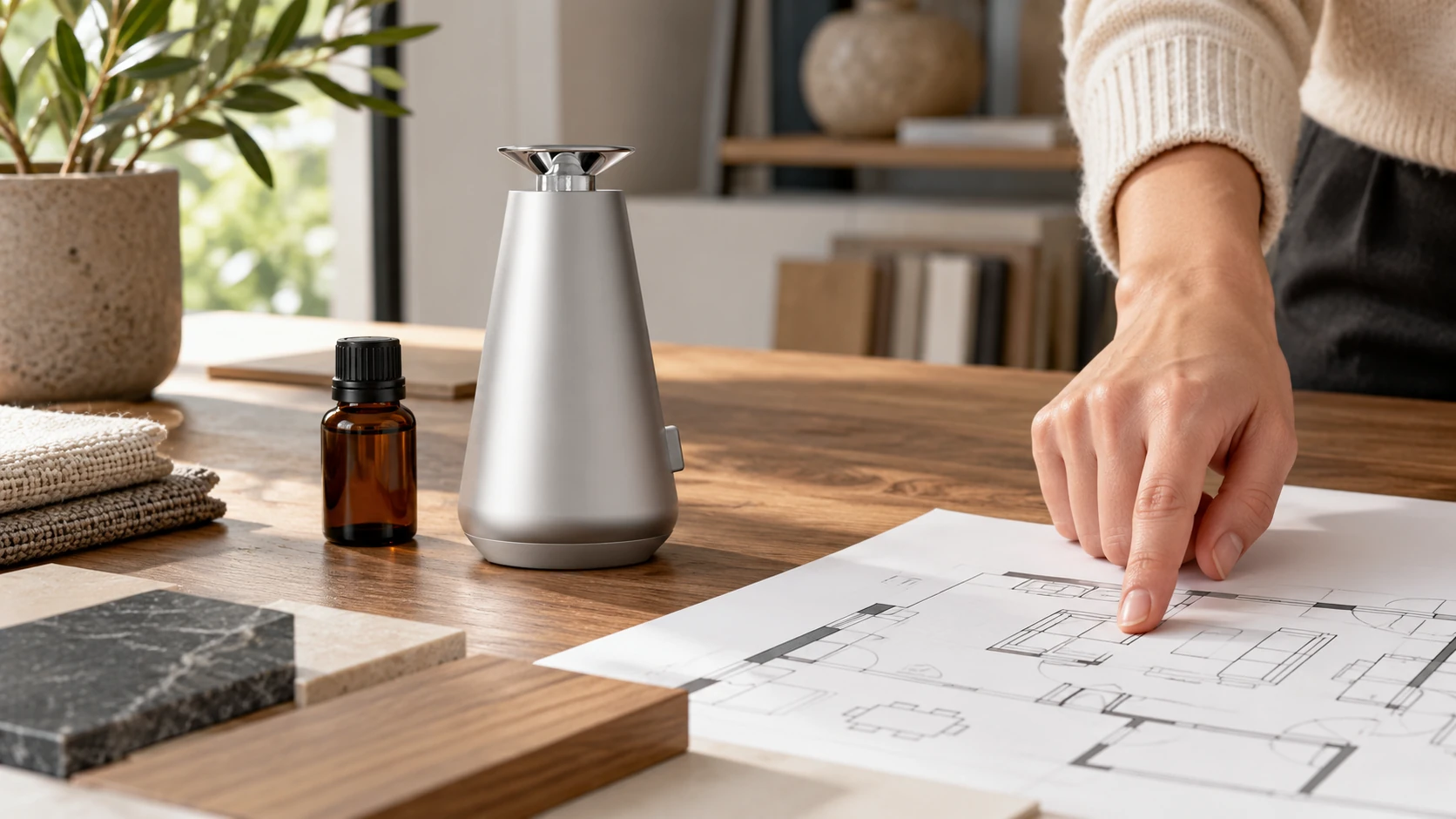
3. Recognize shared air, even across visual zones
Furniture, curtains and display partitions can divide a room visually without creating independent air zones. Check how open doorways and normal ventilation connect the spaces. Do not assume that two diffusers placed at opposite ends will remain separate to visitors. Ask building staff about airflow where necessary, without changing ventilation for the fragrance experiment. If the arrangement cannot offer a suitable unscented alternative when required, reconsider whether adding scent is appropriate.
4. Compare one source at a time
Establish an unscented baseline when practical, then observe the first proposed source under approved conditions. On a separate suitable occasion, observe the second. Record the same occupied positions and relevant room activities. Only consider a combined trial after each has been acceptable individually and participants agree. There is no universal reset interval between evaluations. Residual fragrance can affect the next observation, so wait until the earlier scent no longer confuses the comparison.

5. Evaluate the combined impression without blending oils
Running two sources in a room is different from mixing their liquids in one reservoir. Do not blend oils or add ingredients without express formulation and device approval. During a permitted combined trial, use conservative documented settings and independent comments from willing observers. Ask whether the result is recognizable, comfortable and appropriate, not merely stronger. Stop if it becomes confusing or objectionable. An unsuccessful combination is useful information, not a reason to keep raising output.
6. Choose a simple operating rule
Record which fragrance sources are approved, where they operate and who can change them. If one fragrance works better alone, remove the unnecessary second source from the plan. For adjoining departments, coordinate changes so one team does not unknowingly alter the other's room experience. Review the arrangement after cleaning-product or layout changes. Keep the final rule simple enough that daily staff can follow it without memorizing an elaborate blending scheme.
Frequently asked questions
Can I mix two fragrance oils in the diffuser bottle?
Do not assume that room compatibility means liquid compatibility. Use only mixtures and preparation methods explicitly approved for the exact formulation and device.
Will two machines make a room smell twice as strong?
There is no reliable universal doubling rule for perceived strength. Placement, room conditions, settings and the fragrances all matter.
What if I like both fragrances separately but not together?
Use one at a time or choose one for that room. There is no requirement to combine them, and a simpler arrangement is easier to evaluate and maintain.
Plan your next step
Describe the room and all existing scent sources to Aromaprox before adding another diffuser. Ask about a coherent application plan rather than treating a second fragrance as a coverage adjustment.
Related resources
Images are AI-generated editorial scenarios based on Aromaprox product reference photographs. They are not test records, installation instructions or a statement of included accessories. Confirm the exact model, finish and current specifications before ordering.


