
Shopping Mall Scenting System: Entrances, Corridors and Retail Floors
A shopping mall scenting system must handle open entrances, tall atriums, long corridors, changing foot traffic and multiple tenant environments. Treating the entire property as one room usually produces uneven results: some areas feel too strong while distant zones receive little fragrance.
A better plan divides the building into operational scent zones, gives each zone a clear purpose and matches equipment, schedule and intensity to actual airflow.
1. Define the Role of Scent in the Mall
Decide whether fragrance should create arrival recognition, support a luxury atmosphere, improve transition areas or reinforce a seasonal campaign. A clear objective prevents unrelated scents from being added at every available location.
2. Map Entrances and Exterior-Air Loss
Main doors create strong and variable air exchange. Record door type, opening frequency, prevailing airflow and nearby exhaust. An entrance scent should be recognizable but should not rely on excessive intensity to overcome uncontrolled air loss.
3. Divide Corridors, Atriums and Floors Into Zones
Use architectural boundaries, floor levels and air-handling areas to define zones. Long corridors may require more than one carefully spaced location, while an atrium may need a different delivery format from a smaller seating area.
- Entrance and arrival zone
- Main circulation corridor
- Atrium or event zone
- Customer-service and lounge area
- Elevator and floor-transition zone
4. Protect Food, Children’s and Sensitive Areas
Food courts, restaurants, clinics and tenant spaces may have their own aroma, ventilation and customer requirements. Keep common-area scenting from drifting into these zones without approval. Document fragrance-sensitive routes and establish a response process for feedback.
5. Match the Diffuser Format to Each Location
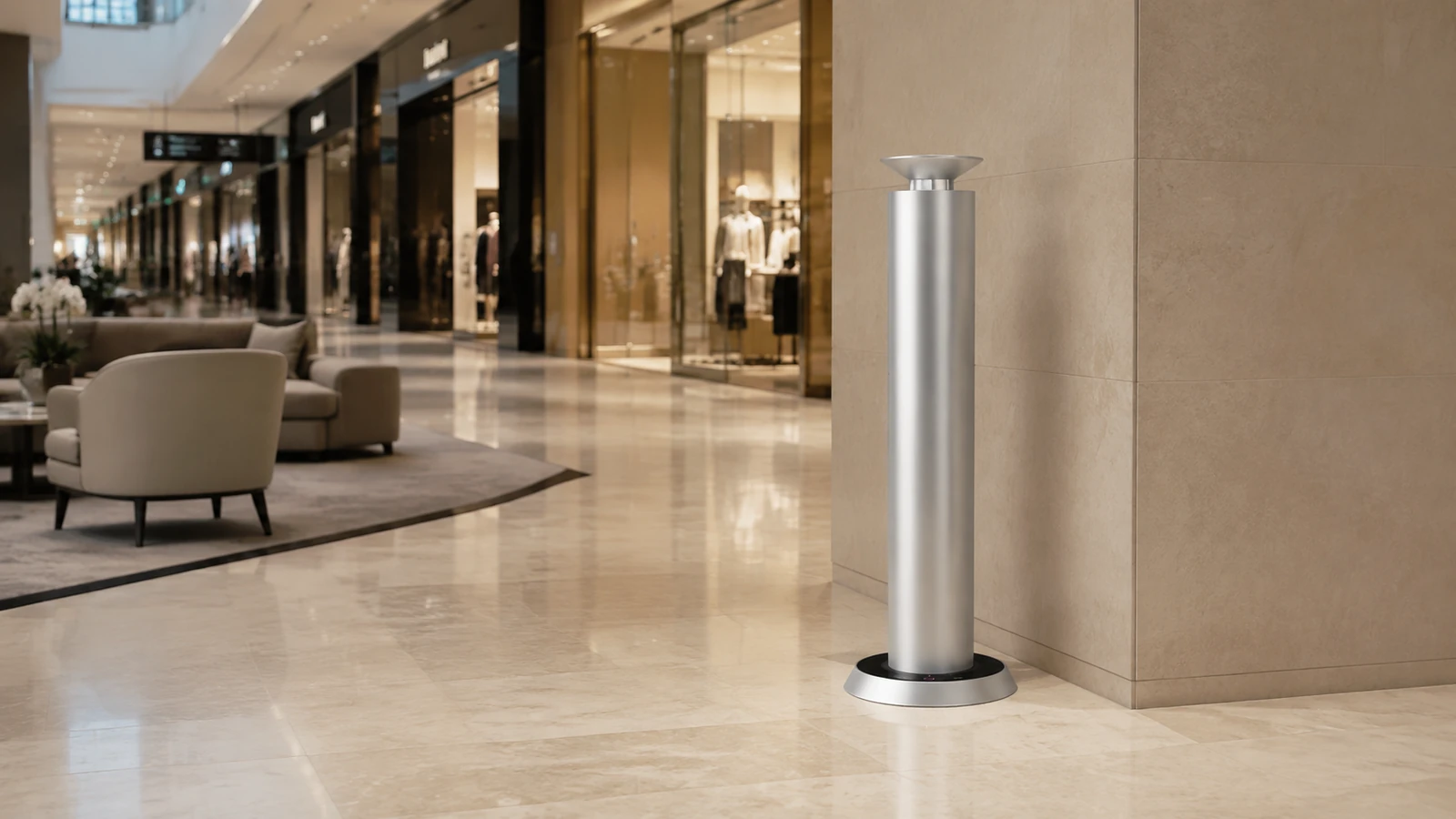
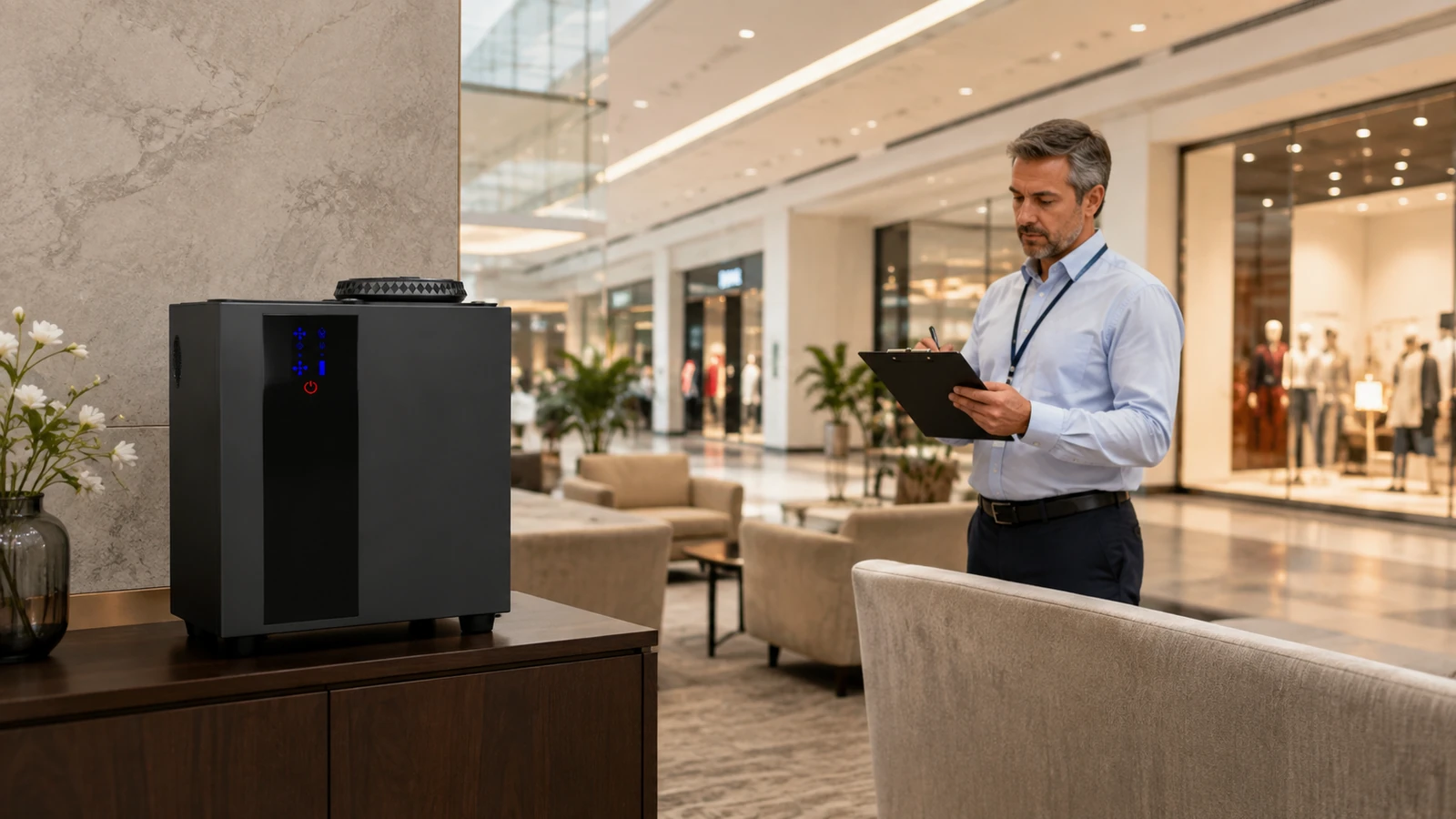
A digital-signage format such as GX8000 can suit a visible floor position, while slim floor-standing or protected console units can support transition and lounge zones. Compare current commercial formats on the business diffuser page. Confirm coverage, oil capacity, controls and service access for the exact model.
6. Build an Operating Schedule
Align start and stop times with ventilation, opening hours, cleaning and events. Use different programs for weekdays, weekends and seasonal peaks only when the site data supports them. One authorized owner should approve setting changes.
7. Commission and Measure
Begin with low settings and walk each zone at opening, peak traffic and quieter periods. Gather feedback from first-time arrivals, tenants and staff. Record oil use, complaints, weak areas, service time and campaign dates. The coverage planning guide can support early sizing, but site commissioning determines the final program.
Implementation Checklist
- Confirm the exact objective and target user.
- Verify the current product specification and instructions.
- Record room or vehicle conditions before testing.
- Start with conservative approved settings.
- Change one variable at a time.
- Keep an approved sample, baseline or installation record.
- Assign one person to approve changes.
- Review results after operating conditions change.
A documented baseline makes troubleshooting, staff training and future purchasing more reliable. It also provides first-party evidence for improving later product selection and operating standards.
Frequently Asked Questions
Where should scent diffusers be placed in a shopping mall?
Typical priority zones include main entrances, selected corridors, lounges and floor transitions, subject to airflow and tenant requirements.
Should a mall use one fragrance everywhere?
A coherent common-area identity is usually easier to manage, but intensity and delivery can vary by zone.
Can the same setting be used all day?
Not always. Traffic, doors and ventilation change, so the schedule should be tested at several operating periods.
How can a mall avoid over-scenting?
Start conservatively, separate sensitive areas, collect fresh-arrival feedback and control changes through one documented program.
Plan the Property as Connected Scent Zones
Share floor plans, operating hours and priority zones with Aromaprox for current commercial product guidance.


