
Private label aroma diffusers allow retailers, fragrance brands, hospitality suppliers and distributors to launch a branded scenting product without building a factory. The opportunity is attractive, but a successful program requires more than placing a logo on an existing device. Product-market fit, certification, atomization performance, packaging, quality control and after-sales support all need to be defined before production.
Private Label, OEM and ODM: What Changes?
Private label usually starts with a proven product platform and applies the buyer’s brand. OEM focuses on manufacturing to the buyer’s requirements. ODM adds supplier-led design and engineering, often shortening development time. In practice, projects can combine all three: an existing platform, custom exterior details and brand-specific packaging or software.
1. Start With a Commercial Product Brief
Before requesting a quotation, describe the target customer, selling channel, intended space, desired price position and launch market. A hotel-supply distributor may prioritize quiet operation and scheduled control. A lifestyle retailer may prioritize finish, packaging and a compact silhouette. A fragrance brand may need oil compatibility and a refill strategy.
Your brief should cover: product type, target coverage, installation method, oil capacity, power source, control method, noise expectations, materials, color, logo process, packaging, certifications, quantity and target delivery date.
2. Select a Proven Product Platform
Compare existing models before requesting structural changes. The SC02, SP01 and SF03 illustrate different form factors for compact, wall-mounted and portable use. Choosing the closest platform usually reduces tooling cost, testing risk and time to market.
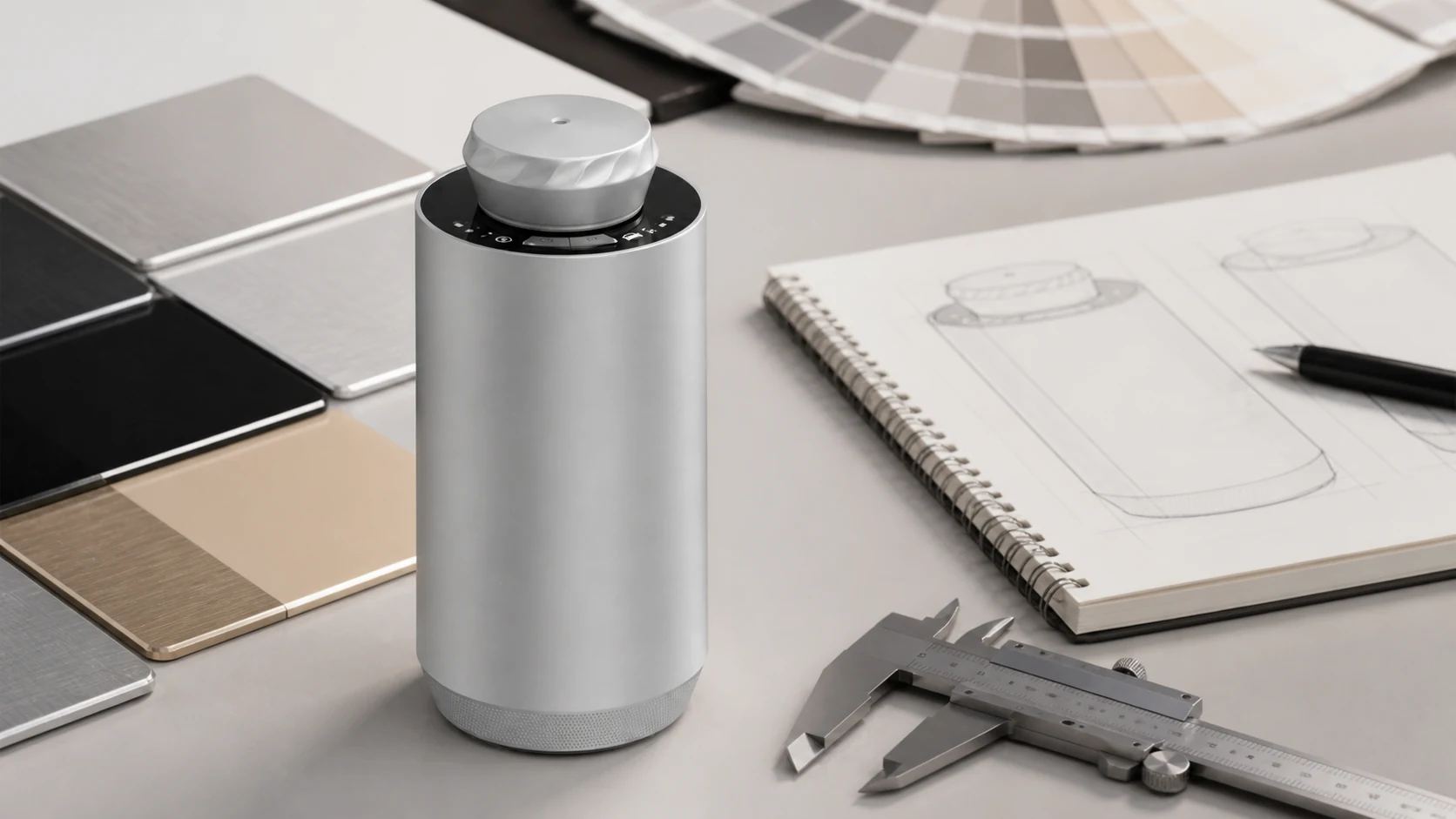
3. Define the Customization Level
Visual branding
Logo application may use silk printing, laser engraving or another method suited to the surface. Confirm artwork format, size, location, contrast and durability.
Materials and finishes
Aromaprox describes options including ABS and aluminum alloy, custom colors, matte or metallic finishes and product-specific surface processes. Request physical samples because screen colors and real finishes can differ.
Packaging and documentation
Specify retail box dimensions, protective inserts, labels, barcode position, manuals, language versions, accessories and carton markings. Packaging must protect the product as well as communicate the brand.
Software and controls
For connected products, confirm scheduling, intensity adjustment, remote monitoring, multi-device management and white-label app requirements. Define who owns app accounts, updates, data and customer support.
4. Build a Sample-Approval Process
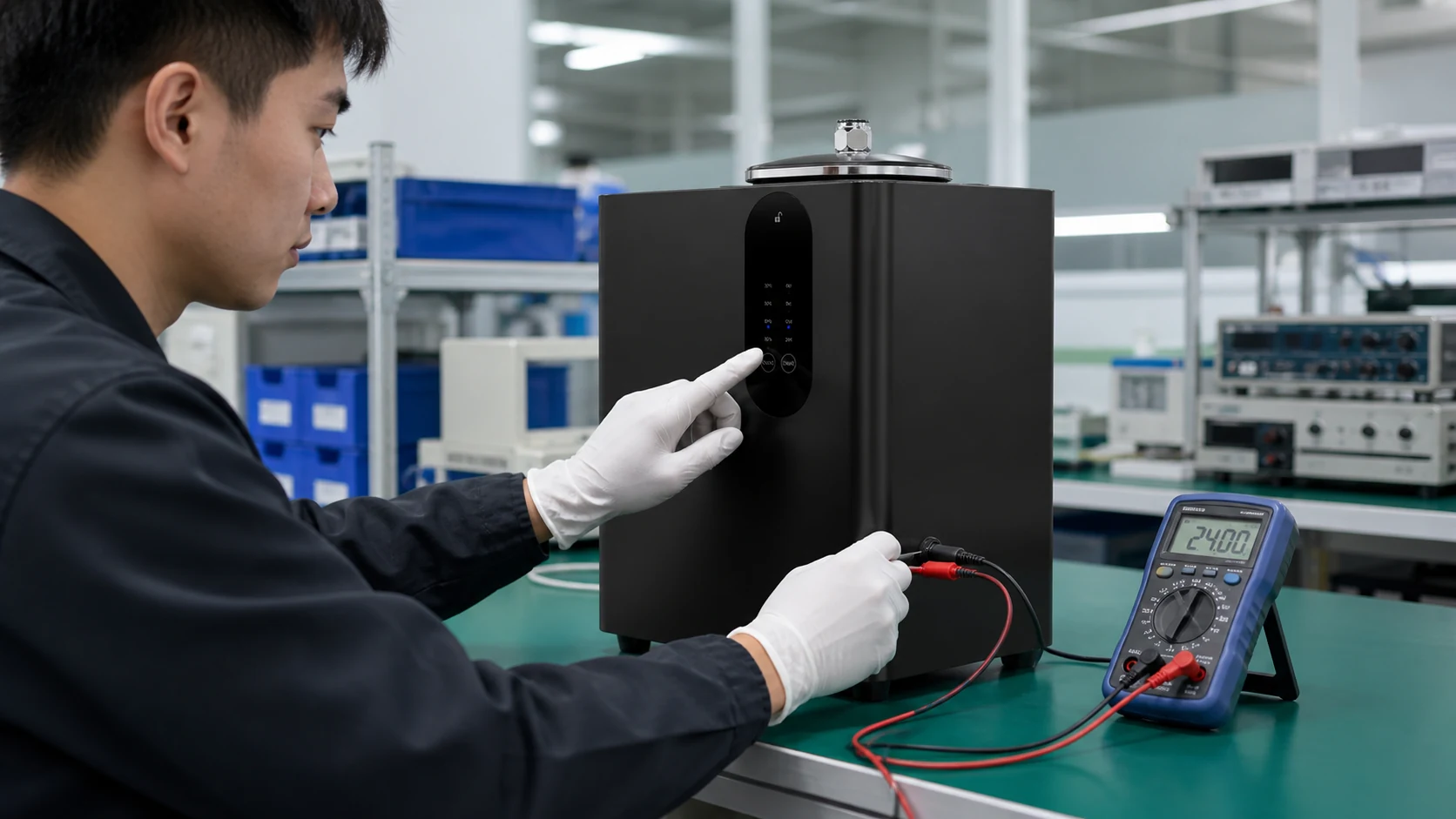
Do not approve a sample from photographs alone. Use a written checklist and compare the physical sample to the latest specification. Test the controls, noise, scent output, oil bottle fit, charging or power accessories, packaging and instructions. Record any deviation and require a revised sample when a critical issue changes.
5. Plan Compliance by Destination Market
Requirements depend on the product design, battery, adapter, wireless features and destination. Ask the manufacturer which reports and certificates apply, whether they cover the exact model and configuration, and whether the laboratory is accepted by your channel. Packaging labels and manuals may also need local language, recycling or importer information.
6. Understand MOQ, Tooling and Total Cost
A low unit price is not the same as a low landed cost. Include samples, molds or fixtures, custom printing, packaging, certification, inspection, freight, duty, spare parts and warranty support. Aromaprox notes that standard customized projects commonly start around 500–1,000 units depending on model, material and process; confirm your final MOQ after the specification is frozen.
7. Protect Quality During Mass Production
- Use a signed golden sample.
- Freeze drawings, colors and packaging files with revision numbers.
- Define incoming, in-process and final inspection criteria.
- Test function, noise, leakage protection and output consistency.
- Agree on sampling level, defect definitions and corrective action.
- Retain traceability for production lots and critical components.
8. Evaluate the Manufacturer, Not Just the Product
Review engineering capability, production capacity, fragrance experience, app support, testing equipment, export history and response time. Aromaprox presents more than ten years of OEM/ODM experience, multiple production lines and international distribution; buyers should still validate the resources relevant to their own program.
Frequently Asked Questions
What is a private label aroma diffuser?
It is a diffuser manufactured by a supplier and sold under the buyer's brand, with agreed customization such as logo, color, packaging, manuals or app branding.
What is the difference between OEM and ODM?
OEM generally manufactures to a buyer's specification, while ODM provides an existing or supplier-developed platform that can be customized for the buyer.
What is a typical custom diffuser MOQ?
Aromaprox states that standard custom projects commonly begin around 500 to 1,000 units, depending on the model, material and process. Confirm the final MOQ for your specification.
What should a sample approval include?
Approve appearance, logo position, finish, controls, fragrance performance, packaging, accessories, manual language and test criteria before mass production.
Move From Idea to a Controlled Specification
A strong private-label project converts a brand idea into measurable requirements. Send your target market, model preference, quantity, branding scope and launch schedule through Aromaprox OEM/ODM customization services or request a project consultation.


