
Open-Plan Home Scenting: Balance the Kitchen and Living Area
Open plan home scenting needs to work with daily life, not just a floor plan. A kitchen, dining table and sofa may share the same air even when furniture makes them look like separate rooms. Before adding fragrance, decide where you want it to be noticeable and when an unscented environment is more appropriate. The aim is a comfortable living area without competing with meals or other people's preferences.
1. Start with the kitchen, not a stronger fragrance
Identify whether the unwanted odor comes from cooking, waste, a spill or an appliance requiring attention. Fragrance does not resolve these sources. EPA guidance prioritizes source control and appropriate ventilation for indoor air quality. EPA: Improving Indoor Air Quality Follow your kitchen equipment instructions and address maintenance issues separately. A pleasant added smell is not a measurement of clean air, and there is no reason to increase diffuser output to overpower a problem.
2. Draw boundaries based on use
Mark where food is prepared, where people eat, the usual seating positions and routes through the room. Also note spaces that connect to bedrooms or a home office. These observations describe how the home is used; they do not establish a fragrance barrier. If someone needs an unscented area within the same connected space, switching the diffuser off may be more workable than promising that scent will stop at the edge of a rug.
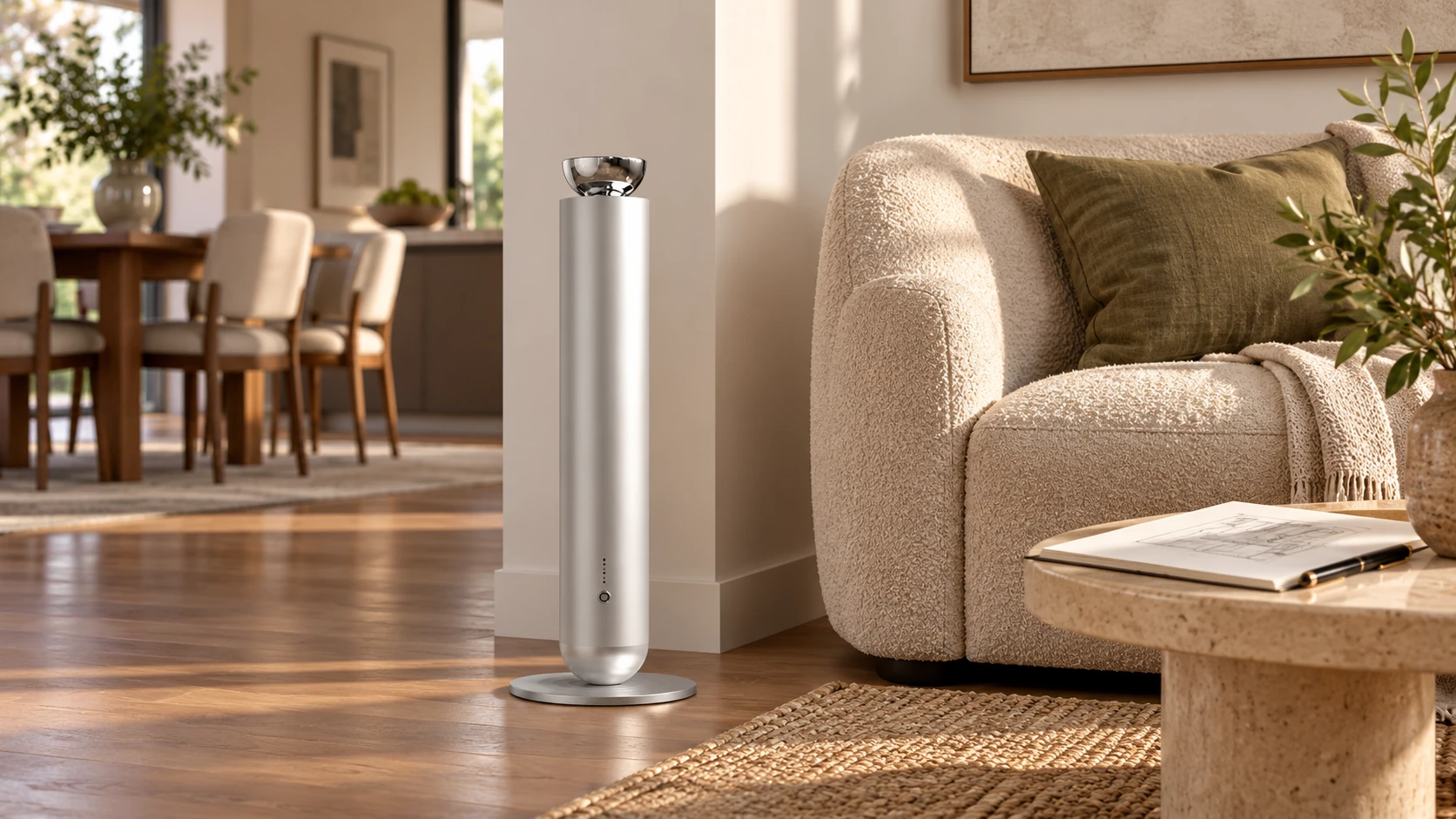
3. Choose a position you can evaluate and service
Use only a location permitted by the exact model's instructions, with access for routine maintenance and appropriate clearance. Keep it away from food preparation, heat, splashes and places where it could be knocked over. Do not place a floor-standing model on a narrow shelf to force fragrance higher. Start from the intended living area and check the dining position as well, rather than assuming the device should sit at the geometric center.
4. Make meal times part of the operating plan
Consider pausing before food preparation or dining if added fragrance distracts from the meal. Remember that stopping output does not guarantee an immediate disappearance of scent. Test the routine during an ordinary day rather than setting a universal number of minutes. Keep normal ventilation unchanged. A household that prefers no fragrance during cooking may choose limited living-room use at other times, or no ambient scent at all.
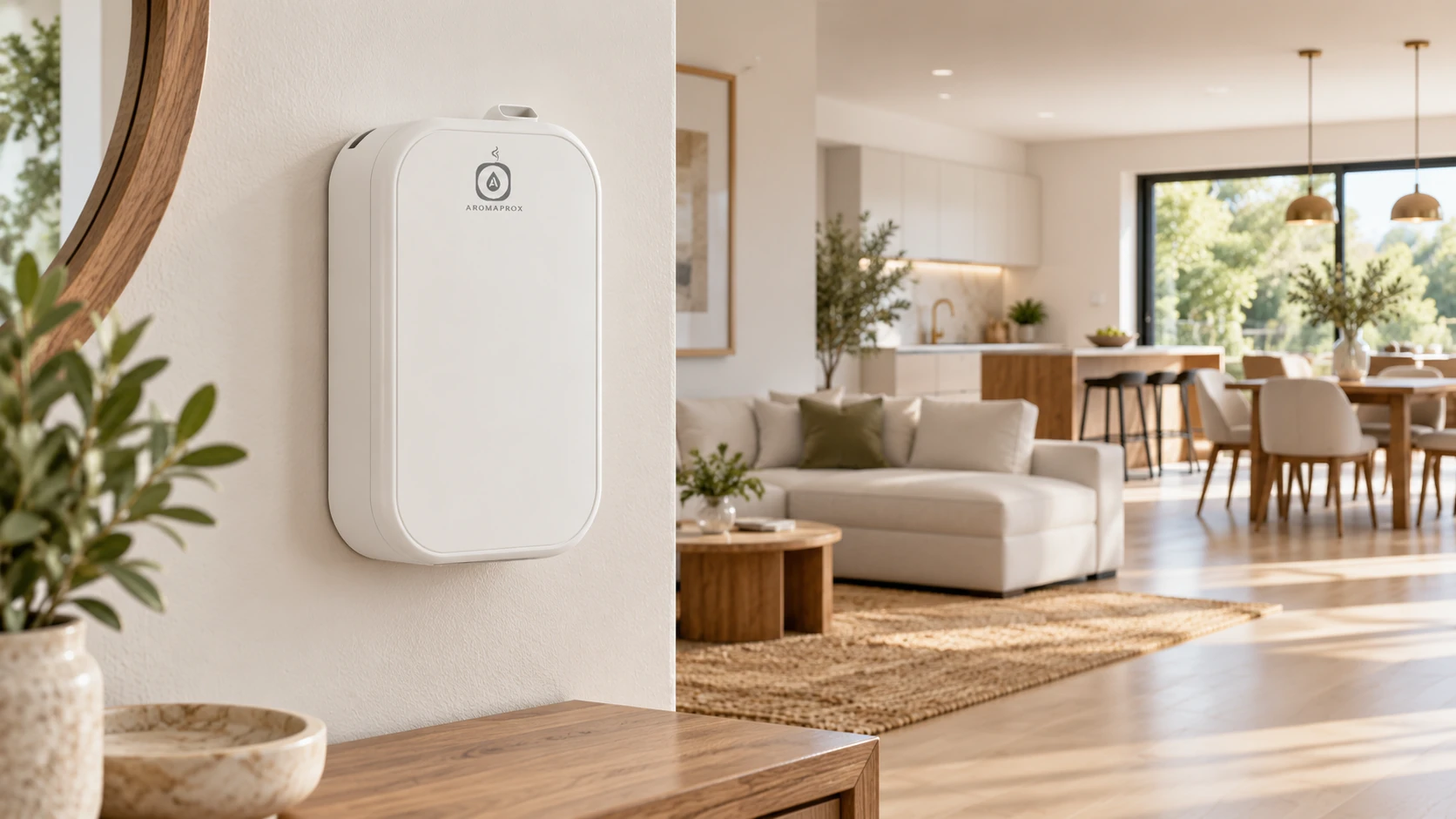
5. Review the experience with everyone who shares the room
Ask for feedback from the sofa, table and connected work area. Use neutral questions: is fragrance noticeable, is it wanted here, and when should it stop? Do not tell others that a subtle setting must be acceptable. Stop use if someone objects or experiences discomfort. Avoid combining candles, sprays and multiple diffuser fragrances during the first evaluation, because it becomes difficult to identify which source affects the experience.
6. Keep the routine simple enough to maintain
Record the approved fragrance, placement, operating periods and person responsible for refilling. Recheck the arrangement after moving furniture or changing how the space is used. Models such as DecoPro and DecoPlus can illustrate different tabletop forms, but confirm the actual configuration and instructions before purchase. Choose a serviceable arrangement instead of relying on an image to prove whole-home coverage or an exact boundary between living and dining areas.
Frequently asked questions
Can one diffuser scent an entire open-plan home?
Do not assume so from a photograph or floor area alone. Discuss the actual layout, ventilation and intended occupied zones with the supplier, then evaluate the proposed model in use.
Should I put a diffuser next to the stove?
Use the manufacturer's permitted placement and keep fragrance equipment away from heat, food preparation and splashes. A diffuser is not a substitute for kitchen extraction or cleaning.
Can I keep one side of an open-plan room fragrance-free?
Shared air makes an exact boundary difficult to promise. If an unscented environment is needed, pause or avoid ambient scenting in the connected space.
Plan your next step
Share your connected kitchen, dining and living layout with Aromaprox, including periods when fragrance is not wanted. Ask for model-specific placement guidance before choosing a configuration.
Related resources
Sources and further reading
Images are AI-generated editorial scenarios based on Aromaprox product reference photographs. They are not test records, installation instructions or a statement of included accessories. Confirm the exact model, finish and current specifications before ordering.


