
Hotel scent marketing uses fragrance as part of the guest experience, from the first step through the entrance to the lobby, corridor, room and wellness areas. A well-designed scent is subtle, recognizable and operationally consistent. A poor program is too strong, changes unpredictably or conflicts with food, cleaning products and local expectations.
Why Scent Matters in Hospitality
Guests notice a hotel through many small sensory cues: lighting, acoustics, materials, service language and scent. Fragrance can reinforce the emotional position of the property—calm, energetic, natural, luxurious or playful. Because smell is closely connected with memory, a consistent signature scent can become a recognizable part of the brand.
Scent should support the environment rather than conceal cleanliness problems. Odor sources, ventilation and housekeeping processes need to be addressed first.
1. Map the Guest Journey
Walk the property as a first-time guest. Mark the entrance, reception queue, seating area, elevator bank, corridor, room, gym, spa and departure path. Note where doors open, where air changes and where guests pause. These points become candidate scent zones.
- Entrance: a clear but restrained first impression.
- Reception: consistent fragrance during waiting and check-in.
- Elevator transition: continuity between lobby and rooms.
- Guestroom: lower, calmer intensity and easy service access.
- Spa: a scent profile coordinated with treatments.
2. Build a Signature Scent Brief
Translate the brand into sensory words before selecting formulas. A coastal resort may use airy citrus, green leaves and transparent woods. An urban luxury hotel may prefer tea, soft leather, amber or refined florals. A wellness retreat may emphasize herbs, woods and gentle natural notes.
Test several formulas in the actual lobby. Stone, carpet, timber, cleaning products, humidity and outdoor air all change perception. Aromaprox offers fragrance development and regional scent collections that can support a custom brief.
3. Zone the Property Instead of Using One Setting
A hotel is not one air volume. Lobby doors, elevator shafts and corridors create different conditions. Use coordinated devices and schedules rather than pushing one diffuser to maximum output. Keep restaurants, kitchens and fragrance-sensitive functional areas separate from the lobby program.
4. Match Diffuser Format to Each Touchpoint
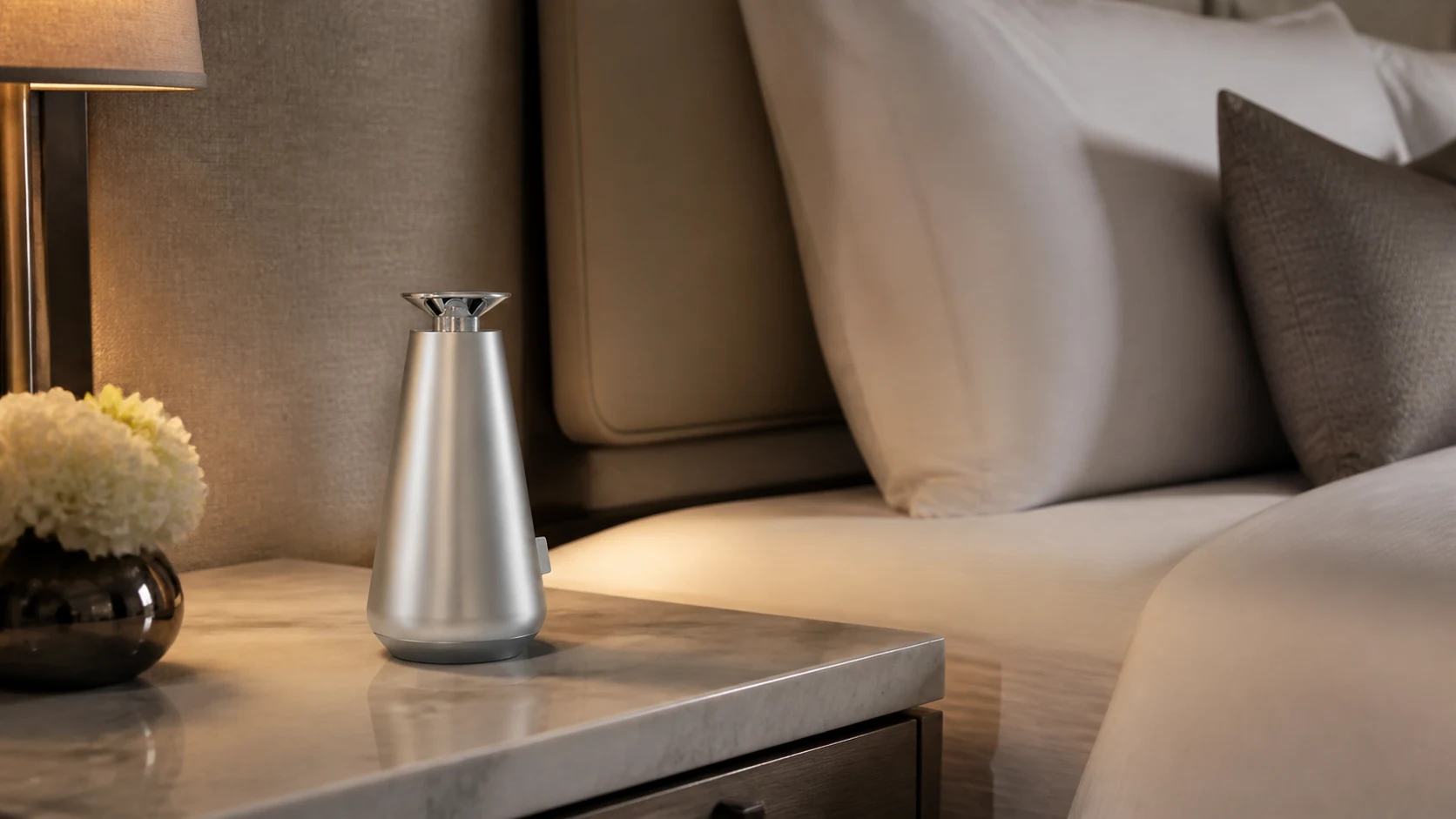
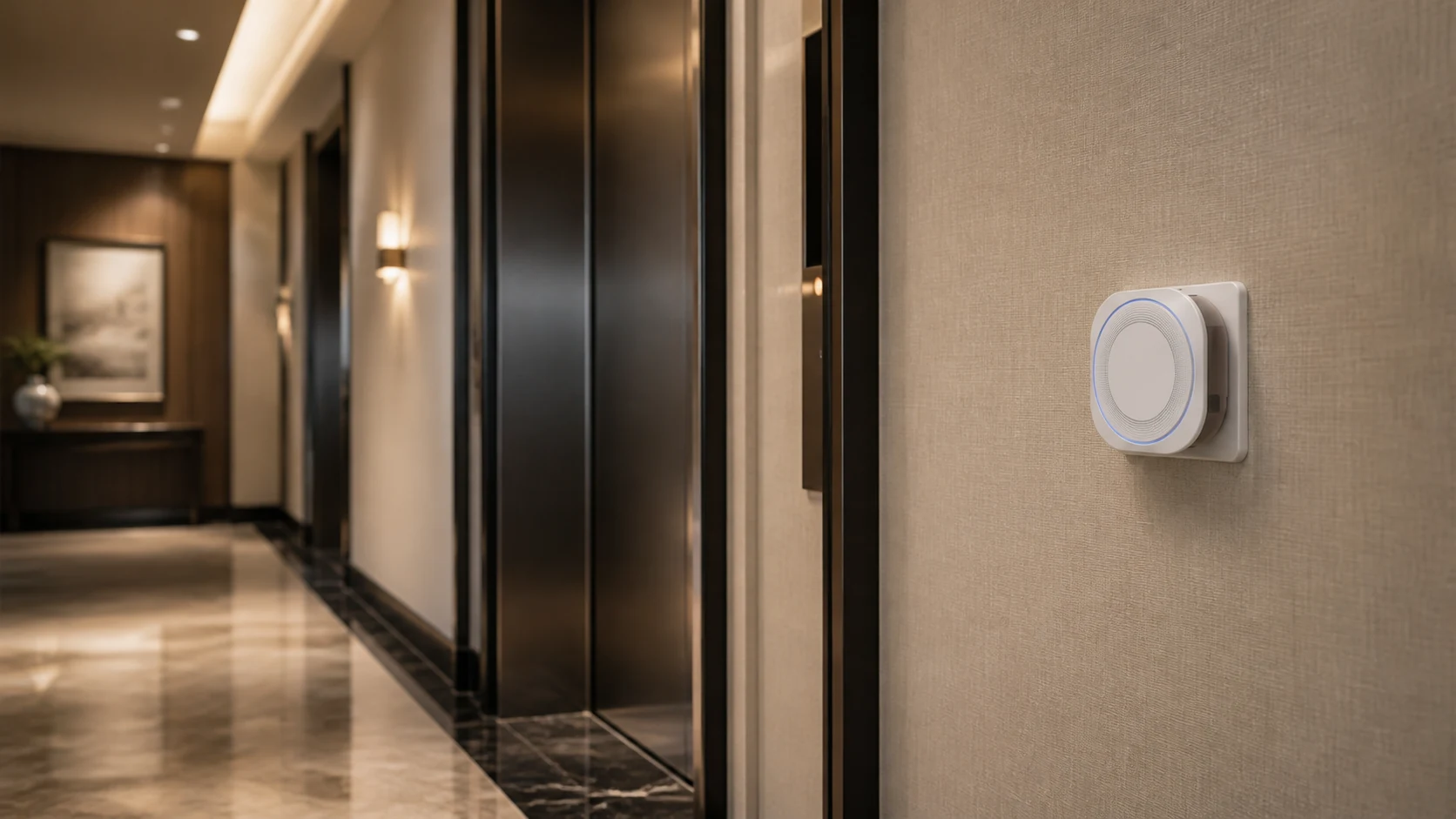
A wall-mounted model such as the SP01 can suit a discreet reception or corridor position. A portable design such as the SF03 offers flexibility for lounges, suites or seasonal layouts. Compact formats can serve smaller personal zones when their current specifications fit the room.
Check coverage, oil capacity, controls, power, noise and refill access for every location. A beautiful device is not operationally successful if staff cannot reach it safely or if it requires service during peak arrival times.
5. Treat Guestrooms Differently
Guestrooms are enclosed and personal. Use a lower intensity than the lobby and consider how long the room remains closed. Provide a clear service procedure and a response plan for fragrance-sensitive guests. Never place a device where oil can contact linens, polished surfaces or guest belongings.
6. Create an Operating Standard
- Document device locations and approved settings.
- Schedule operation around occupancy and ventilation.
- Assign refill and cleaning responsibility.
- Track oil consumption by zone.
- Use the same approved fragrance batch.
- Record complaints, compliments and corrective changes.
A standard operating procedure prevents well-intentioned staff from increasing intensity independently. It also turns fragrance into a managed brand asset rather than an informal decoration.
7. Measure Experience and Efficiency
Use short guest surveys, front-desk comments, repeat-guest recognition and oil consumption to evaluate the program. Ask new arrivals rather than relying only on employees, who may become accustomed to the scent. Compare feedback by time of day and season.
Operational metrics matter too: refill frequency, device downtime, staff minutes per service and fragrance use per zone. The best program balances guest impact with predictable maintenance.
Common Hotel Scent Marketing Mistakes
- Choosing fragrance in a meeting room instead of testing on site.
- Using the same intensity in the lobby and guestroom.
- Placing a diffuser directly beside an entrance or strong vent.
- Trying to cover several isolated zones with one device.
- Ignoring restaurants and fragrance-sensitive areas.
- Changing formulas too frequently to build recognition.
Frequently Asked Questions
What is hotel scent marketing?
Hotel scent marketing is the planned use of fragrance across guest touchpoints to support brand recognition, atmosphere and a consistent arrival-to-stay experience.
Where should a hotel place scent diffusers?
Common zones include the entrance, reception, elevator transition and selected guest or wellness areas. Placement should follow airflow, safety and maintenance requirements.
Should every hotel area use the same scent?
A recognizable core accord can connect the property, but intensity and supporting notes may change by zone. Restaurants and sensitive areas often need separate treatment.
How can a hotel avoid over-scenting?
Begin with low settings, schedule around occupancy, collect feedback from new arrivals and adjust each zone separately instead of increasing all devices together.
Turn Fragrance Into a Repeatable Brand Experience
A strong hotel scent strategy aligns fragrance, hardware, airflow and staff procedures. Share your floor plan, guest journey, brand mood and operating requirements with Aromaprox through its customization services or request a consultation.


