
Hair Salon Scenting Without Competing With Treatment Products
Hair salon scenting should support the welcome experience, not compete with treatment products or conceal chemical odors. Reception, styling stations and processing areas have different activities and exposure concerns. Before considering an optional fragrance, a salon needs appropriate product handling, cleaning and ventilation practices for the services it actually provides.
1. Address salon product concerns independently
A pleasant smell does not demonstrate acceptable air quality. OSHA warns that some hair-smoothing products can release formaldehyde during use. OSHA: Hair Salons — Protecting Worker Health Follow applicable professional guidance and the instructions for the actual products used. Fragrance is not a replacement for required controls or a way to decide whether a treatment area is safe. When there is an unexplained chemical odor or worker concern, address that issue through the appropriate workplace process before discussing scenting.
2. Give reception a separate brief
Describe the desired reception experience in ordinary terms: welcoming, unobtrusive and compatible with the salon's identity. Do not carry that brief automatically into every treatment station. For example, a salon might consider a reception-only trial while keeping processing and washing areas outside the plan. Confirm whether shared airflow makes even that separation impractical. A wall or a change in flooring is not evidence that fragrances will remain confined to the entrance.
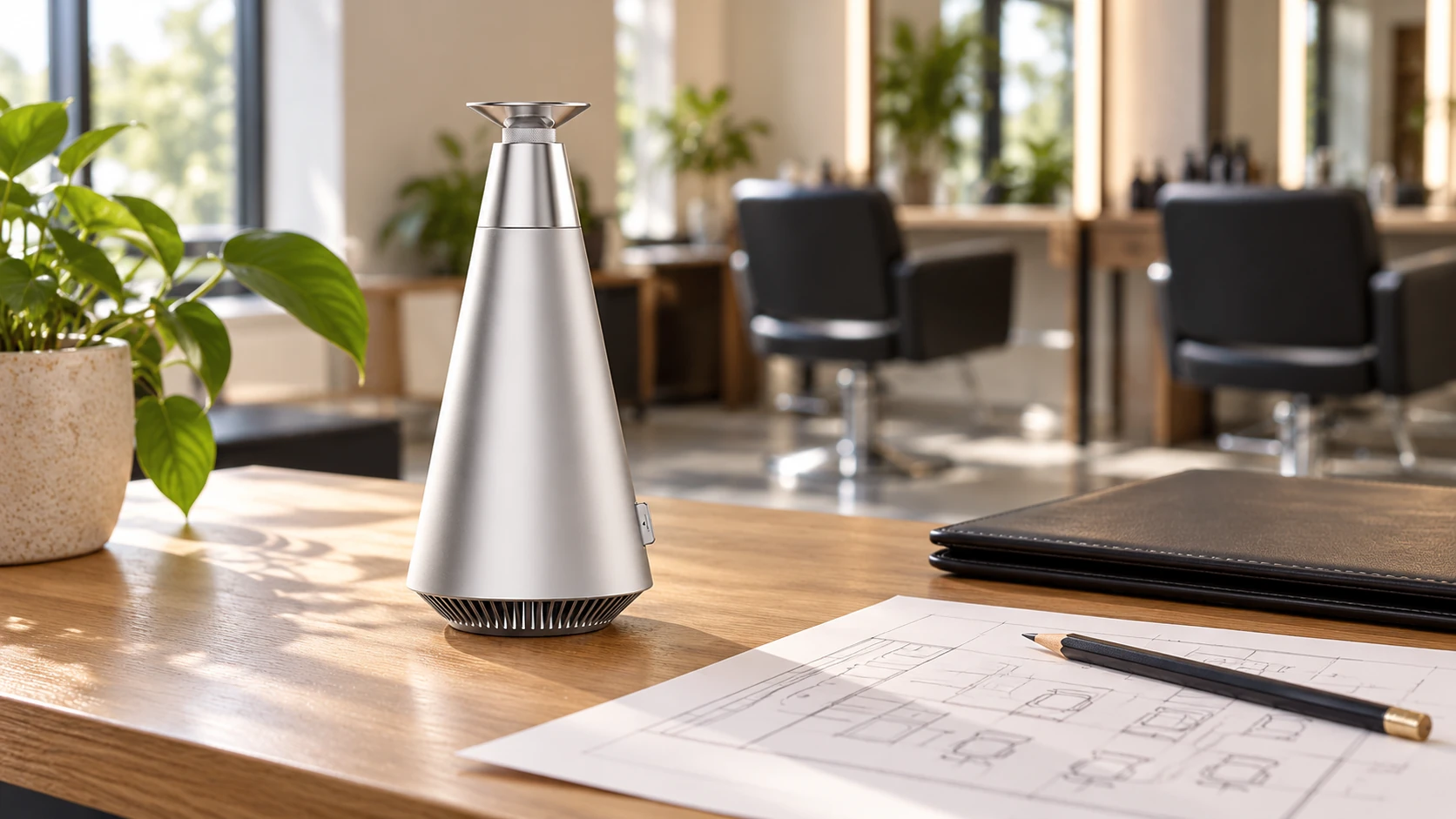
3. Review the existing scent background
List shampoo, styling products, cleaning materials and any candles or room sprays already in use. Note when they are used during a normal service day. An optional diffuser should not create another uncontrolled layer on top of several strong sources. Review this with staff who work through the full day, not just someone visiting before opening. The aim is a coherent experience, and the review may support leaving added fragrance out entirely.
4. Place equipment away from salon work hazards
Follow the selected model's instructions and keep equipment clear of water, heat, product preparation and movement routes. Avoid positioning a device where liquid could contact tools, treatment products or customer belongings. A wall-mounted SP01 or another suitable format requires a location-specific review; the illustrations are not installation instructions. Confirm the exact model and approved fragrance rather than borrowing specifications from a visually similar unit. Keep service access available without disrupting clients.
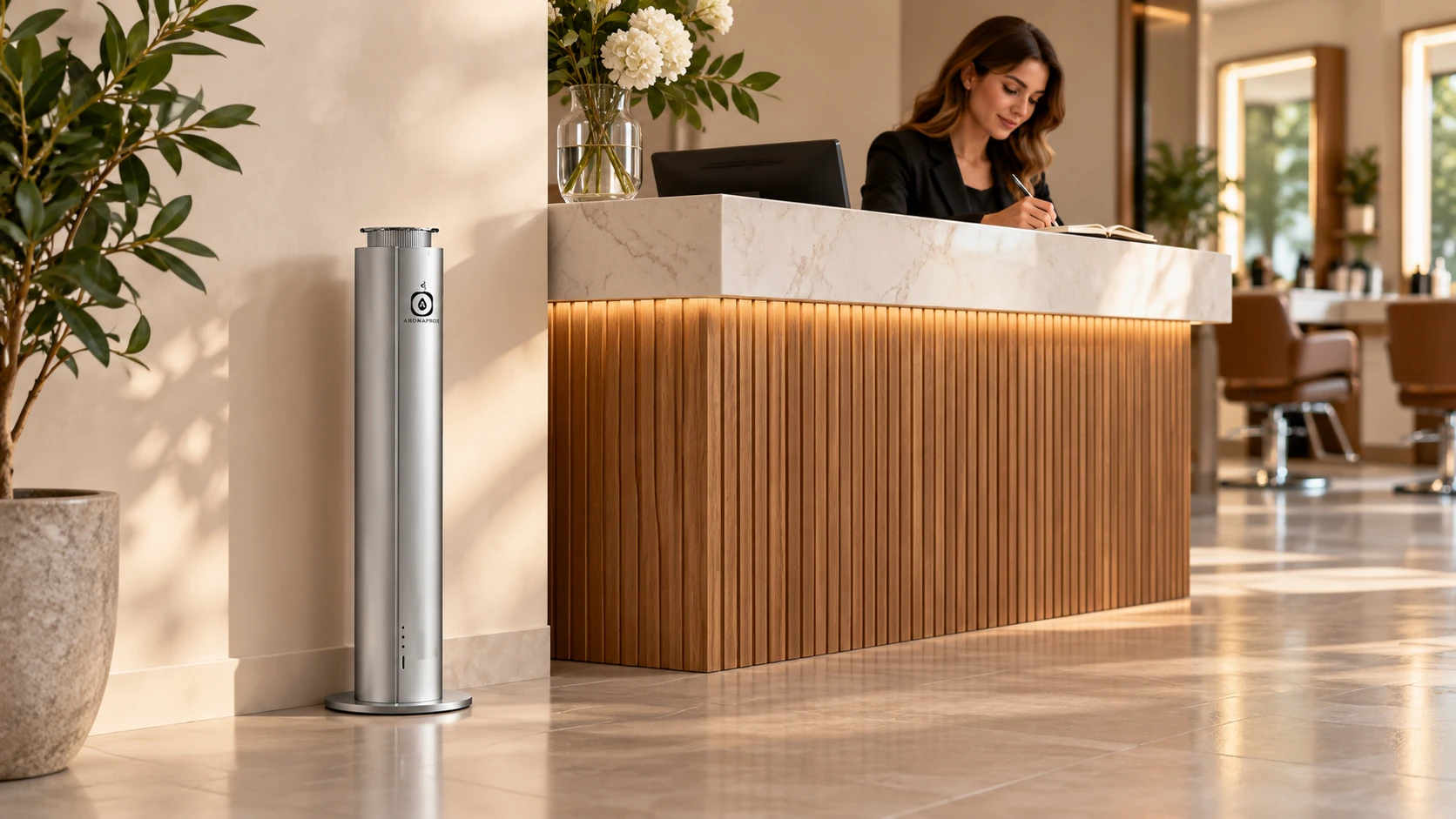
5. Run a supervised reception trial
Choose a period with representative salon activity, use an approved conservative setting and assign someone to observe and stop the trial. Record the reception impression separately from treatment-product odors. Ask staff and willing clients for feedback without suggesting that stronger means cleaner or better. Pause if anyone objects or reports discomfort. Do not compensate for a weak fragrance impression by increasing output while other product odors are present; reassess the setting and whether scenting is appropriate.
6. Make the operating rule easy to follow
Specify the permitted area, fragrance, operating times, responsible staff member and stop procedure. Coordinate changes with cleaning and service routines. When a treatment product or ventilation arrangement changes, revisit the fragrance decision rather than assuming the previous plan still fits. Keep refills stored and handled under their instructions, separate from salon chemicals. A short documented rule is easier to maintain than informal adjustments made by each stylist throughout the day.
Frequently asked questions
Can a diffuser remove salon chemical odors?
A scent diffuser adds fragrance. It should not be treated as an exposure-control or odor-removal system, and it must not substitute for appropriate workplace controls.
Is reception always suitable for fragrance?
No. Shared airflow, client preferences and the salon's activities may make it unsuitable. Evaluate the actual location rather than assuming an entrance is isolated.
Should fragrance run throughout every treatment?
Not automatically. Establish an agreed area and schedule only after the salon's other controls and staff concerns have been addressed.
Plan your next step
Describe the proposed reception location and operating constraints to Aromaprox. Keep any workplace chemical-safety questions with the relevant qualified professional, and discuss diffuser suitability separately.
Related resources
Sources and further reading
Images are AI-generated editorial scenarios based on Aromaprox product reference photographs. They are not test records, installation instructions or a statement of included accessories. Confirm the exact model, finish and current specifications before ordering.


