
Freestanding Diffuser Stability Checklist: Base, Floor and Traffic
A freestanding diffuser stability checklist starts with the actual location, not the appearance of a wide base. A model that stands neatly in a product photograph may be unsuitable beside a moving chair, a doorway or an uneven rug. Aromaprox SF03, MiniPro and A2000 illustrate different freestanding formats, but they should not share an assumed weight, footprint or resistance to tipping. Assess the supplied unit and its installation instructions before choosing the final position.
1. Check the actual base and assembled condition
Identify the exact model and supplied base, then inspect the assembly according to its instructions. SF03's round-foot format is not evidence that every tall diffuser uses the same support. Look for visible damage, missing approved components or an assembly that does not sit correctly. Do not replace the base with a decorative stand simply because it looks wider. If an assembly step or fastening requirement is unclear, obtain the correct instructions. A visual inspection is useful for obvious problems, but it is not a structural assessment or a certified stability test.
2. Choose a firm and level supporting surface
Review the floor where the complete base will sit. Avoid a position split between a rug and hard flooring, a loose mat or an uneven threshold. The general aim is full, even support rather than balancing part of the base on a different surface. Do not compensate with folded paper, an improvised wedge or a slippery platform. Examine the location before filling or operating the device. If the floor condition does not suit the product's installation requirements, choose another position instead of trying to force an attractive but unstable layout.
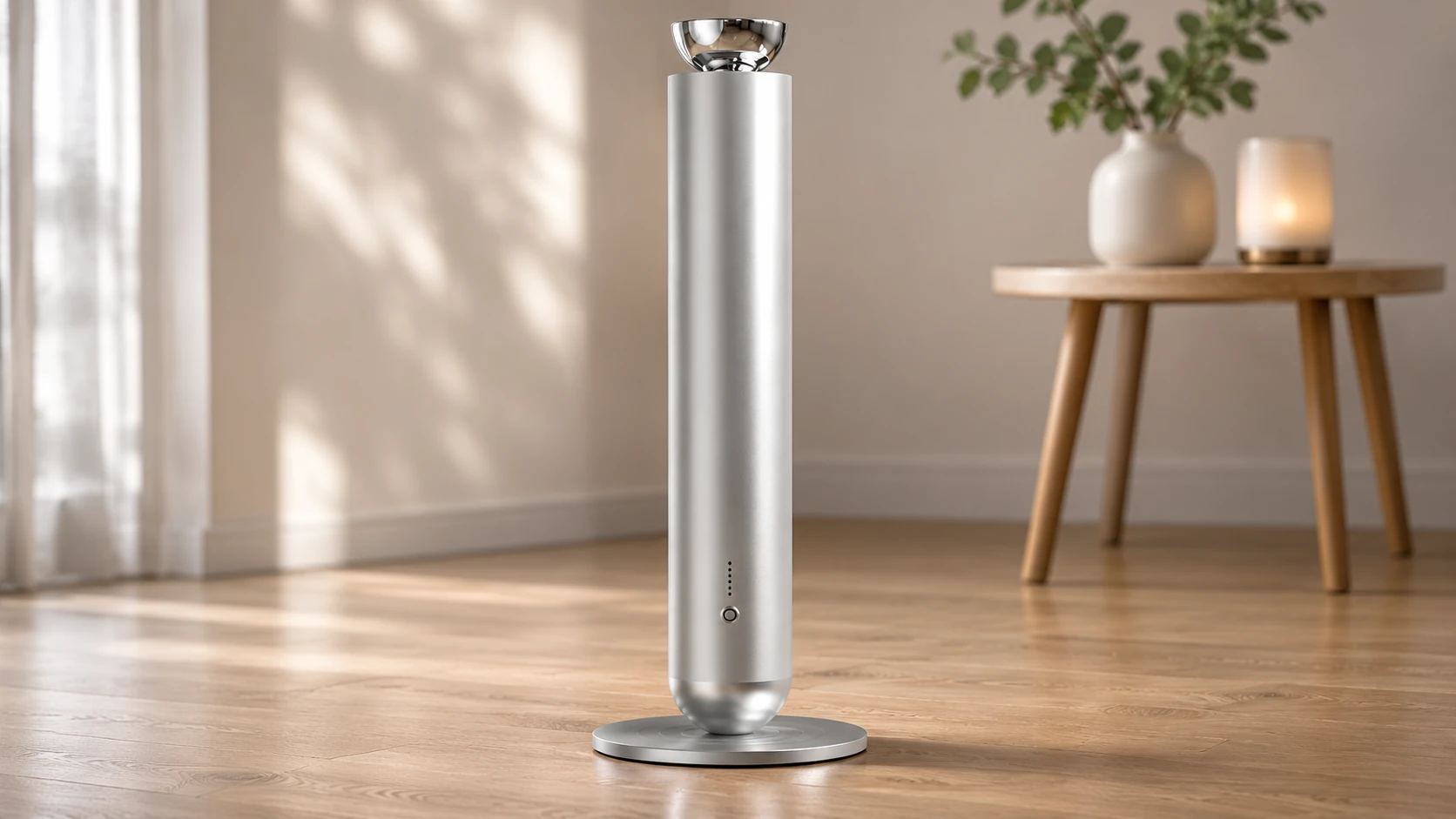
3. Follow the path of people and movable furniture
Walk the area with normal room use in mind. Check door swings, chairs pulled back, luggage, cleaning carts and access routes. A position that is clear in an empty room may become a contact point during a busy period. Keep the unit out of these movement zones without blocking required circulation. Do not treat a freestanding diffuser as something guests can lean on or move casually. Where children or pets may reach it, choose a placement consistent with the device instructions and the site's supervision needs; appearance alone does not establish protection against tipping.
4. Review cables without inventing a restraint system
For the exact configuration in use, inspect whether any approved power cable could be caught by a foot, chair or cleaning equipment. Do not assume every floor-standing model is cordless. Keep the cable arrangement within the installation instructions and do not trap, stretch or alter a cable to make the layout work. A power lead is never a restraint. Likewise, adhesive pads, straps and added weights should not be presented as approved accessories unless the manufacturer explicitly specifies them for that model. Request an approved solution when a position needs additional protection.
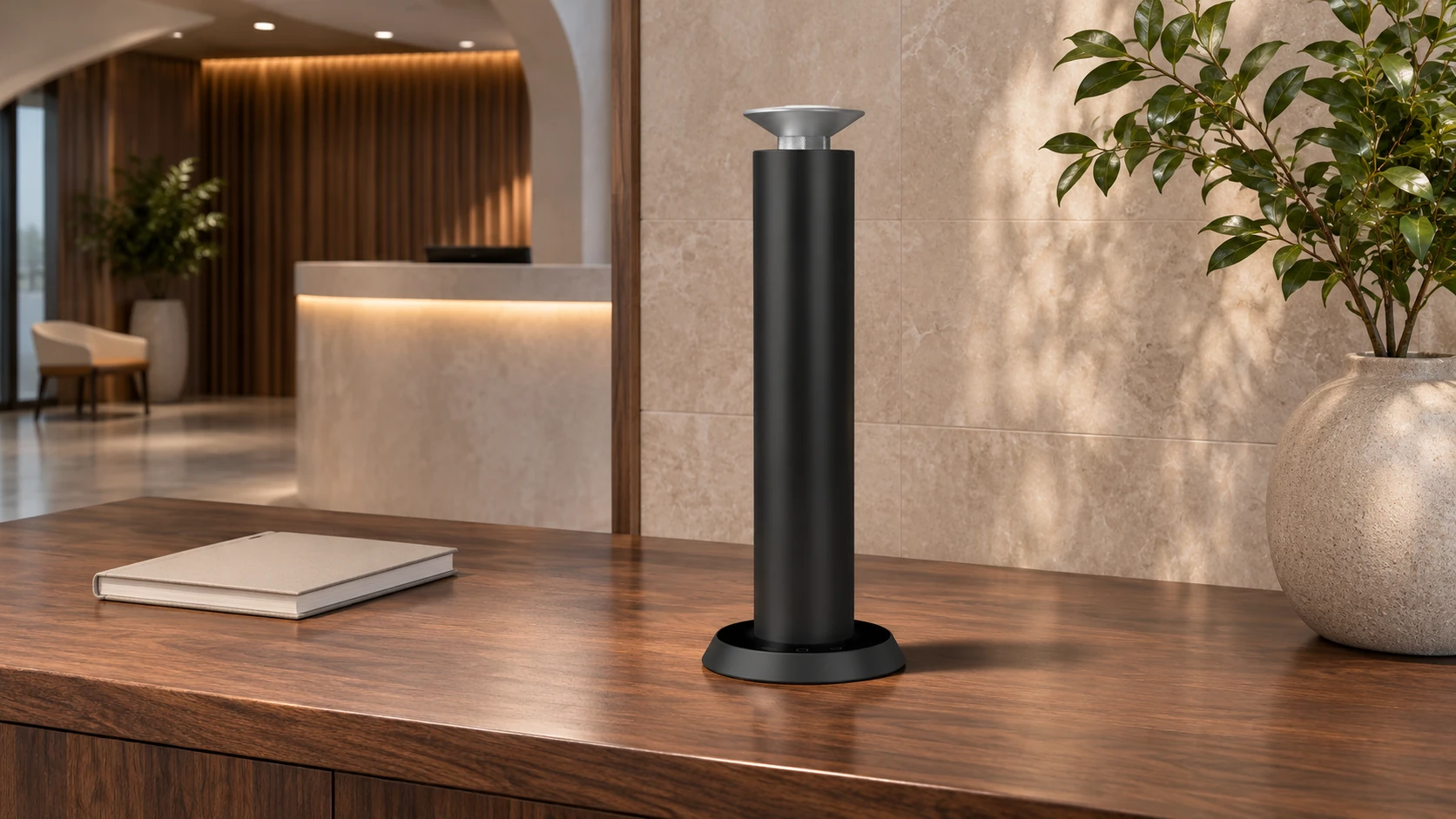
5. Preserve upright handling and service access
MiniPro's reviewed manual warns against inverting or tilting the device in use and calls for preparation before transport. Do not turn that into an unsupported universal handling sequence for SF03 or A2000; obtain each model's instructions. Leave enough space for the documented refill procedure without pulling the device across the floor or reaching awkwardly around furniture. Stop and prepare it as instructed before repositioning. A well-chosen location lets the responsible person maintain the unit while avoiding casual movement by everyone else.
6. Document the chosen location and recheck after changes
Record the model, approved base, floor condition, nearby moving objects and the person responsible for servicing. A simple photograph can document placement, but cannot prove a tested resistance to impact or overturning. Recheck after furniture moves, floor coverings change or a new cleaning routine is introduced. If a unit is struck or becomes unstable, stop using it and request inspection rather than disguising the problem. This checklist is a practical site review, not a substitute for product testing, a local risk assessment or the manufacturer's instructions.
Frequently asked questions
Does a wide round base make a diffuser tip-proof?
No. The base shape alone does not establish resistance to tipping. The actual model, assembly, supporting surface and environment matter.
Can I add weight or adhesive to keep it upright?
Do not improvise modifications. Use only a solution approved for the specific model, or choose a more suitable location.
Should I push the diffuser to test stability?
Do not conduct an improvised push or tilt test on a filled unit. Obtain the appropriate assessment or test information from the manufacturer.
Plan your next step
Share the proposed location and actual floor conditions with Aromaprox when considering SF03, MiniPro or A2000. Request the matching placement and handling instructions before installing the unit.
Related resources
Images are AI-generated editorial scenarios based on Aromaprox product reference photographs. They are not test records, installation instructions or a statement of included accessories. Confirm the exact model, finish and current specifications before ordering.


