
Diffuser Battery Life Testing: A Repeatable Runtime Method
Diffuser battery life testing is useful only when the conditions are stated. A device that releases fragrance intermittently cannot be compared fairly with one operating continuously, and elapsed days are not the same as active diffusion hours. This guide explains a practical documentation method for evaluating the exact rechargeable model you intend to buy; it does not report measured Aromaprox runtime results.
1. Identify the exact rechargeable variant
Record the model, hardware version, sample identifier, battery age if known and the supplied charger or adapter. Confirm that the variant actually supports battery operation; a similar-looking enclosure is not sufficient evidence. SF03 is used in the illustrations as a product reference, not as proof of a particular runtime. Obtain the current manual and written battery information for the sample being evaluated. Do not transfer capacity or charging claims from another model or an older listing.
2. Write the operating profile before starting
Specify intensity, active and rest intervals, daily operating window, lights and connectivity functions where present. Include the fragrance and fill condition permitted by the manufacturer, room conditions and how observations will be made. For example, a hypothetical schedule of eight enabled hours per day with intermittent release must be described in those terms; it is not eight hours of continuous pumping. Keep the profile unchanged across comparison runs so that a setting change does not masquerade as a battery improvement.

3. Use the approved charging procedure
Charge using the equipment and conditions required by the model instructions. Record when charging starts, what indicates completion and when the run begins. Do not open the battery compartment or improvise a charging connection for this exercise. If the device or battery shows damage, leakage, swelling or abnormal heating, stop and seek manufacturer guidance rather than continuing a runtime trial. Storage and transport requirements are separate from a normal-use runtime test and should follow their own instructions.
4. Define what counts as the end of a run
Choose an observable endpoint before testing: for example, the device's documented low-battery shutdown or failure to complete its normal operating cycle. Do not use fragrance perception alone, because occupants adapt to smells and the liquid may need attention. Record charging, refilling, manual restarts and any interruption. If oil runs out first, that run does not establish battery exhaustion. Retain the original notes so another person can understand why the observation ended.
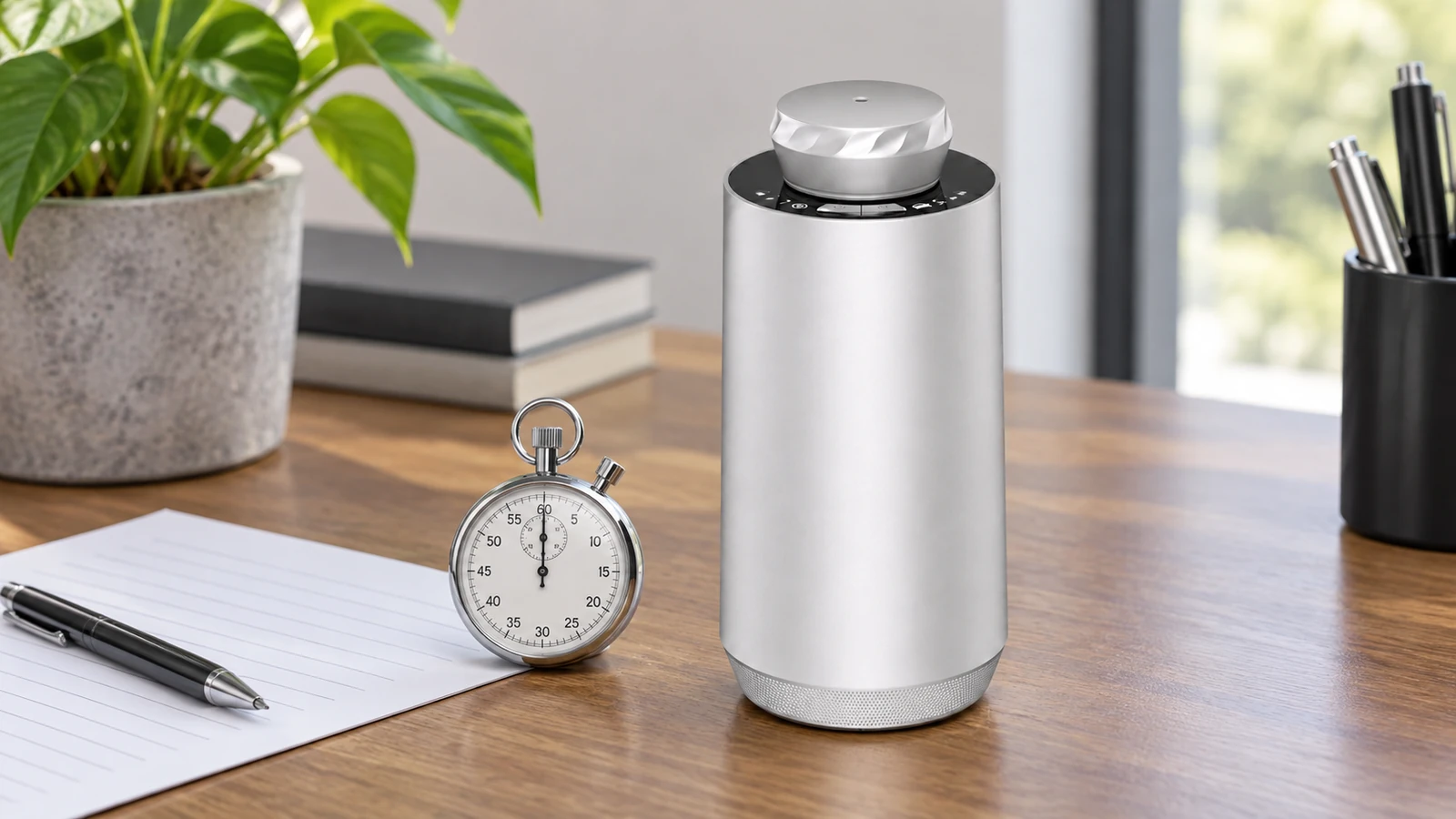
5. Repeat and report the spread
One successful sample is not a reliable basis for a universal claim. Repeat the same profile and, where possible, evaluate more than one representative unit. Report individual results and their range; do not publish only the longest observation. Describe sample age, settings and exclusions alongside the headline result. A comparison table can include sample ID, start time, end time, elapsed duration, operating profile and interruption notes. No fixed number of runs automatically turns an internal evaluation into certification.
6. Turn the evidence into a precise buying question
Ask a supplier what operating profile supports its stated runtime and whether that result applies to your exact version. Clarify charging time, permitted use during charging and the expected maintenance procedure separately. Battery capacity alone is not a runtime guarantee because the whole device's power demand matters. If your deployment schedule differs from the supplier's profile, request a relevant evaluation before committing to a rollout. Keep the approved test record with the product specification rather than shortening it to an unsupported number of days.
Frequently asked questions
Does a larger mAh figure always mean longer runtime?
No. Battery voltage, device demand, operating schedule and battery condition affect the comparison. Compare documented whole-device results under equivalent conditions.
Can I run the diffuser while charging during the test?
Only if the model instructions permit it, and label that as a separate operating condition. It cannot establish unplugged battery runtime.
Do these photographs show completed battery tests?
No. They are AI-generated editorial illustrations. No runtime result for SF03, SC02 or another Aromaprox model is claimed in this article.
Plan your next step
Send Aromaprox your intended daily schedule and exact model choice. Ask for the current charging instructions and a runtime statement that includes its test conditions.
Related resources
Images are AI-generated editorial scenarios based on Aromaprox product reference photographs. They are not test records, installation instructions or a statement of included accessories. Confirm the exact model, finish and current specifications before ordering.


