
Coworking Space Scenting: A Shared-Tenant Planning Guide
Coworking space scenting involves people who share a building but may not share fragrance preferences or working hours. A welcoming reception does not justify extending the same fragrance into every desk area and meeting room. The planning question is who uses each space, who can approve a change, and how members retain a practical way to object or choose an unscented setting.
1. Map users and decision rights
List the operator, reception team, facilities contact, resident companies and occasional visitors. Ask who can approve equipment in common areas and who maintains it. A tenant's preference for its private office is not automatically authority to scent a shared corridor. Record the proposed area and approval contact before choosing a machine. This is an operating framework, not a statement about lease terms or legal duties; check the arrangements that actually apply to the property.
2. Separate arrival spaces from sustained work
A reception visit may be brief while a member spends a full day at the same desk. Consider these experiences separately. For example, a pilot might examine only an entrance lounge while leaving desk zones and bookable rooms unscented. That is an illustrative choice, not a universal recommendation. Check shared air with building staff because a glass partition or open doorway may not keep fragrance within the intended area. Do not reduce needed ventilation to create a boundary.

3. Ask for useful member feedback before a pilot
Explain the location, proposed trial period and a simple way to comment privately. Ask whether fragrance is welcome in that area and whether an unscented option is needed. Avoid asking only which fragrance people prefer, as that assumes everyone wants one. Do not require personal medical details to accept a request to stop. Keep the decision record focused on the room's use and practical concerns, not on judging whether a person's preference is reasonable.
4. Choose a maintainable location and modest trial
Check the exact model's installation instructions, clearances and approved liquid before placement. Keep equipment outside circulation routes and away from members' possessions. A tall model such as H200D or a compact tabletop format can be reviewed for an appropriate location, but appearance does not establish coverage or suitability. Begin only after approval, use a conservative documented setting and have someone available to stop operation promptly. Do not run an unattended trial merely to collect feedback later.
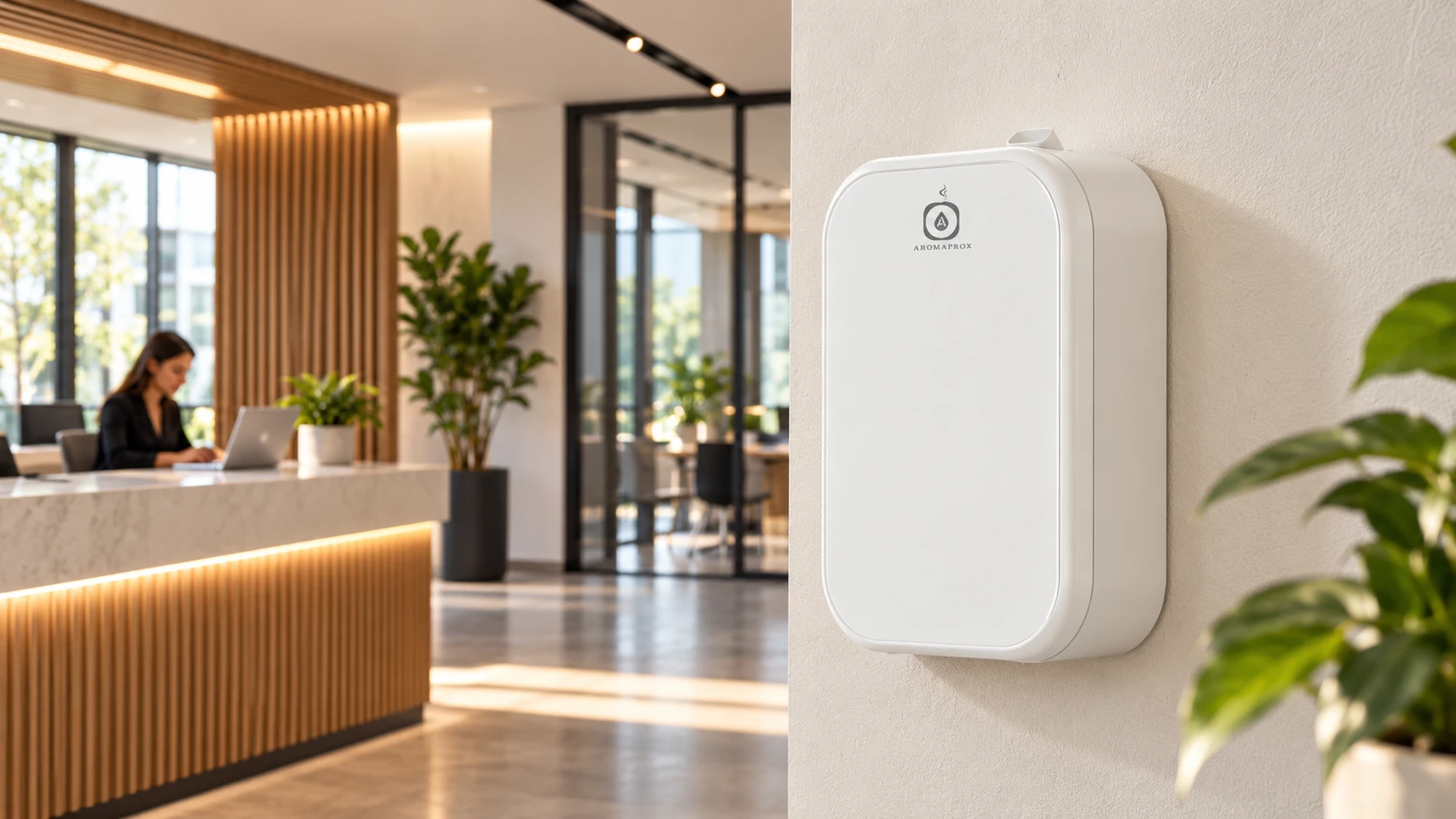
5. Assign one person to control changes
Reception, cleaners and individual tenants should not independently adjust a common-area device. Keep a short record of the model, fragrance, permitted settings, operating window and responsible person. A report that scent became stronger should trigger a check of changes and nearby sources, not an automatic counter-adjustment. Coordinate cleaning products and events as well. When staff change shifts, the current agreed setting should be clear without relying on a verbal recollection.
6. Review the outcome with all affected groups
Assess whether the reception objective was achieved without affecting work areas or creating unresolved objections. Do not judge success only from the operator's own impression. Record what will continue, what will stop and when to review the decision. A new tenant, altered partition or changed ventilation pattern can make the old arrangement unsuitable. Retain an easy reporting channel after the trial; acceptance at one point does not mean every future member will share the same preference.
Frequently asked questions
Should every coworking area use the same scent?
No. Start with how each space is used and whether fragrance is wanted. Shared air and long occupancy can make unscented desk or meeting areas preferable.
Can one tenant install a diffuser in a shared corridor?
Check the actual property approval process and affected users first. A private-office decision should not be assumed to cover common areas.
What should happen if a member objects?
Stop or adjust the arrangement through the agreed responsible person and review the concern. Do not require a member to tolerate a trial while feedback is being collected.
Plan your next step
Give Aromaprox a plan of the proposed common area and the building's operating constraints. Discuss an exact model only after the location, approval process and member-feedback plan are clear.
Related resources
Images are AI-generated editorial scenarios based on Aromaprox product reference photographs. They are not test records, installation instructions or a statement of included accessories. Confirm the exact model, finish and current specifications before ordering.


