
How to Choose Fragrance Oil for a Cold Air Diffuser
Choosing fragrance oil for a cold air diffuser requires more than selecting a pleasant scent. The oil must be compatible with the diffuser, stable during atomization, documented for the target market and appropriate for the people, materials and activities in the space.
Start With Machine Compatibility
Cold air diffusion uses controlled atomization rather than water or heat. Oils formulated for candles, reed diffusers, personal perfume or ultrasonic devices may not have the same viscosity, carrier system or material compatibility. Using an unsuitable liquid can reduce output, leave residue or shorten service intervals.
Ask the supplier to confirm the intended application in writing. Match the oil to the specific diffuser model and bottle, tube, seal and atomizer materials. The comparison in cold air diffusion versus ultrasonic technology explains why liquids cannot automatically be shared between systems.
Review Technical and Compliance Documents
Commercial buyers should request a current Safety Data Sheet and applicable fragrance or allergen documentation for the destination market. Documents should identify the supplied product, revision date and responsible company. Requirements vary by country and use case, so the buyer must confirm local obligations with qualified advisers.
Documentation is also a consistency tool. Record the approved formula reference and batch so later deliveries can be compared with the original sample. Avoid relying only on a marketing name such as “luxury hotel scent,” because names do not define composition or suitability.
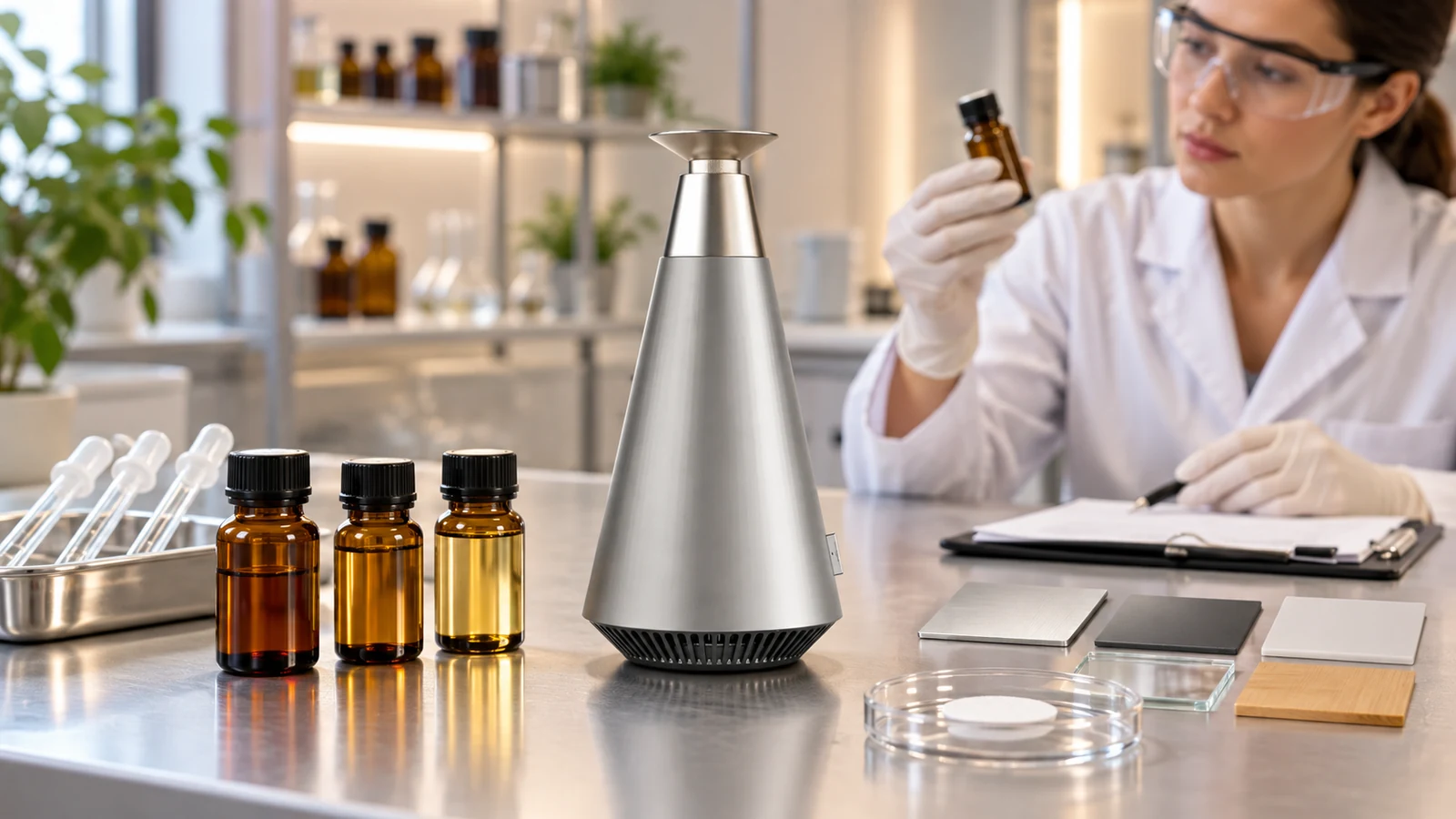
Evaluate Scent Character in the Target Space
A blotter test helps compare scent direction, but it does not predict performance in a ventilated room. Test top, middle and dry-down character over time. Then run the approved oil in the intended diffuser at a conservative setting and observe how doors, airflow, temperature and occupancy change perception.
Choose a profile that supports the brand and activity. Food areas need particular restraint; gyms, spas, offices and showrooms have different expectations. A scent that works in a small sample room may become heavy when repeated across a large site.
Measure Operating Performance
During the trial, record setting, schedule, room volume, oil use and maintenance observations. Stable output is more valuable than an intense first impression. Check whether the fragrance leaves objectionable residue near the machine or requires unusually frequent cleaning.
Use the site’s expected operating hours to estimate monthly consumption. The commercial diffuser oil consumption guide provides a framework, but actual use must be measured with the selected oil and settings.
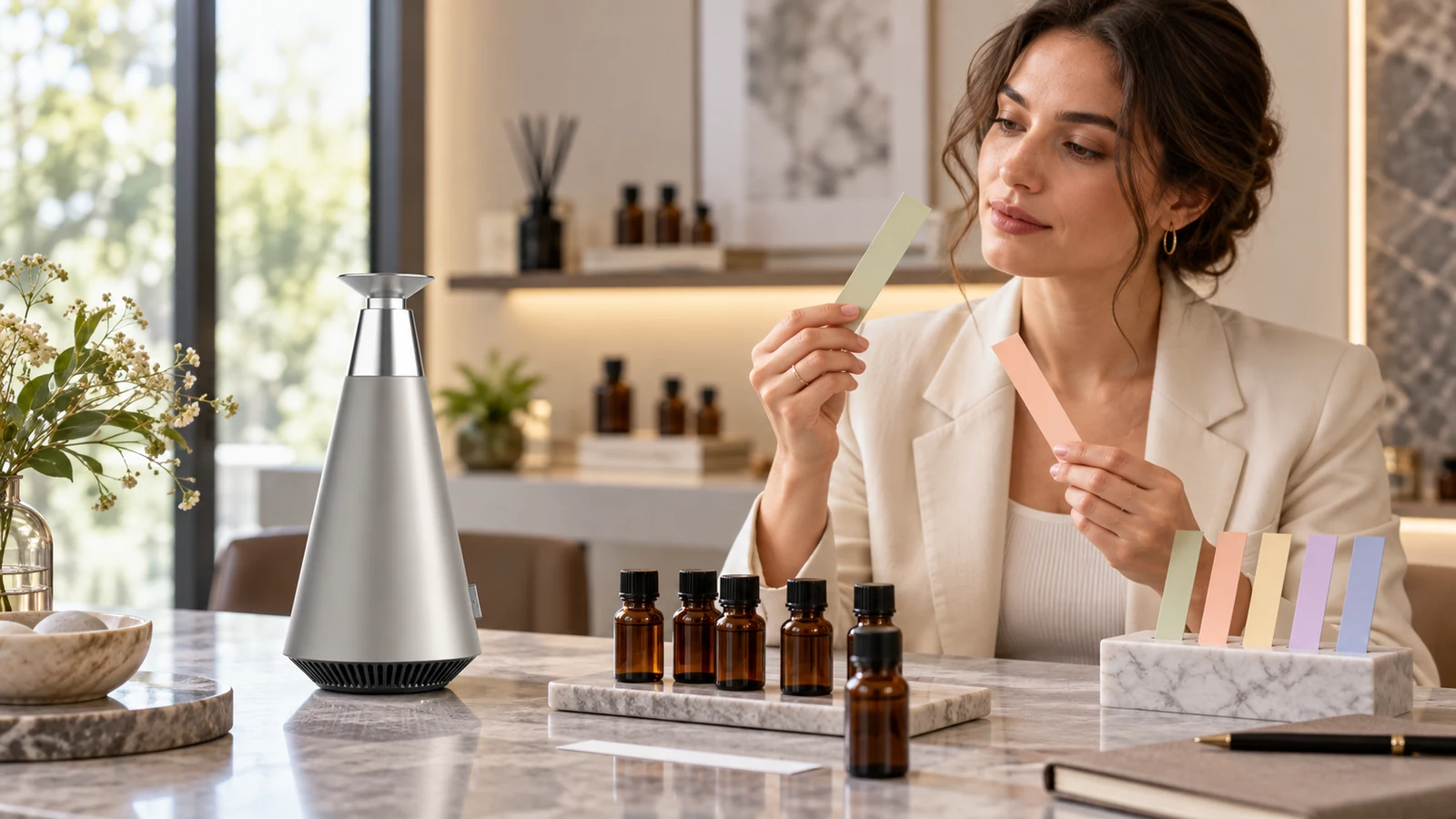
Approve a Reference Sample Before Volume Purchasing
Keep a sealed approved oil sample and written evaluation record. Define acceptable color, odor profile, documentation, fill quantity and packaging. When a new batch arrives, compare it before filling multiple machines.
For private-label projects, specify whether the fragrance is standard, modified or exclusive, who owns the formula reference and how substitutions will be controlled. These details are more dependable than approving a scent name alone.
Implementation Checklist
- Define the objective, target user and operating environment.
- Confirm the exact diffuser, oil, accessories and documentation.
- Approve a written baseline before changing settings or specifications.
- Test in realistic conditions and record the result.
- Assign one authorized person to approve changes.
- Keep samples, photographs and revision records.
- Review the program after layout, ventilation or product changes.
Frequently Asked Questions
Can essential oil be used directly in a cold air diffuser?
Only when the diffuser manufacturer confirms that the specific oil and formulation are compatible with that model.
Is thicker fragrance oil better?
No. Viscosity must suit the atomizer; oil that is too thick or otherwise incompatible may reduce performance.
What documents should a commercial buyer request?
Typically an SDS plus any applicable fragrance, allergen, transport and market-specific documents required for the intended use.
How should I test a fragrance oil sample?
Evaluate it on a blotter, then run a controlled trial in the intended diffuser and space while recording settings, consumption and feedback.
Discuss Your Project With Aromaprox
For compatible oil samples and diffuser recommendations, share the model, market and target scent profile with Aromaprox.