
Restaurant Scent Marketing: How to Add Fragrance Without Competing With Food
Restaurant scent marketing should support arrival, atmosphere and brand memory without masking food, cleanliness problems or ventilation issues. The most successful programs use restrained fragrance in carefully selected non-food zones and give managers clear authority to reduce or pause output.
Define the Role of Scent
Begin with a precise objective: create a calm arrival, reinforce a design concept, make a waiting area feel more welcoming or provide a consistent transition from the street. Do not use fragrance to cover smoke, drains, waste or cleaning issues. Those sources require operational correction first.
The scent identity should complement the restaurant’s cuisine and positioning without imitating a dish. An abstract woody, citrus, tea or botanical direction may be easier to control than a literal food aroma. Approval should involve operations as well as marketing.
Map Zones Before Choosing Equipment
Walk the site during quiet hours and full service. Mark the entrance, host desk, waiting area, bar, dining rooms, private rooms, restrooms, kitchen doors, delivery routes and exhaust points. Air movement and door cycles matter more than visual symmetry.
Candidate scent zones are normally separated from food preparation and direct dining exposure. A discreet portable unit may suit a lounge, while a larger system may serve a high-volume entrance. Use the coverage calculator as a starting framework, then validate on site.
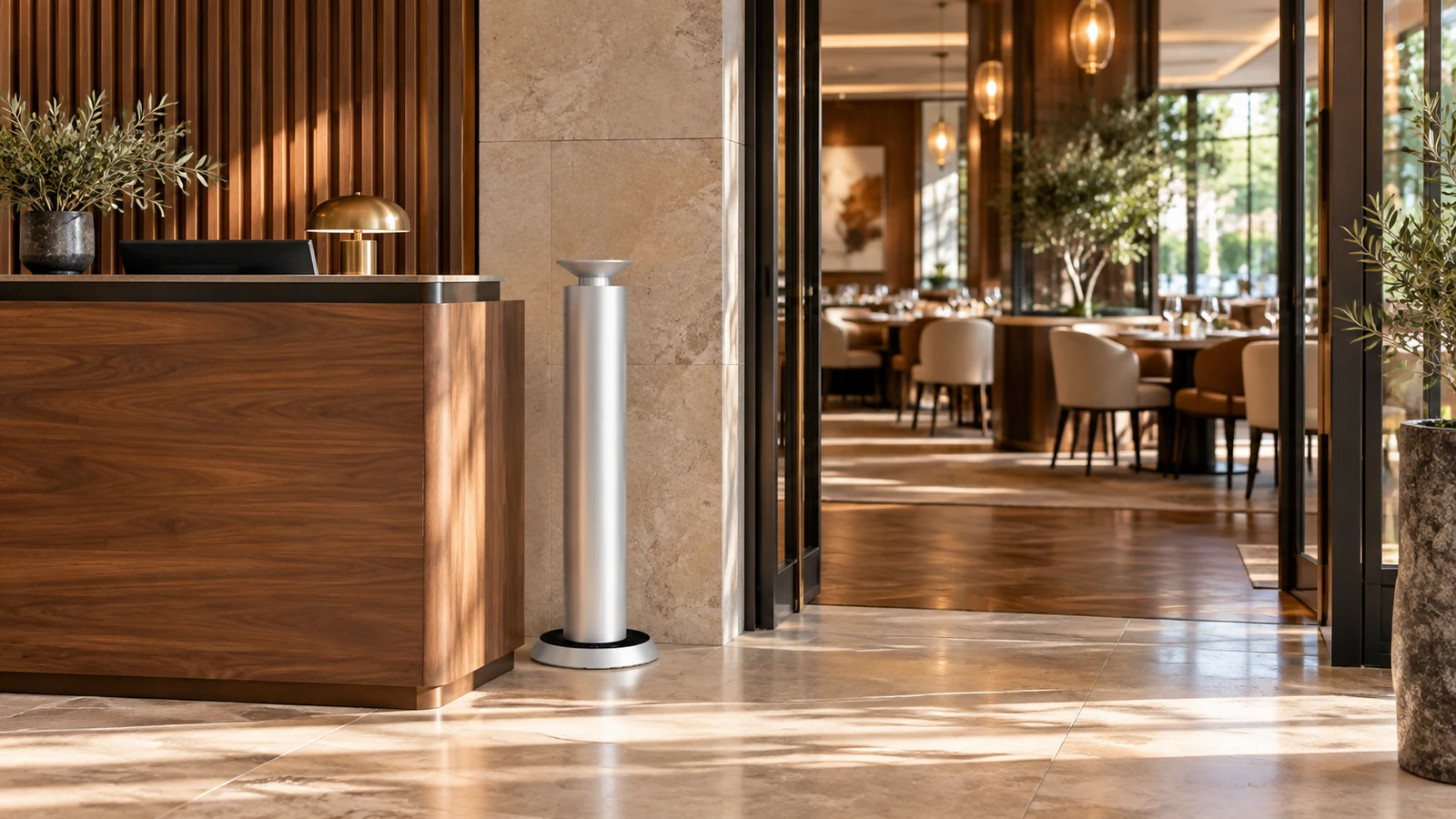
Protect the Food Experience
Flavor perception and aroma are closely connected, so excessive ambient fragrance can interfere with the meal. Keep intensity lower than in a hotel lobby or fashion store. Avoid aiming a diffuser toward tables, pass-through counters, open kitchens, wine service or pastry displays.
Schedule fragrance to begin before opening at a low baseline and reduce or pause it during sensitive service moments if needed. Train staff to report when the ambient scent becomes identifiable as a separate layer rather than a subtle background cue.
Run a Controlled Service Trial
Test one zone, one fragrance and one setting. Observe guest arrival, table turnover periods, door openings and HVAC cycles. Gather structured feedback from front-of-house managers, not only people standing beside the diffuser.
Document schedule, setting, weather, occupancy and comments for at least several representative service periods. If a complaint occurs, pause the system and record the location and time. That creates evidence for adjustment rather than guessing.
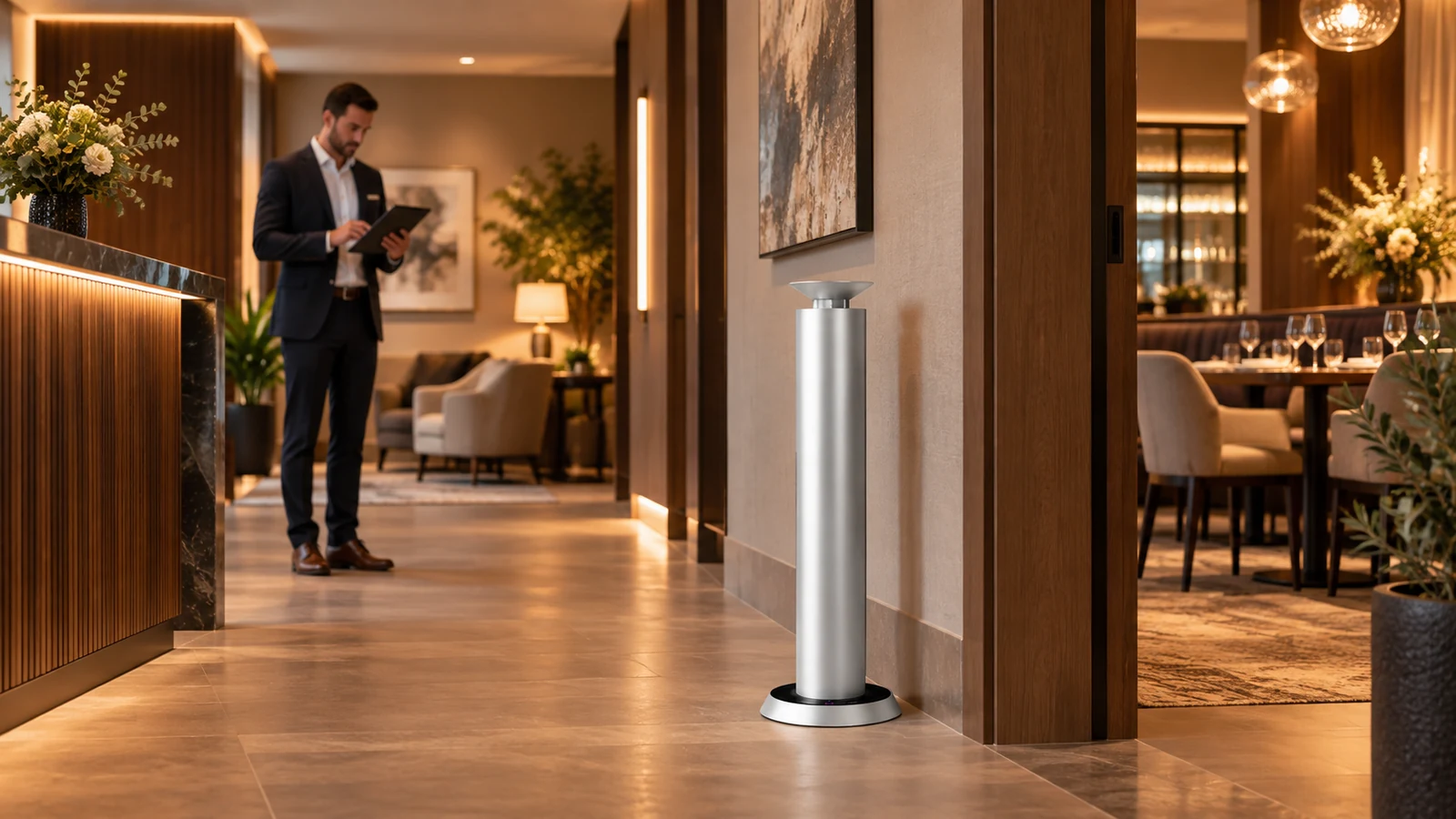
Create Operating and Maintenance Rules
Assign one approved person to change settings. Keep oil bottles labeled, closed and stored away from food. Include diffuser cleaning, refill dates and inspection in the facilities schedule. Staff should know how to switch the system off immediately.
Review the program when menus, ventilation, layout or seasonal traffic changes. The placement and intensity that worked in winter may not suit an open terrace or summer air-conditioning pattern.
Implementation Checklist
- Define the objective, target user and operating environment.
- Confirm the exact diffuser, oil, accessories and documentation.
- Approve a written baseline before changing settings or specifications.
- Test in realistic conditions and record the result.
- Assign one authorized person to approve changes.
- Keep samples, photographs and revision records.
- Review the program after layout, ventilation or product changes.
Frequently Asked Questions
Where should a scent diffuser be placed in a restaurant?
Usually in entrances, waiting lounges or selected transition areas, away from kitchens, open food and direct table exposure.
Can restaurant scenting affect food taste?
Strong or poorly placed fragrance can interfere with aroma perception, which is why intensity and zoning must be conservative.
Should fragrance run during every service period?
Not automatically. Test schedules during real service and reduce or pause output when ventilation, menus or occupancy make it inappropriate.
Can fragrance cover kitchen or drain odors?
It should not. Odor sources, sanitation and ventilation problems must be corrected directly.
Discuss Your Project With Aromaprox
For a restaurant zoning and equipment discussion, send floor plan, service hours and ventilation notes to Aromaprox.