
Waterless Scent Diffuser Troubleshooting: Why Is My Diffuser Not Producing Fragrance?
Waterless scent diffuser troubleshooting works best when you test one variable at a time. A room may seem unscented because the machine has no power, its operating schedule is inactive, the oil path needs service, the atomization assembly is not seated correctly, or airflow is carrying fragrance away from the expected zone.
This guide provides a safe diagnostic order for owners and facility teams. Always use the instructions for the exact model, disconnect power before opening a service compartment, and send electrical or component repairs to qualified support personnel.
1. Define the Symptom Before You Touch the Machine
Separate no operation, operation with no detectable fragrance, weak coverage, intermittent output and unexpected noise. These symptoms point to different checks. Record when the issue began, the last refill or cleaning date, the current program and whether the room ventilation changed.
Do not diagnose by standing directly beside the diffuser. Evaluate the intended occupied zone after leaving the area briefly, because regular occupants may become less aware of a stable scent.
2. Check Power, Indicators and the Operating Schedule
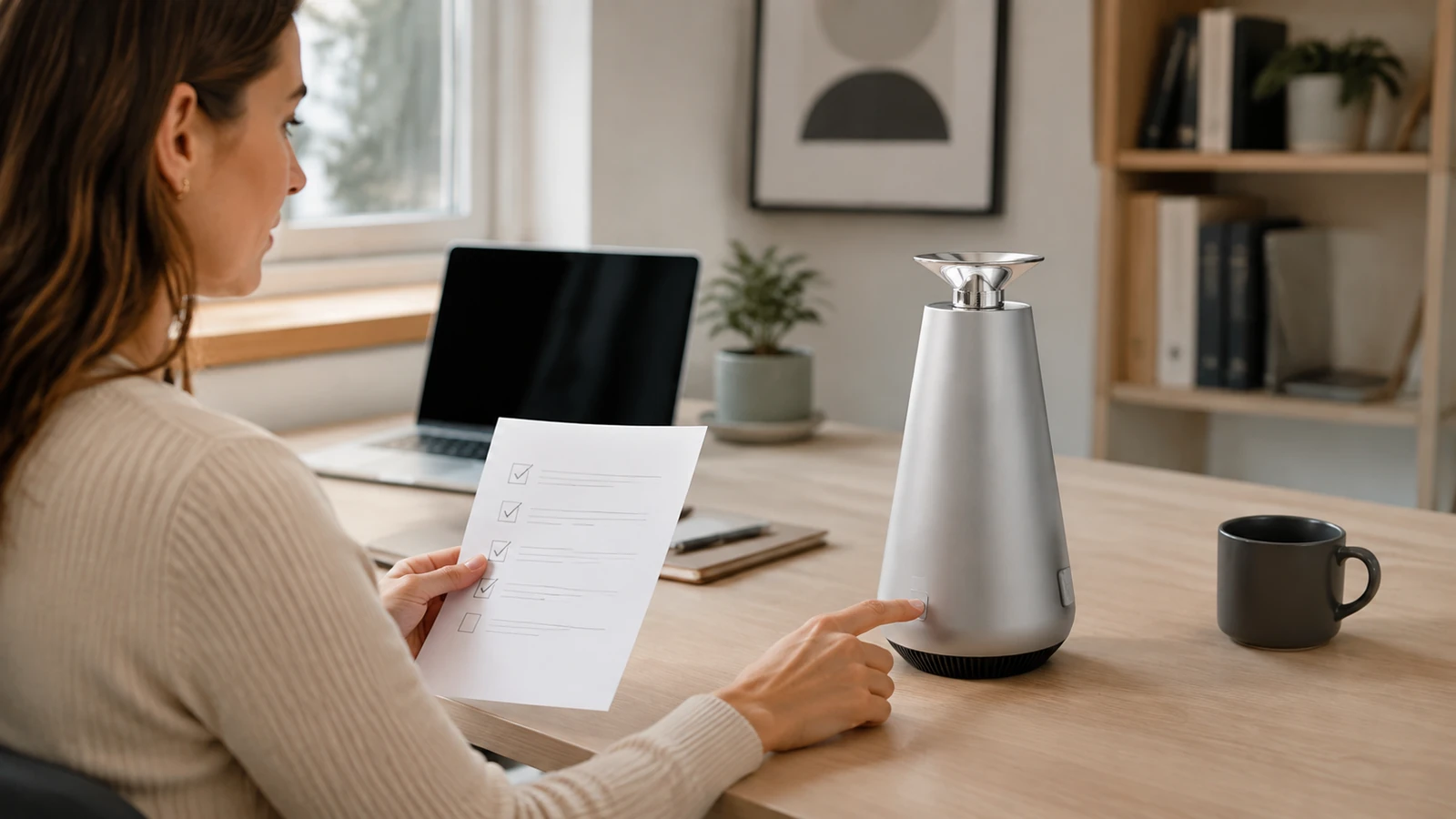
Verify the specified power adapter, outlet and switch position. Confirm that the device clock, working periods and day-of-week schedule include the current time. A correctly powered unit can still appear inactive when it is inside a programmed pause interval.
- Use only the approved voltage and adapter.
- Check that plugs are fully seated.
- Review start, stop, work and pause periods.
- Confirm the time zone after an app reset or network change.
3. Verify the Oil and Bottle Installation
Confirm that the liquid is intended for the waterless diffusion system and has not been mixed with water or an unapproved carrier. Inspect the bottle for correct threading, seal condition and sufficient oil. A tilted, loose or incompatible container can interrupt delivery.
Aromaprox recommends matching the oil and machine specification; review the current guidance on the aroma oil collection or ask support before testing a different liquid.
4. Inspect User-Serviceable Atomization Parts
Follow the model manual for accessible cleaning. Residue around an air path, nozzle or atomization head can reduce output. Use only the recommended cleaning material and never force a narrow tool into calibrated openings. Reassemble every seal and part in its original orientation.
If a component is cracked, swollen, heavily blocked or electrically damaged, stop the test and contact the supplier rather than improvising a repair.
5. Test Output in a Controlled Area
Move a portable model to a suitable test location, use a known approved oil and run a short documented program. Listen for the normal operating cycle and evaluate at several distances. A successful local test suggests that placement, ventilation or room size—not the machine alone—is affecting perceived coverage.
6. Review Placement and Airflow
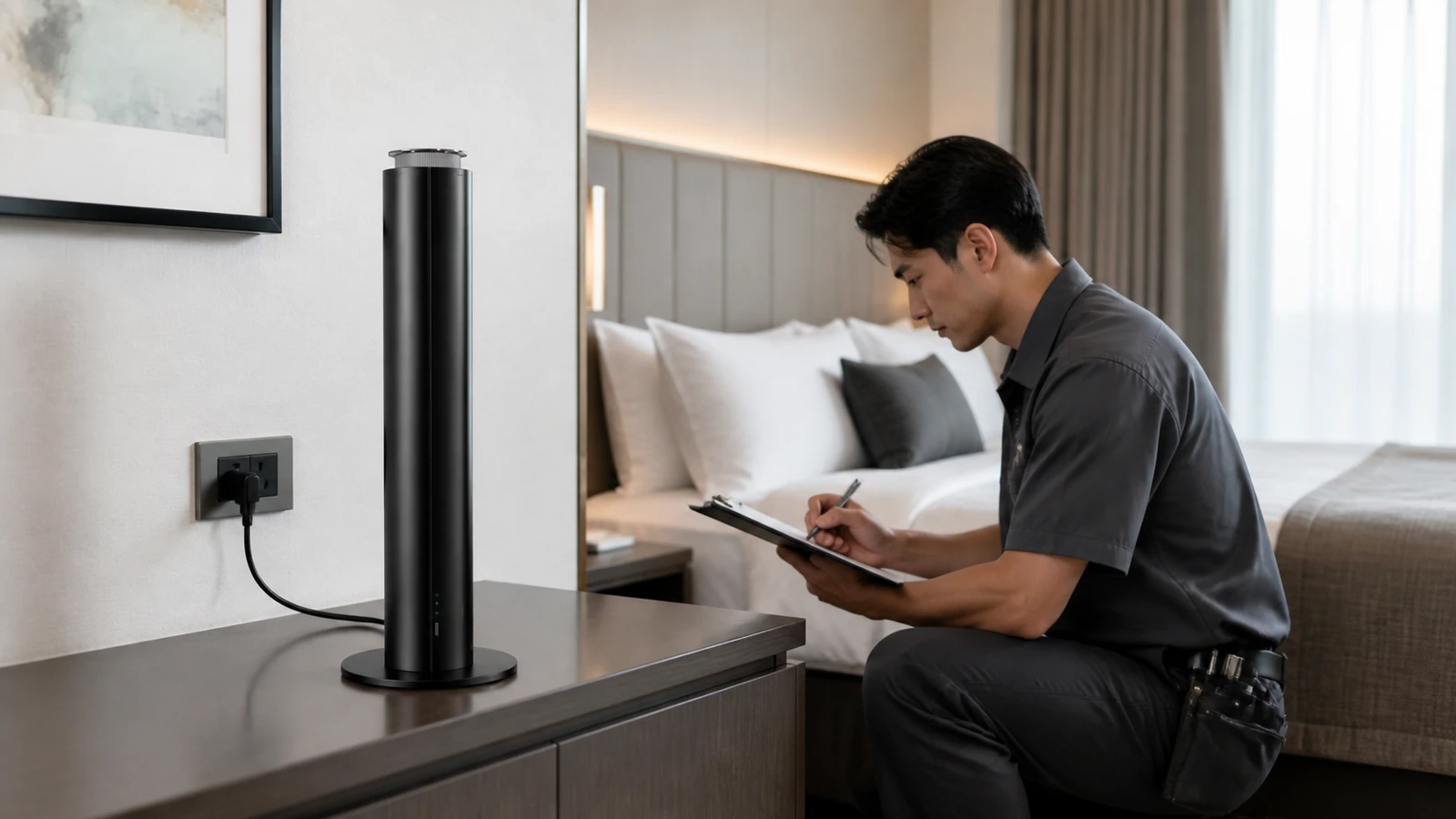
Keep the diffuser away from a strong exhaust, an open exterior door or an obstacle that traps output. For larger rooms, compare the target zone with the scent diffuser coverage calculator. Adjust only one of placement, operating time or intensity, then allow the environment to stabilize before judging the result.
7. Know When to Escalate
Stop using the unit if there is overheating, liquid leakage near electrical parts, a damaged cable, burning odor or repeated fault behavior. Record the model, serial details, oil used, settings, video of the symptom and steps already tested. This evidence helps technical support avoid repeating basic checks.
Implementation Checklist
- Confirm the exact objective and target user.
- Verify the current product specification and instructions.
- Record room or vehicle conditions before testing.
- Start with conservative approved settings.
- Change one variable at a time.
- Keep an approved sample, baseline or installation record.
- Assign one person to approve changes.
- Review results after operating conditions change.
A documented baseline makes troubleshooting, staff training and future purchasing more reliable. It also provides first-party evidence for improving later product selection and operating standards.
Frequently Asked Questions
Why is my waterless diffuser running but not producing fragrance?
Possible causes include an inactive work cycle, an empty or incorrectly fitted bottle, residue in a user-serviceable oil path, unsuitable oil, poor placement or scent adaptation.
Can I add water to a waterless scent diffuser?
No. A waterless system should use only the liquid specified for that exact model.
How often should a waterless diffuser be cleaned?
Follow the model manual and adjust the maintenance interval to oil type, operating hours and site conditions.
When should I contact technical support?
Escalate damaged electrical parts, leaks, overheating, persistent faults or issues that remain after the approved basic checks.
Document the Symptom Before Requesting Support
For model-specific help, send the machine model, oil, settings and test results through Aromaprox support.


