
Cold air diffusion vs ultrasonic diffuser is an important comparison for anyone choosing a scent system. Both technologies can disperse fragrance, but they use different liquids, produce different particle behavior and create different maintenance routines. The right choice depends on whether your goal is light personal aromatherapy or consistent scent coverage for a home, hotel, office, spa or retail environment.
How Cold Air Diffusion Works
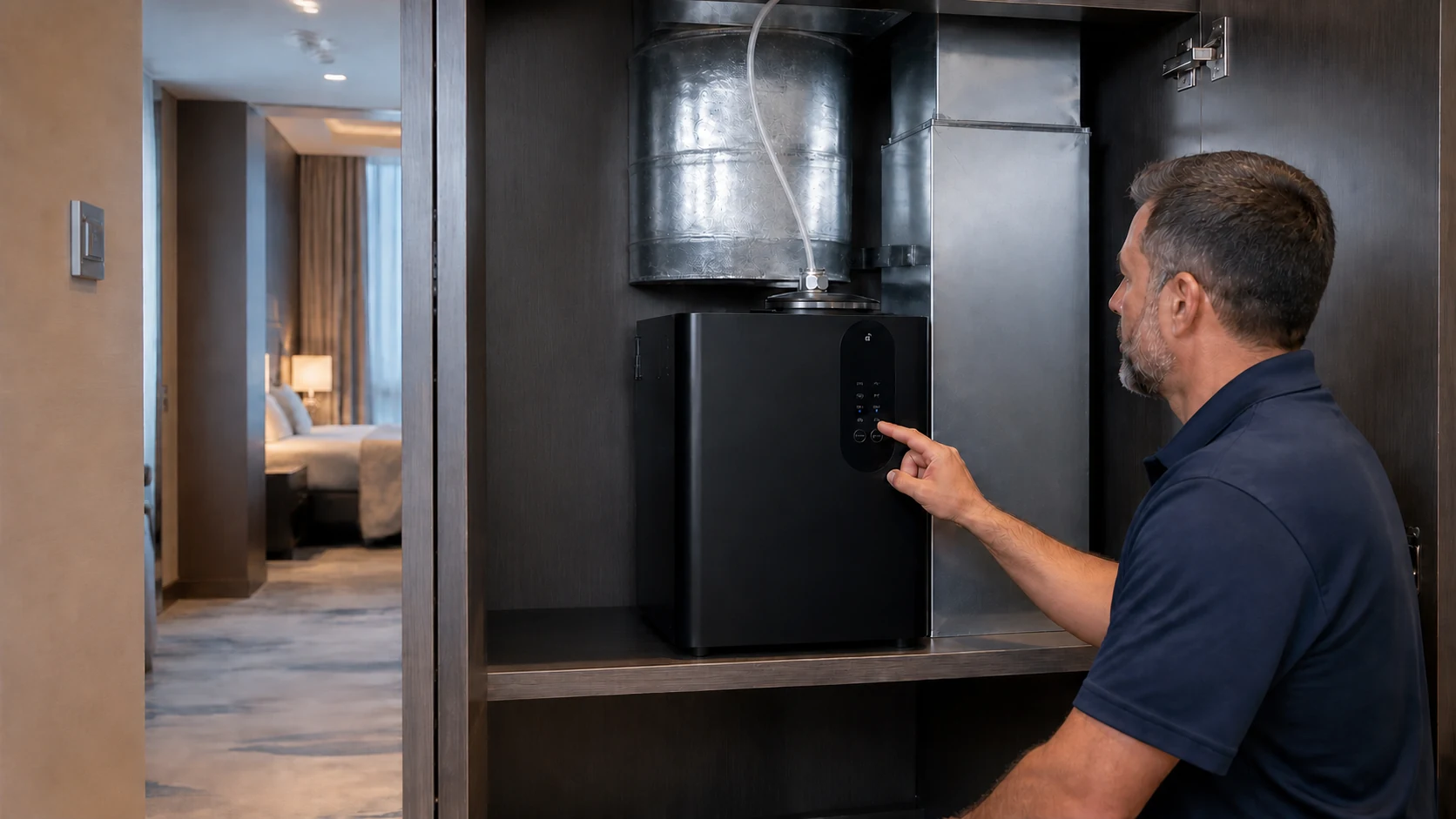
Cold air diffusion—also called waterless or nebulizing scent diffusion—uses airflow and an atomization system to break liquid fragrance into very fine particles. The process does not heat the oil or dilute it in a water tank. Settings control when the device operates and how frequently it atomizes.
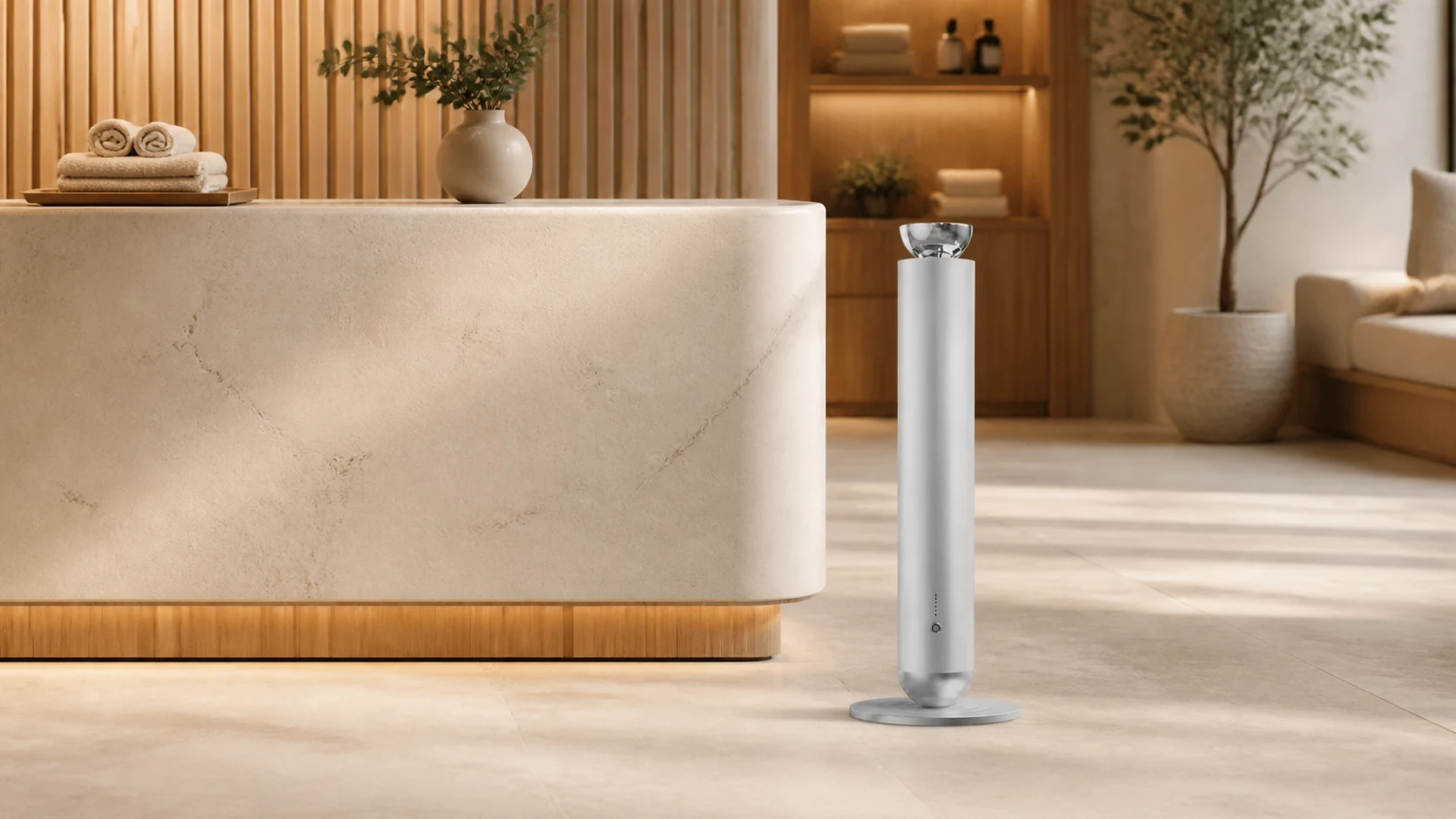
This approach is useful when consistent fragrance intensity, scheduling and low daily handling matter. Aromaprox products such as the SP01 and SF03 support programmed scenting in different form factors.
How an Ultrasonic Diffuser Works
An ultrasonic diffuser uses a vibrating plate inside a water reservoir. The vibration produces a cool visible mist containing water and a small amount of compatible essential or fragrance oil. These units are popular for short sessions in bedrooms, small wellness areas and personal spaces.
Because water is part of the process, the tank needs regular filling and cleaning. Output may also be affected by the water-to-oil ratio and mineral buildup. The visible mist is easy to see, but visibility does not automatically mean better scent distribution.
Cold Air vs Ultrasonic: Key Differences
| Factor | Cold Air Diffusion | Ultrasonic Diffusion |
|---|---|---|
| Liquid | Fragrance oil without water | Water plus compatible oil |
| Humidity | Does not add meaningful humidity | Adds moisture to the air |
| Output | Fine, typically less visible particles | Visible water mist |
| Control | Often designed for schedules and intensity cycles | Usually simple session-based operation |
| Maintenance | Oil bottle and atomization path | Water tank, plate and oil residue |
| Typical use | Homes, hospitality, offices and retail scenting | Small personal or wellness spaces |
Fragrance Performance and Consistency
Cold air systems can deliver a concentrated scent experience because fragrance is not diluted with water. Programmable cycles make it easier to align output with occupancy. Ultrasonic units are often gentler and work well for shorter sessions, but they require a consistent water and oil routine.
The fragrance itself also matters. Heavy woods, resins and gourmands can feel stronger than citrus or airy florals at the same setting. Always begin at a low intensity and evaluate the actual room.
Maintenance and Daily Operation
A waterless diffuser avoids the daily task of filling a reservoir, but it is not maintenance-free. Follow the manufacturer’s instructions for oil changes, atomizer cleaning and storage. Do not mix incompatible formulas or allow residue to harden in the scent path.
An ultrasonic tank should be emptied and cleaned regularly to prevent residue, odor carryover and mineral deposits. Never leave stagnant water for long periods, and do not assume every fragrance oil is safe for the tank material.
Which Technology Should You Choose?
- Choose cold air diffusion when you need waterless operation, programmable scenting, stronger coverage potential and a professional fragrance routine.
- Choose ultrasonic when you want a light, visible mist for a small personal area and do not mind filling and cleaning a water tank.
For businesses, consistency and staff workload often make cold air diffusion the more practical choice. For a bedside wellness ritual, a small ultrasonic unit may be sufficient.
Frequently Asked Questions
Is cold air diffusion the same as ultrasonic diffusion?
No. Cold air diffusion atomizes fragrance oil without adding water, while ultrasonic units use vibration in a water reservoir to create a visible mist.
Which diffuser is better for commercial spaces?
Cold air diffusion is generally better suited to controlled scenting across larger or professionally managed spaces because it is waterless and can provide consistent fragrance output.
Does a cold air diffuser increase humidity?
No meaningful humidity is added because the system does not rely on a water reservoir.
Can I put fragrance oil directly into an ultrasonic diffuser?
Only follow the specific manufacturer's instructions. Many ultrasonic devices require water and only a limited amount of compatible oil; using the wrong liquid can damage the unit.
Choose Technology Around the Experience
The best diffuser is the one that matches the room, operating schedule and desired scent intensity. Explore Aromaprox home diffuser options, compare product controls and request guidance through the contact page.


