
Fragrance Oil Refill Bottle Sizes: Build a Practical Range
Fragrance oil refill bottle sizes affect more than the price per milliliter. A useful refill must be manageable where it is opened, compatible with the intended handling method and appropriate for the customer's replenishment routine. Retail customers and trained service teams may need different packs even when they use the same fragrance. Start with those tasks before creating a long list of bottle sizes.
1. Separate the refill pack from the machine reservoir
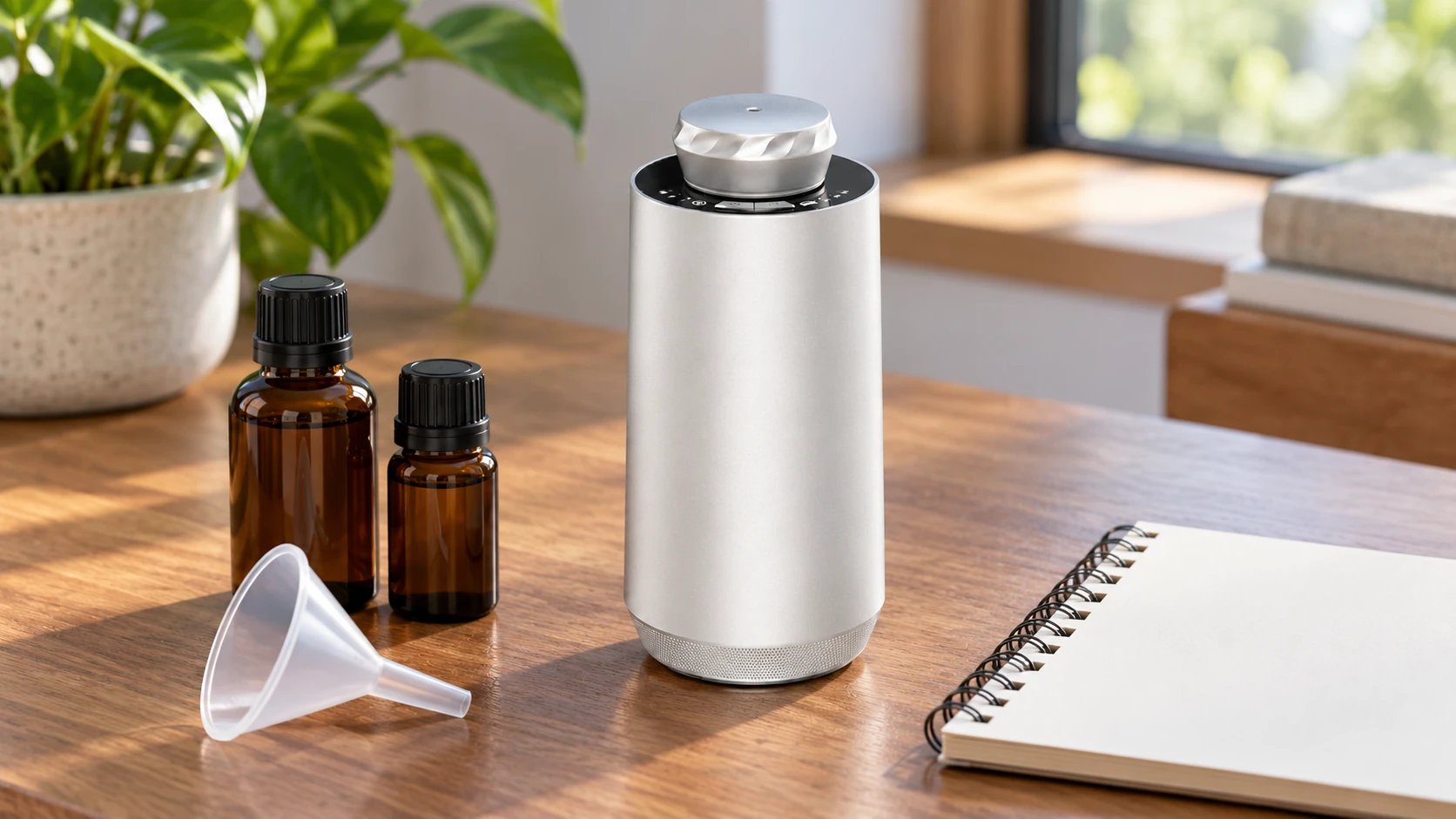
A refill may be poured through an approved procedure or supplied as a model-specific replacement container. These arrangements are not interchangeable. Establish whether the customer transfers liquid or installs the bottle directly. Check neck dimensions, closure, seals and connection requirements where relevant. Do not assume that a bottle with the same nominal volume fits the machine, and do not encourage customers to exceed the reservoir's specified fill level.
2. Design for the person doing the refilling
Consider whether the pack is handled at home, on a retail counter or by a service technician carrying several fragrances. Review grip, opening, controlled dispensing and the ability to reclose the package without contaminating it. Evaluate the filled package rather than an empty sample alone. A large pack may look economical on a spreadsheet while being awkward at the actual refill location; a smaller pack may simplify handling for some customers.
3. Use real replenishment records to narrow the range
Review actual reorder intervals and customer use patterns for the intended configuration. Keep different device schedules and sites separate instead of averaging them into a universal bottle-life promise. For a new range, begin with a small, understandable assortment and collect feedback before adding more sizes. Explain the quantity supplied clearly. Avoid promising a fixed number of months unless the claim has a defined and substantiated operating basis.
4. Validate the complete package with the formulation
Ask the fragrance and packaging suppliers to assess the bottle, closure, liner and any dispensing accessory as a complete system. Confirm relevant storage and transport conditions and the approved handling instructions. Material names alone do not establish compatibility with every fragrance. Keep documentation tied to the exact formulation and package revision. Do not recommend household containers or improvised dilution as a way to make a refill format more convenient.
5. Plan labels, storage and stock rotation
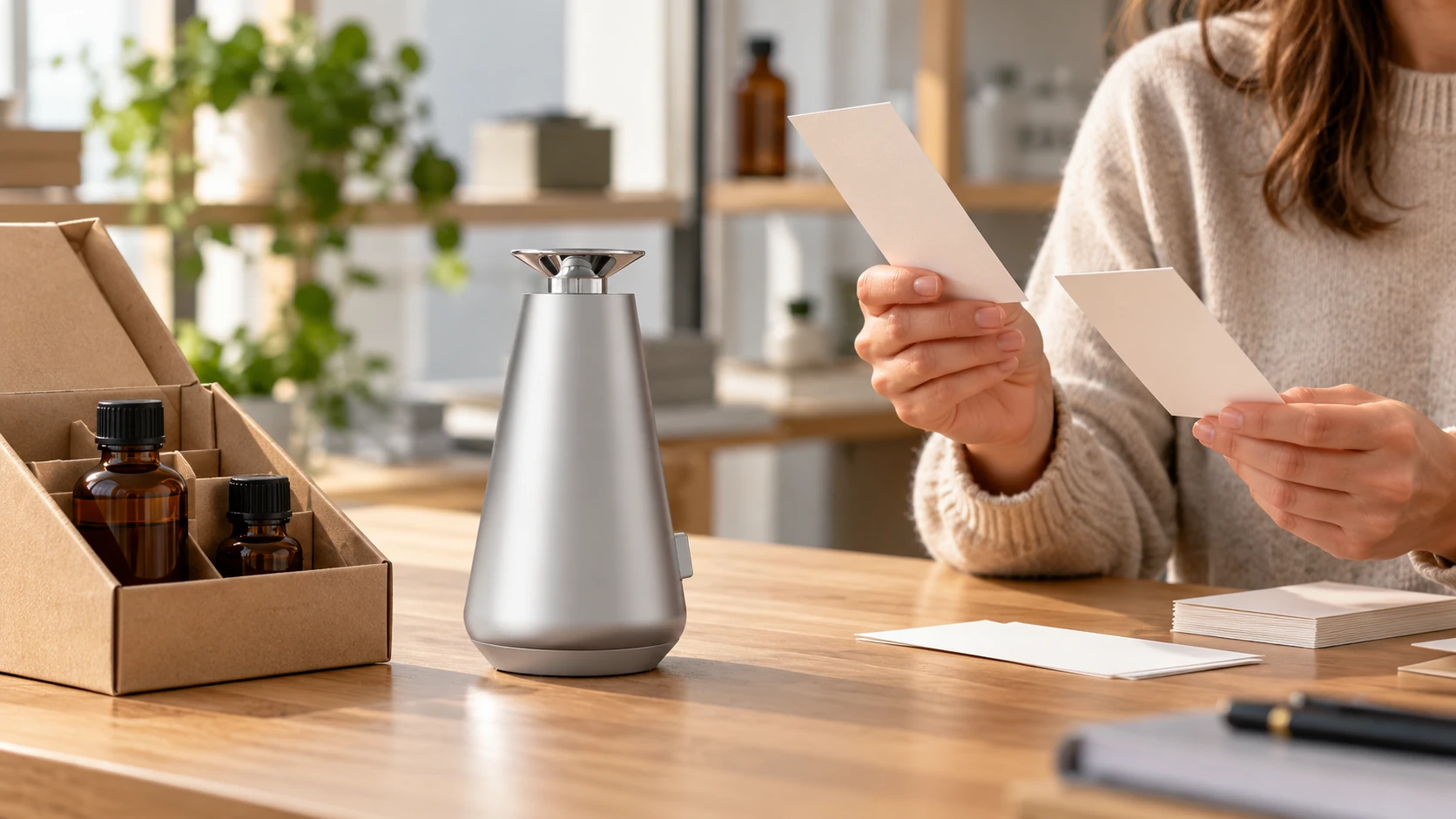
Make fragrance identity, quantity, lot reference and handling information easy to distinguish, especially when several oils are stored together. Have the responsible specialist confirm applicable labeling and transport requirements for the exact formulation and market. Use supplier-defined storage and shelf-life guidance rather than assigning an arbitrary expiry date. Keep the remaining oil in its approved, correctly closed package and ensure service staff can trace which lot was used.
6. Compare total practicality before finalizing sizes
Compare purchase price, packaging, shipping, service handling and the risk of unused remainder without assuming which option wins. Obtain feedback from the people who actually refill the equipment. A sensible range might separate an accessible consumer format from a service format, but the quantities should follow the evidence and packaging validation. Record why each size exists so new variants solve a real need instead of creating confusing inventory and duplicate listings.
Frequently asked questions
Should the refill bottle equal the diffuser reservoir size?
Not necessarily. First determine whether it is a transfer refill or a directly installed replacement bottle. Capacity alone does not prove mechanical compatibility.
Is the largest refill always the most economical?
No. Compare handling, transport, storage and unused remainder alongside the unit price. The best pack depends on the customer's actual replenishment workflow.
Can I promise how many months a refill will last?
Only with a clearly defined and substantiated basis. Device configuration, operating schedule and usage conditions must be stated; bottle volume alone is insufficient.
Plan your next step
Share your target customer and refill workflow with Aromaprox. Discuss compatible packaging and a focused size range alongside the actual diffuser and fragrance configuration.
Related resources
Images are AI-generated editorial scenarios based on Aromaprox product reference photographs. They are not test records, installation instructions or a statement of included accessories. Confirm the exact model, finish and current specifications before ordering.


