
Apartment Lobby Scenting: Plan Around Residents, Not Just Decor
Apartment lobby scenting differs from fragrance in a hotel or a property-sales showroom. Residents pass through repeatedly, receive deliveries and may have no alternative route to their homes. A decorative machine and an attractive fragrance are therefore only a small part of the decision. Property managers need a transparent plan for approval, feedback and everyday operation.
1. Start with the building's approval process
Identify the property manager, facilities team and any resident body involved in common-area decisions. Check the arrangements that apply to the building rather than assuming a hotel-style branding decision is appropriate. Write a short proposal that identifies the area, intended purpose and review period. This article offers an operational framework, not legal advice on leases or residential governance. Do not purchase or install equipment before the required local approvals are resolved.
2. Separate optional atmosphere from maintenance
Investigate persistent unwanted odors through the relevant cleaning or building-maintenance process. A new fragrance should not cover a waste-room, drainage, dampness or ventilation issue. Residents may interpret a strong new smell as a sign that something is being concealed. Explain the proposed experience plainly and avoid claims that fragrance disinfects, purifies the air or proves cleanliness. If there is no clear resident benefit, leaving the lobby unscented is a sensible decision.
3. Review the routes people cannot avoid
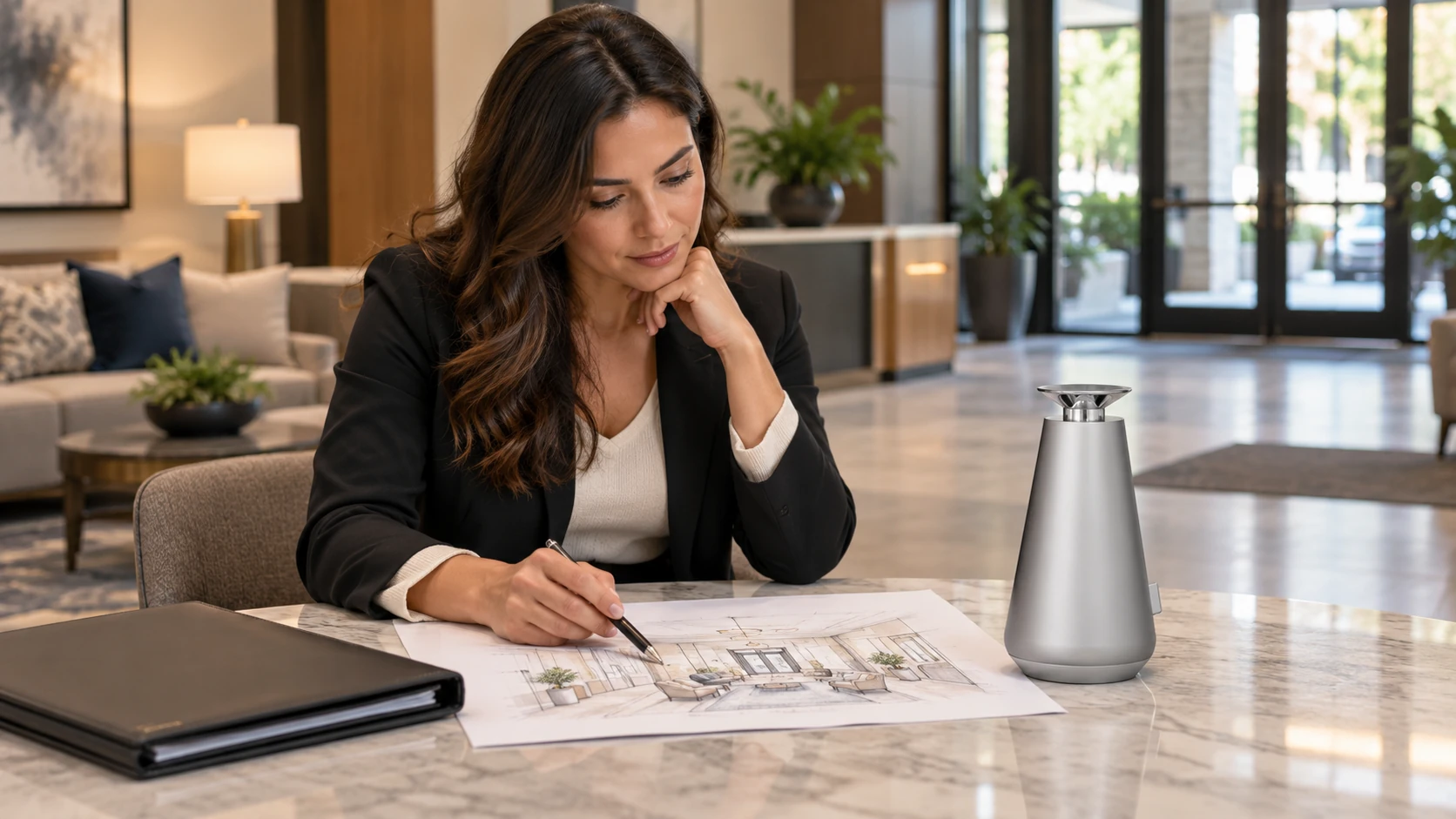
Map the main entrance, elevators, mail area, seating and doors to residential corridors. Consider how long people wait and whether fragrance could move into areas outside the proposal. Keep access routes and equipment servicing separate. A lobby seating alcove might be assessed differently from a compulsory elevator queue, but neither is automatically suitable. Ask facilities staff about shared air, and do not alter ventilation merely to retain fragrance in the lobby.
4. Collect feedback before and during a trial
Offer a simple private channel for comments and explain who will respond. Ask whether added fragrance is wanted, not only which scent is preferred. Avoid requiring residents to disclose medical details to request an unscented environment. If a trial proceeds, state its area and period and keep the ability to stop promptly. Record concerns from repeated users as well as occasional visitors; a positive first impression does not describe the experience of passing through several times daily.
5. Choose equipment around safe, practical access
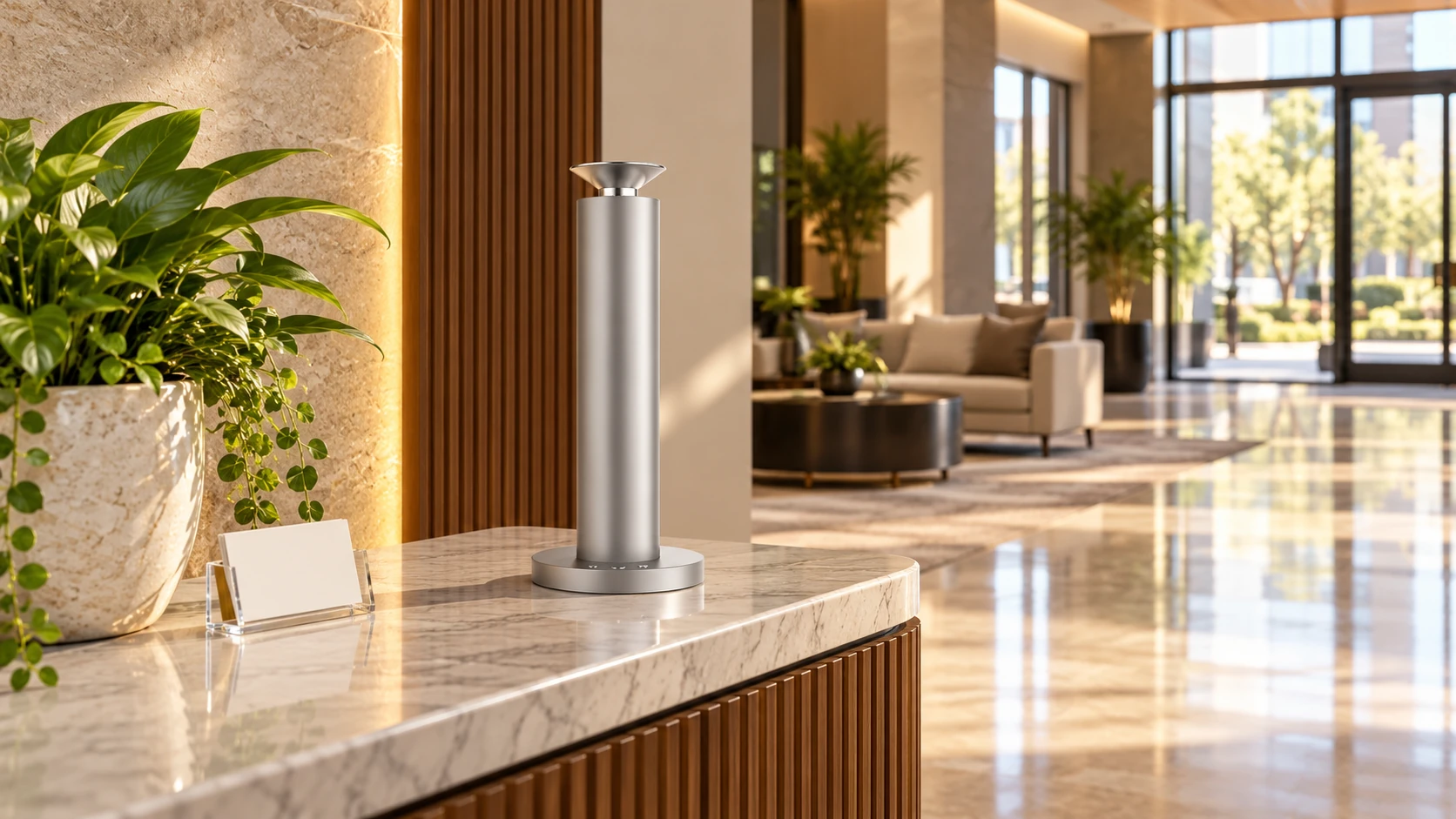
Follow the exact model's placement instructions, keep outlets clear and avoid obstructing circulation or housekeeping work. A freestanding SF03 in an illustration is not a prescription for every residential lobby. Confirm stability, permitted clearances, power arrangements and service access for the real site. Keep refill containers out of public reach and handle them according to instructions. Only authorized staff should adjust the common-area setting, even if the device is easy to reach.
6. Review and communicate the decision
At the end of the agreed trial, record whether fragrance will continue, change or stop, and why. Do not treat silence as universal approval. Name the person responsible for settings, refills and follow-up, and retain a clear reporting route. Review the arrangement after a layout, occupancy or ventilation change. If concerns remain unresolved, discontinue the optional scenting rather than repeatedly modifying the fragrance while residents continue to be exposed to an unwanted trial.
Frequently asked questions
Is apartment lobby scenting the same as hotel scent marketing?
No. Residents are repeated users of shared residential space, and approval and feedback need to reflect that setting rather than a hotel guest-marketing brief.
Where should a lobby diffuser go?
Only in an approved suitable location that meets the model's instructions and building requirements. Avoid compulsory queues, blocked routes and assumptions based on a photograph.
What if some residents dislike the fragrance?
Use the agreed stop-and-review process. Consider whether added fragrance belongs in that common area at all, rather than only searching for a stronger or different scent.
Plan your next step
Share the proposed common-area plan and property-management constraints with Aromaprox. Confirm the exact product and installation requirements after resident feedback and approval have established whether a trial is appropriate.
Related resources
Images are AI-generated editorial scenarios based on Aromaprox product reference photographs. They are not test records, installation instructions or a statement of included accessories. Confirm the exact model, finish and current specifications before ordering.


