
Cloudy Fragrance Oil: What to Check Before Using It
Cloudy fragrance oil, unexpected layers or visible particles deserve a product-specific check before use. Appearance alone cannot tell you whether the liquid is normal for its formulation, has changed during handling or needs to be rejected. The practical first step is to pause use, preserve the product identity and ask the supplier for a documented assessment.
1. Describe the observation without diagnosing it
Distinguish an overall haze, separate visible layers, settled material, floating particles and a change in color. These descriptions are more useful than calling every change cloudy or defective. Photograph the closed container under neutral light if the packaging allows a useful view. Do not open it solely to obtain a more dramatic image. Note whether the observation was present on arrival or appeared after opening, transfer or storage.
2. Keep the product and handling history together
Record the fragrance name, supplier, batch, delivery date, opening date and any storage or transport information available. Retain the label and relevant order details. Note whether anything was added or whether the liquid was moved into another container. Do not conceal an accidental mix-up; it changes the advice the supplier can give. Keep the affected container separate from approved stock so another operator does not unknowingly refill a machine with it.
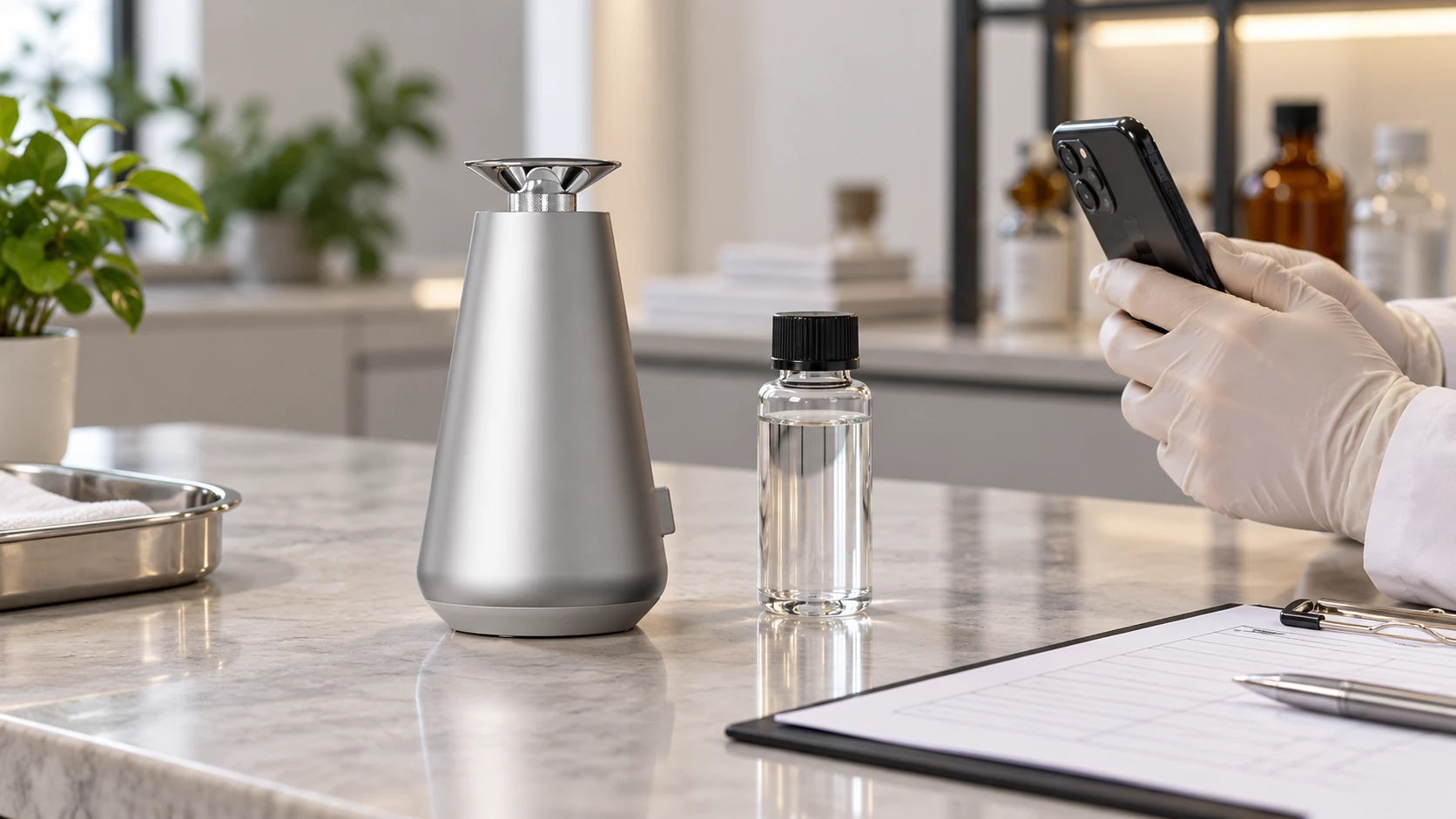
3. Compare with the correct product specification
Ask the supplier what appearance is expected for that formulation and what storage conditions apply. A photograph of another fragrance is not a reliable reference. Nor does a statement about candle wax, a reed-diffuser base or a cosmetic preparation automatically apply to a waterless diffuser oil. Request the relevant product information and handling guidance. If there is no clear specification, treat that as an unresolved question rather than filling the gap with a generic internet remedy.
4. Avoid changes that destroy useful evidence
Do not add alcohol, water or another oil, and do not filter out material or heat the container to make it look clear. Such changes can alter the formulation and make the original condition impossible to assess. Shaking is not a universal remedy either. Follow any supplier-directed procedure only when it clearly applies to the exact product and can be performed safely. Keep a record of the instruction and what was done.

5. Decide what happens to affected machines and stock
If the liquid has already been used, identify which devices received it and when. Pause further refilling while obtaining guidance. Follow the diffuser manual for any shutdown or permitted inspection; do not open non-serviceable components. Avoid topping up affected liquid with a fresh supply because that obscures identity. Have the supplier confirm whether the stock should be accepted, returned or otherwise handled, and follow applicable local disposal requirements rather than pouring it into a drain.
6. Close the issue before returning stock to use
Keep the supplier's conclusion, product identity and any replacement details in the purchasing record. Tell the staff responsible for refills which containers are approved and which remain on hold. If the assessment identifies a handling error, correct the process rather than simply replacing one bottle. If the cause remains unknown, preserve that uncertainty. A clear-looking liquid after an improvised treatment is not evidence that compatibility or safe use has been restored.
Frequently asked questions
Does cloudiness always mean fragrance oil has expired?
No conclusion can be made from appearance alone. Ask the supplier to assess the specific formulation, product history and observed change.
Can I warm the bottle until it becomes clear?
Do not apply heat as a generic remedy. Follow only product-specific handling instructions supplied by the manufacturer; no heating procedure is recommended here.
Can I still use the clear layer from a separated bottle?
Do not separate and use a portion on your own. The composition may no longer be the intended formulation. Obtain written supplier guidance first.
Plan your next step
Send Aromaprox the product name, batch information, photographs and handling history when asking about a fragrance supplied for your diffuser. Keep the liquid out of use until the specific concern has been resolved.
Related resources
Images are AI-generated editorial scenarios based on Aromaprox product reference photographs. They are not test records, installation instructions or a statement of included accessories. Confirm the exact model, finish and current specifications before ordering.


