
Why Fragrance Smells Different in a Diffuser Than in the Bottle
If fragrance smells different in a diffuser than in the bottle, the product has not necessarily changed. You are comparing different sampling conditions: the air close to a concentrated liquid and a fragrance delivered into a room. A buying decision should therefore include a suitable in-room evaluation, not rely only on the first impression when a sample arrives.
1. Understand what each sample can tell you
A bottle can help identify the supplied product and an initial scent character, but it does not reproduce room delivery. The air near the container, the amount presented and the distance from the source differ from normal use. Smell begins when airborne odor molecules reach the sensory system. NIDCD: The Journey of Smell to the Brain Do not use direct, prolonged inhalation from a container as a performance test; follow the fragrance supplier's handling and evaluation instructions.
2. Confirm identity before comparing impressions
Check the fragrance name, batch reference and intended application. Keep the original label and note whether the bottle was recently transported or opened. Verify that the fragrance is approved for the exact diffuser version; a liquid suitable for another application is not automatically suitable here. Do not add water, alcohol or a carrier to make it seem closer to the bottle impression. An unexpected separation or appearance change should be discussed with the supplier first.
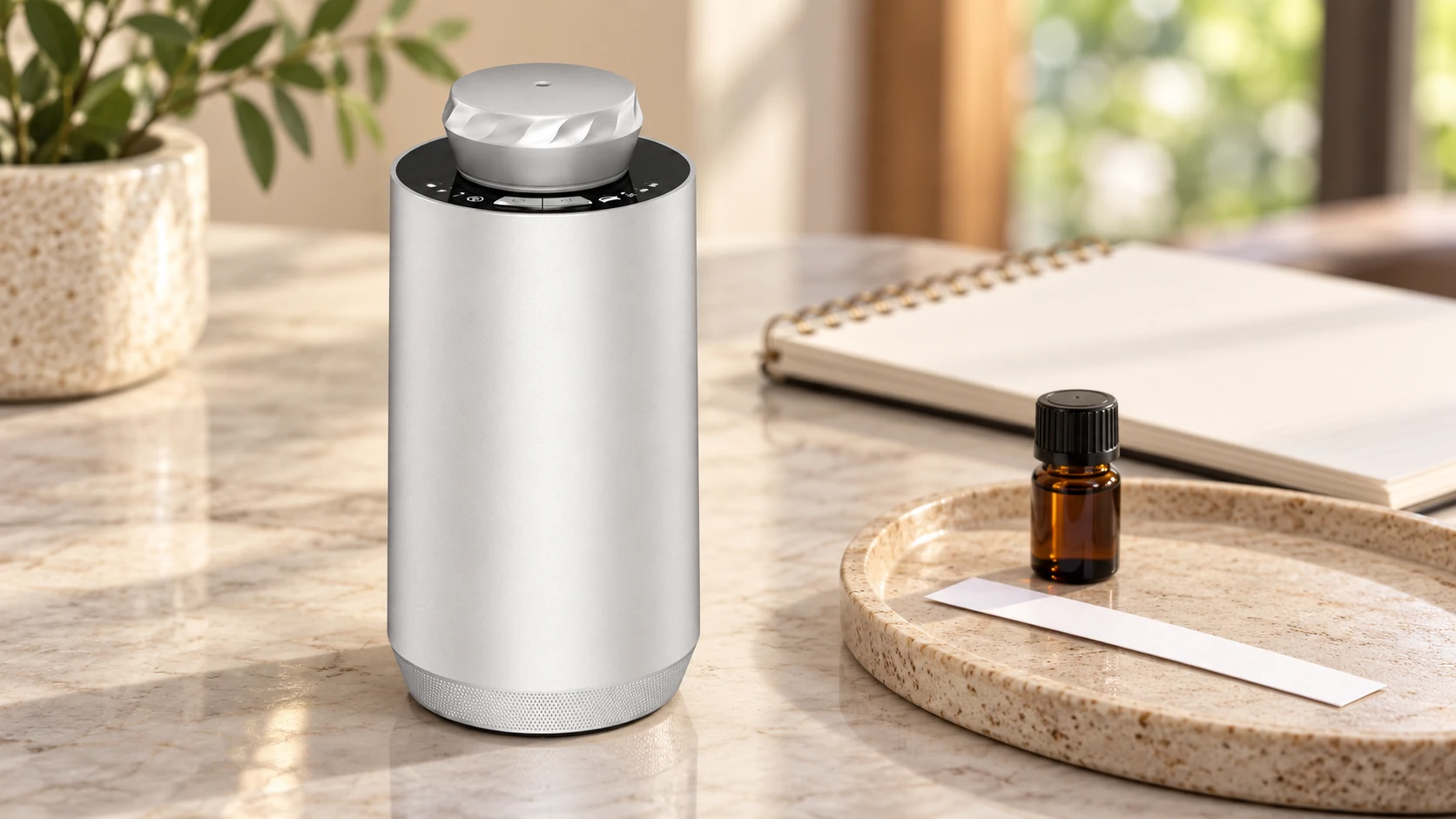
3. Prepare a room without competing scent sources
Avoid running the comparison immediately after scented cleaning, cooking or another fragrance demonstration. Identify existing sources before deciding that the sample smells wrong. Keep normal appropriate ventilation and document open doors and nearby activities. There is no universal waiting period that makes every room neutral. If the previous fragrance remains noticeable, postpone the comparison or choose another suitable space rather than layering a new scent over it.
4. Evaluate the actual intended use
Use the approved liquid, documented settings and placement instructions for the chosen model. Observe from normal seating or walking positions, not directly above the outlet. Record both the character of the scent and whether its intensity is comfortable. A pleasant sample may be unsuitable at a particular operating level. Change one permitted setting at a time and repeat the observation, keeping the rest of the arrangement unchanged so the result remains interpretable.

5. Describe the difference precisely
Replace vague comments such as different or weak with observations the supplier can investigate: more noticeable at the entrance, less recognizable near seating, an unexpected note, or a change following a refill. Record when it occurs and whether others independently notice it. Keep preference separate from a potential defect. Disliking the room impression does not itself prove a faulty batch, and a pleasant smell does not verify compatibility or product condition.
6. Approve a room experience, not just a bottle
Retain the product identity and a short record of the arrangement that was accepted. Include the exact model, fragrance, settings, location and evaluation date. If several sites will use the scent, trial representative conditions rather than assuming one room stands for all of them. Keep any supplier-approved sample storage instructions with the record. A later batch comparison is a separate quality-control exercise, not a substitute for checking whether the scent fits the application.
Frequently asked questions
Does a different room impression mean the oil is defective?
Not necessarily. First check identity, compatibility, competing odors and operating conditions. Escalate an unexplained change with clear observations and batch information.
Can I use a paper scent strip instead of a room trial?
A strip may support an initial evaluation when the supplier recommends it, but it does not reproduce delivery into the intended room. Treat it as one stage, not final approval.
Should I mix something into the oil to change its smell?
Do not improvise additives or dilution. Ask the supplier about the intended formulation and exact diffuser compatibility before changing the liquid.
Plan your next step
Share the fragrance identity, intended space and exact diffuser with Aromaprox. Request a suitable sample and an application-specific evaluation before approving a larger order.
Related resources
Sources and further reading
Images are AI-generated editorial scenarios based on Aromaprox product reference photographs. They are not test records, installation instructions or a statement of included accessories. Confirm the exact model, finish and current specifications before ordering.


