
Aroma Diffuser Surface Finish Testing: Wiping, Scratches and Color
Aroma diffuser surface finish testing turns a vague request such as durable silver into a defined evaluation. Color, gloss, texture and resistance to expected handling are different properties, and a photograph alone cannot establish them. This guide helps buyers agree a practical sample-review plan; it does not report measured coating performance for any Aromaprox model.
1. Define the finish and reference sample
Record material, coating or surface process, color and the part version. Retain an approved physical reference with an identifier and protected storage. A named color without a finish specification may still produce different gloss and texture. Include the areas that matter most to the customer, such as the visible front and frequently handled edges. Avoid assuming that all silver, black or white Aromaprox housings share one material or coating system.
2. Standardize the visual comparison
Compare samples under consistent lighting, at an agreed distance and viewing angle. Keep surfaces clean according to their instructions before assessing them. Record color differences separately from dents, scratches, uneven gloss or contamination. Photographs should use consistent exposure and include the sample identifier, but remain supporting evidence. If a numerical color tolerance is required, agree the instrument, measurement geometry and tolerance with the supplier; do not invent a universal acceptable value.
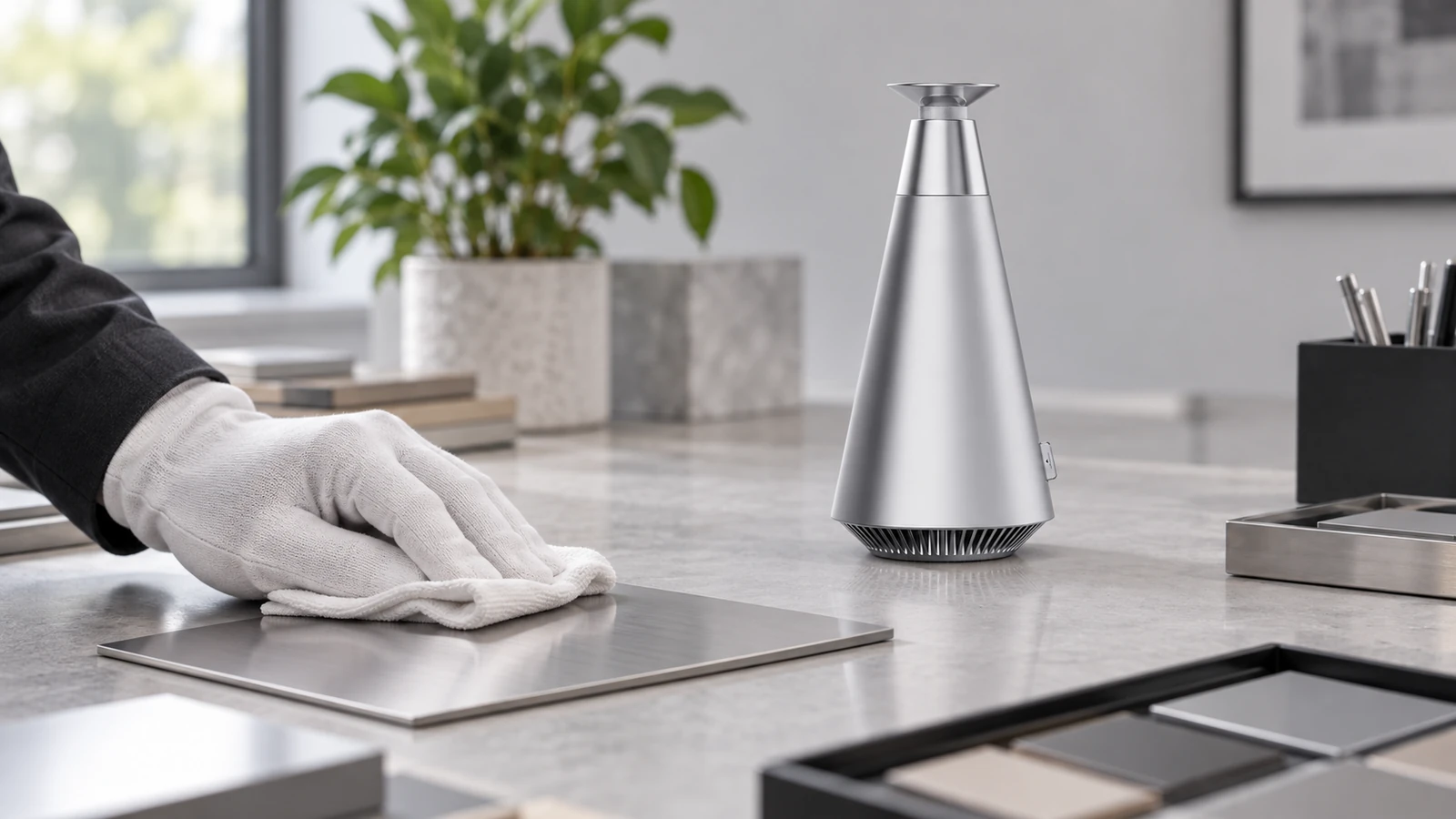
3. Agree a realistic wiping evaluation
Use only an approved cleaning method and compatible materials, and specify the cloth, applied load, repetitions and inspection endpoint if conducting a controlled comparison. An informal wipe by hand is not a standardized abrasion test. Where an exposure could damage the device, use representative finish coupons or qualified testing rather than experimenting on a powered product. The illustrations deliberately show separate coupons, not aggressive cleaning of the diffuser itself.
4. Treat scratch and adhesion tests carefully
Define the business question before choosing a method: shipping marks, routine handling and coating adhesion are not the same issue. Destructive testing may require dedicated samples and competent equipment. Do not scrape a saleable unit with an arbitrary tool and describe the outcome as certified scratch resistance. If a standard is specified in a contract, identify the applicable method, version, specimen preparation and reporting requirements with the laboratory. Keep informal comparisons clearly labeled as such.
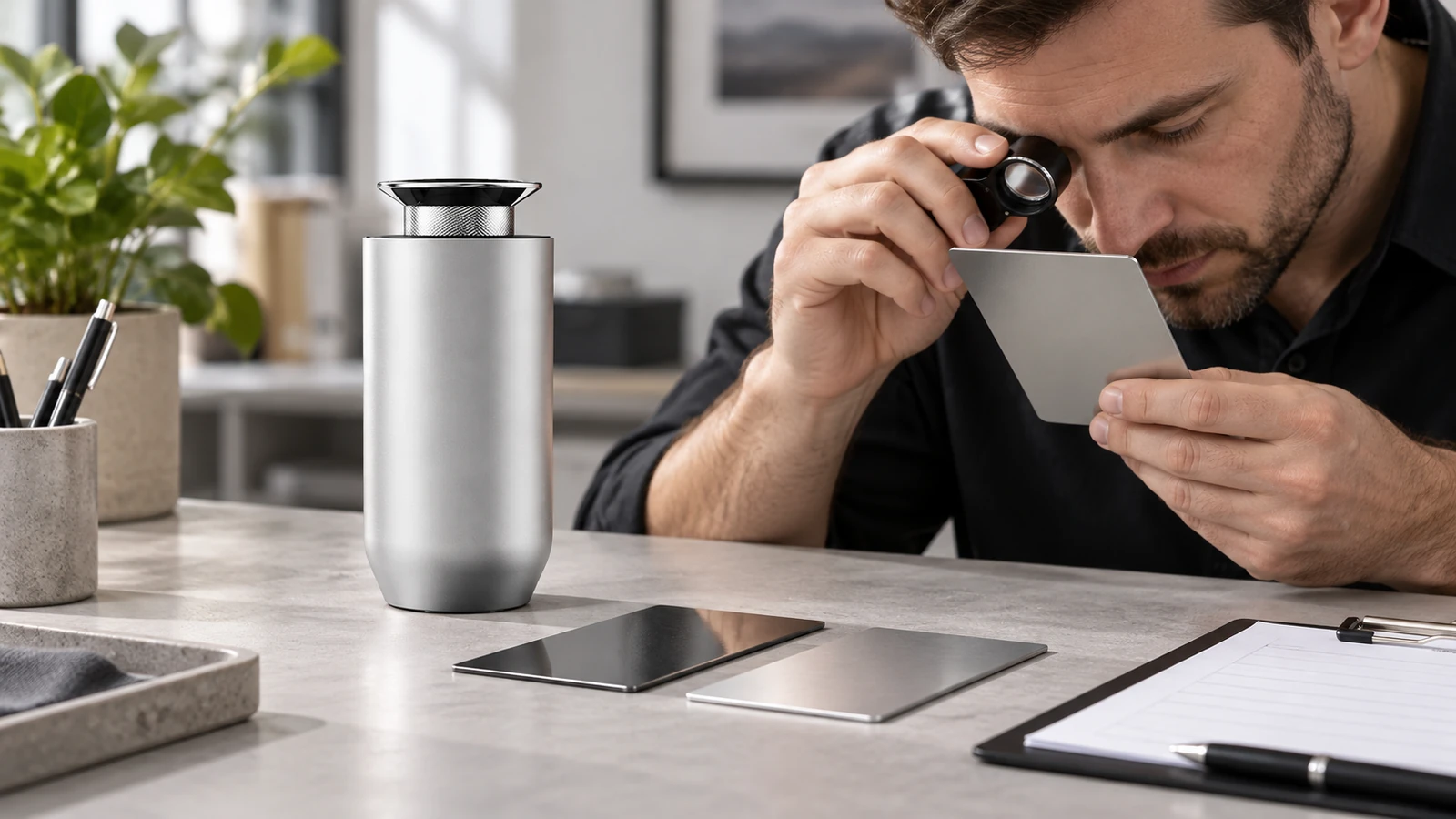
5. Record conditions and evidence
A useful record includes sample ID, finish version, method, test operator, date, exposure conditions and before-and-after observations. Separate the observed result from the acceptance decision. For example, visible change under agreed lighting is an observation; whether it is acceptable depends on the previously approved criterion. Note inconclusive results and repeat the agreed method when necessary. Do not select only favorable photographs or compare one finish after a harsh exposure with another that was never exposed.
6. Connect approval to production changes
Retain the approved reference and communicate the inspection criteria to the supplier. If the coating, material, color or process changes, review whether the earlier approval still applies. A new surface can also affect logo appearance, so coordinate finish and marking decisions. Keep this focused assessment distinct from a complete product-sample approval, which also covers function and other requirements. Ask for the relevant evidence rather than treating a polished appearance as proof of every performance property.
Frequently asked questions
Can I approve color from a website image?
Use it for initial discussion, not final finish approval. Lighting, displays and surface reflection can change apparent color; review a representative physical sample.
Does a wiping demonstration prove abrasion resistance?
Not by itself. The method and acceptance criteria must be defined, and an informal demonstration is not equivalent to a standardized test.
Are the pictured devices being tested?
No. These are generated editorial scenarios. The separate coupons explain the workflow without claiming actual results for H200D, DecoPlus or CarPro.
Plan your next step
Provide Aromaprox with your intended handling conditions and finish requirements, then agree representative samples and documented acceptance criteria.
Related resources
Images are AI-generated editorial scenarios based on Aromaprox product reference photographs. They are not test records, installation instructions or a statement of included accessories. Confirm the exact model, finish and current specifications before ordering.


