
Can You Use an Air Purifier and Scent Diffuser Together?
Using an air purifier and scent diffuser together raises a practical question: will filtration remove the fragrance you are adding? The answer depends on the purifier, its filter media, the fragrance and room conditions. Start by separating the purpose of each device: filtration addresses airborne pollutants; a scent diffuser adds fragrance. One does not replace the other.
1. Decide what the room needs
A room that needs pollutant reduction does not automatically need fragrance. First address the source of unwanted odors and follow appropriate ventilation and cleaning practices. EPA guidance treats filtration as a supplement to source control and ventilation, not a way to remove every pollutant. If occupants prefer an unscented environment, leave the diffuser off. In shared settings, agree on the room's purpose before selecting a fragrance or changing equipment settings.
2. Identify the filter, not just the purifier name
Particle filters and gas-removal media serve different functions. A HEPA filter primarily captures airborne particles; activated-carbon media can adsorb some gases and odors. A purifier may combine both, so a HEPA label alone does not describe its complete effect on fragrance. Performance depends on the media, its condition and the substances present. Check the purifier manual and replacement-filter specification. Do not assume that a thin carbon layer will remove every fragrance component, or that a particle-only filter leaves the entire scent unchanged.
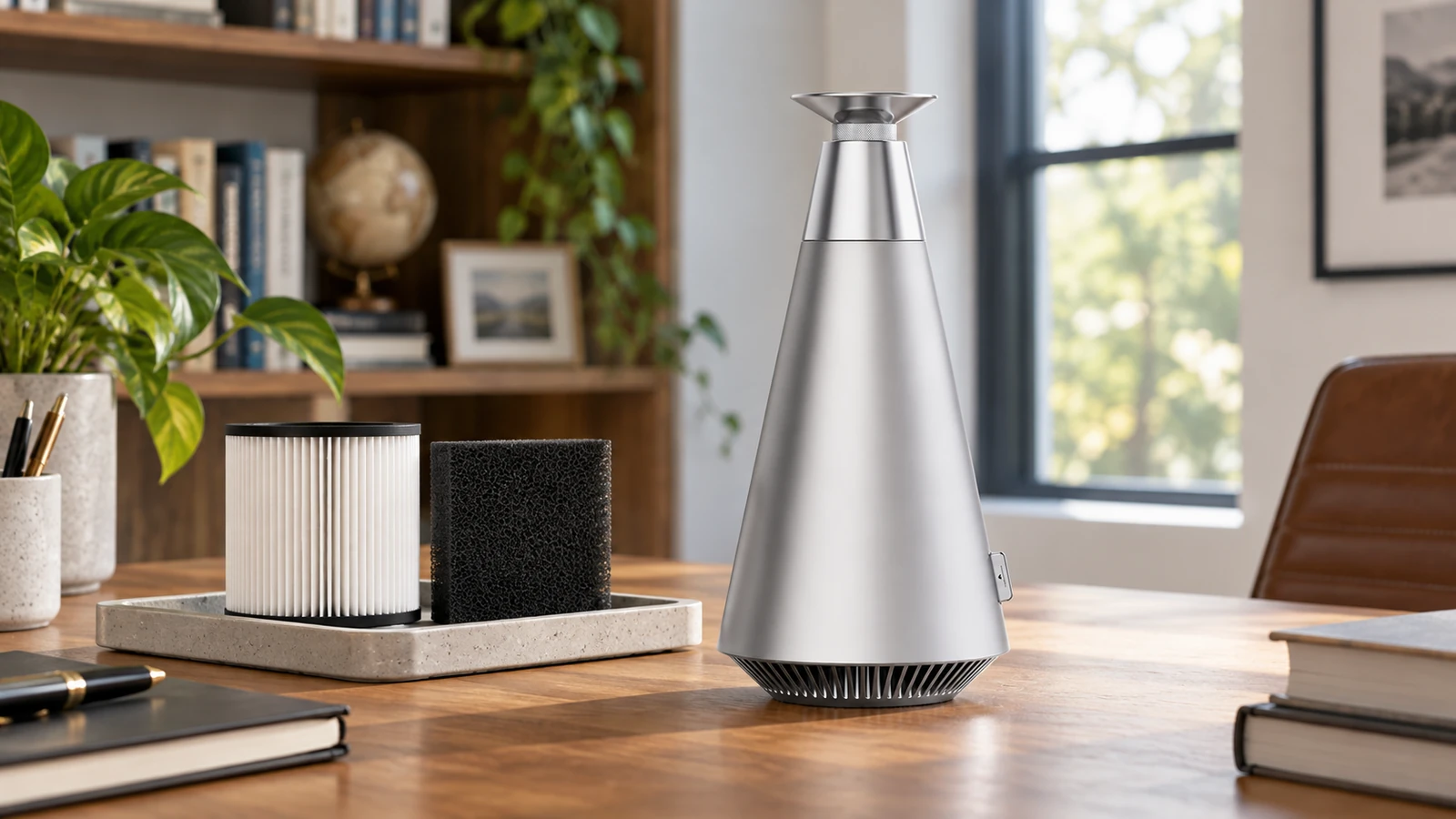
3. Keep the two appliances physically separate
Place each appliance according to its own installation instructions. Do not position a diffuser outlet directly against a purifier intake, place either unit on the other, or block airflow with furniture. There is no universal separation distance that works for every combination. A tabletop model such as DecoPlus can be considered within its intended application, but the scene photographs are not installation diagrams. Check the actual outlet direction, surface stability, maintenance access and manufacturer clearances before use.
4. Observe one change at a time
Establish a baseline with the purifier running normally and no added fragrance. If scenting remains appropriate, introduce the lowest suitable diffuser setting while keeping the purifier setting and room use consistent. Record the diffuser mode, purifier mode, doors or windows, observation time and comments from willing occupants. Change one variable at a time. This is a practical observation exercise, not a laboratory compatibility test. A simple air-quality display cannot prove that a particular fragrance mixture is safe or identify every airborne substance.
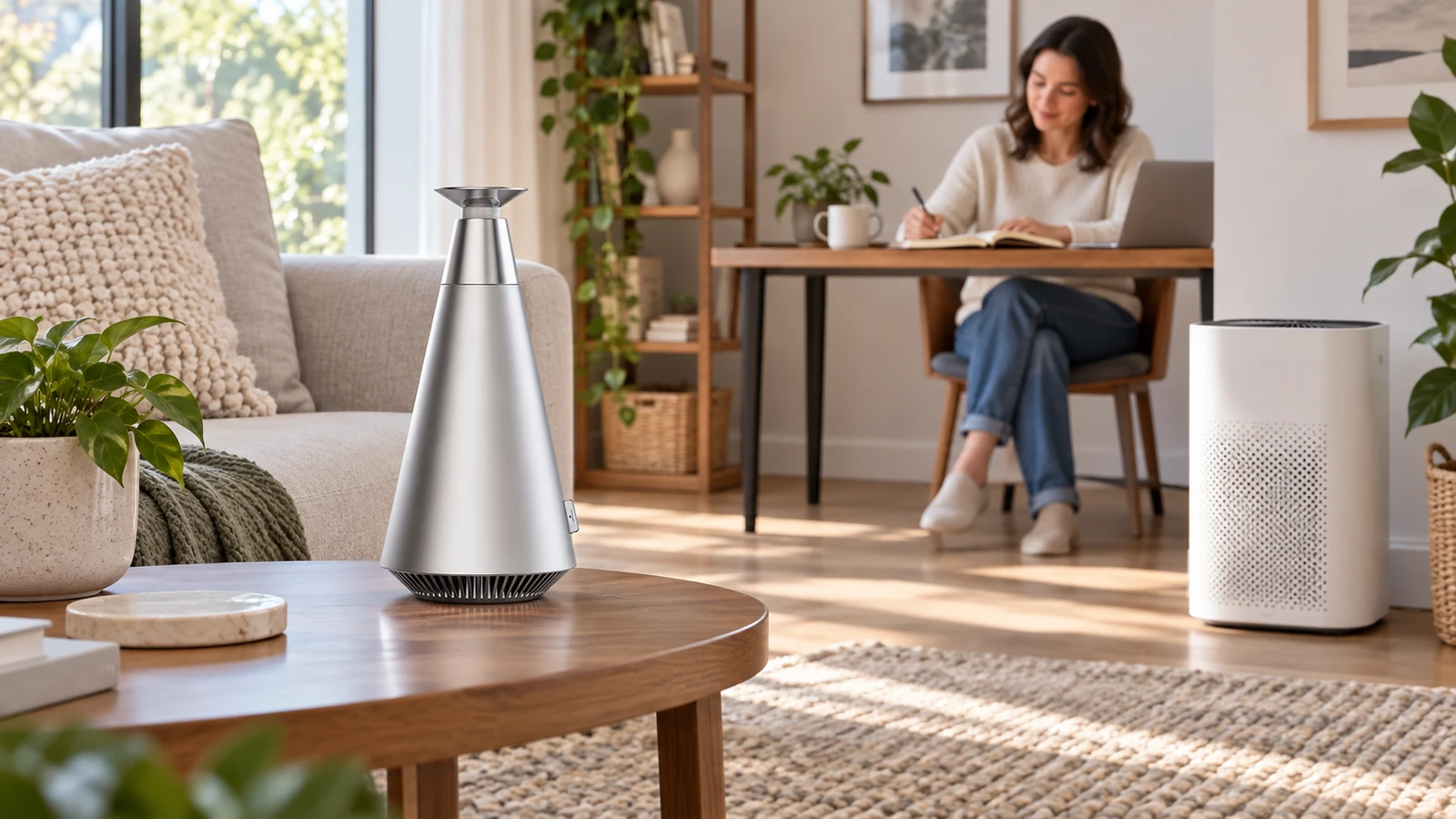
5. Avoid a fragrance-versus-filtration contest
If fragrance seems weaker with the purifier operating, first review whether using both devices serves the room's purpose. Do not disable useful filtration or keep increasing scent output to compensate. Keep all diffuser liquids away from purifier filters unless the purifier manufacturer explicitly provides for a fragrance accessory. Never coat a filter with scent oil. Stop adding fragrance if occupants report discomfort, and reassess the arrangement. An unscented operating plan is a valid outcome, especially where the room's agreed priority is air cleaning.
6. Keep a short operating record
A useful record names both appliance models, filter type and replacement date, diffuser liquid, operating modes and the person responsible for adjustments. Note what changed and when, rather than relying on memory. Reassess after a filter replacement, a different fragrance or a room-layout change. For procurement, ask the diffuser supplier about its intended use and the purifier supplier about fragrance exposure separately. Written confirmation is more useful than a blanket claim that all purifiers and diffusers are compatible.
Frequently asked questions
Will HEPA remove all fragrance?
No. HEPA describes particle filtration, not complete gas removal. A purifier's additional media and the fragrance composition matter; consult its documentation rather than relying on that label alone.
Should I switch off the purifier while scenting?
Do not interrupt needed air cleaning just to preserve a scent. Review the room's priorities and both manuals; leaving fragrance out may be the better choice.
Can I add fragrance oil to the purifier filter?
Not unless that exact purifier's manufacturer explicitly permits it. A separate scent diffuser is not permission to modify the air cleaner or its filter.
Plan your next step
Discuss the intended room, the existing air-cleaning equipment and the exact diffuser variant with Aromaprox before choosing a scenting setup. Request current instructions rather than assuming that one arrangement suits every room.
Related resources
Sources and further reading
Images are AI-generated editorial scenarios based on Aromaprox product reference photographs. They are not test records, installation instructions or a statement of included accessories. Confirm the exact model, finish and current specifications before ordering.


